Sunday, August 19, 2018

My story with people in Herrang Dance Camp (1) -- in the general accommodation

On my first day in Herrang, Phillippe and Vicky, from the scene of my hometown Hong Kong, were already there. Since they are experienced about the camp, I learned about some rooms for general accommodation are quieter than the others. I also needed to queue up early to get the room that I wanted.

The room for general accommodation looks like this.


Basically, this is like living in a hostel, where many people live in the same room. It is also not expensive, 500 SEK per week (1 SEK = 0.9 HKD = 0.1 EUR in July 2018). The general accommodation is unisex.

Phillippe from Hong Kong showed me the room that is supposed to be quiet. I chose the bed next to the window without good thinking. In the following days, I had to sleep with the rising sun at 3 - 4 am.

Yet, this is probably my only complaint. Power outlet was next to me for charging the phone. Best of all, the people who stayed around me gave me great Herrang experience.

Above my bed, there was already a girl staying there. We introduced ourselves. Her name is Ella. She is from London, already stayed in Week 1 of the camp, and she will stay for the entire Week 2 also. When I introduced myself, I once again felt that "John" is too generic, so I switched back to introduce myself as "Wangki" -- you know, "Onekey".

Every day from 9 pm - 10 pm (except Friday), there is a daily meeting of the camp. Yet, a better name for the meeting is probably "the Daily Show of Lennert". It is far from a boring list of announcement. Instead, a long-time organizer of the camp, Lennert, hosted the "meeting". On top of announcement, there are interviews and performances, some with great surprises. On the first day, I was with a new friend to attend the meeting.

On the next day, there was another guy from Switzerland joining this company. His name is also Phillippe. His general accommodation was far away at the marina, which is about 1 km from the main facilities. Thus, he rented a bike for a week. He had the same class schedule as me, which was the half-time session lindy. The key for the half-time session is that the classes would not start until 3 pm at the earliest, so we could party more in the evening. It is of course less expensive than the full-time session. Besides, one does not need an audition to enter the half-time session, but it is expected that the class is at the intermediate-advanced level.

Since this next day (Sunday), Ella, Phillippe (from Switzerland, same below unless stated otherwise), and I always attend the general meeting, standing or sitting at the back of the second-floor ballroom. After that, we usually either attend the Library Talk or the Crash Courses together. Throughout the day and the evening, we often sat together, and talked about what we had learned and what we had done. Of course, we danced during the evening parties.

We became closer friends each day. Phillippe asked me suggestions on where to fly to after his Week 2 in the camp. He said he would like to go to Singapore. I told him it is a good idea, since the world is hot everywhere anyways, so going to a city near the equator is not too bad in comparison. Plus, I told him about the inexpensive and good food there. In the end, he got his ticket to travel to the SE Asia.

Wednesday is the cultural activity day. According to Lennert, Wednesday used to have masquerade party, but low number of people dressing up for the masquerade led to a change to the cultural activity day. On that day, the two swing VIPs (how I called those who are old enough to live through two ages of swing dancing), Sugar and Barbara showed us a routine that they did in the Savoy Ballroom (?), the place where the dance was evolved. After the one-hour lesson, there was originally a plan to take recap video of the routine. Even Phillippe from Hong Kong asked me to get the recap because he was leaving. Yet, the two VIPs became the photo booth with the students, and eventually there was no recap from them. Since Ella also learned the routine, we asked someone to take a video of us dancing this routine. Thus, we both had the routine with ourselves performing it.

On one occasion, the original plan was to take a Crash Course of a fast dance routine, Mama Stew. Yet, it became watching the World Cup semi-final, since England was in it

We also got pizza together in the evening party. The pizza was sold out fast, and it could take 30 - 60 minutes between the order and the pizza. Pizza became our dance breaks.

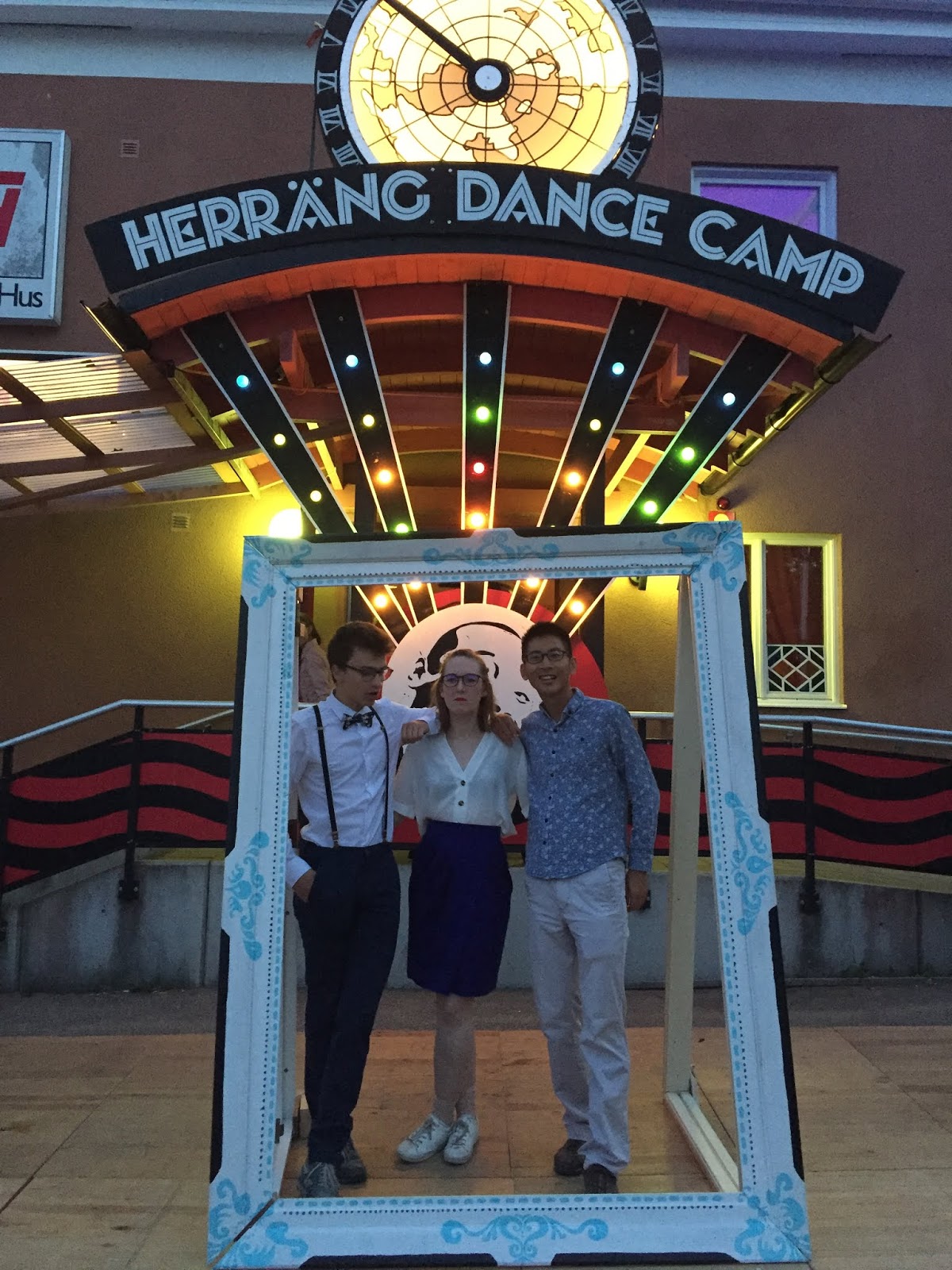
Here is a picture of the Friday Savoy Night, the last night of the week:

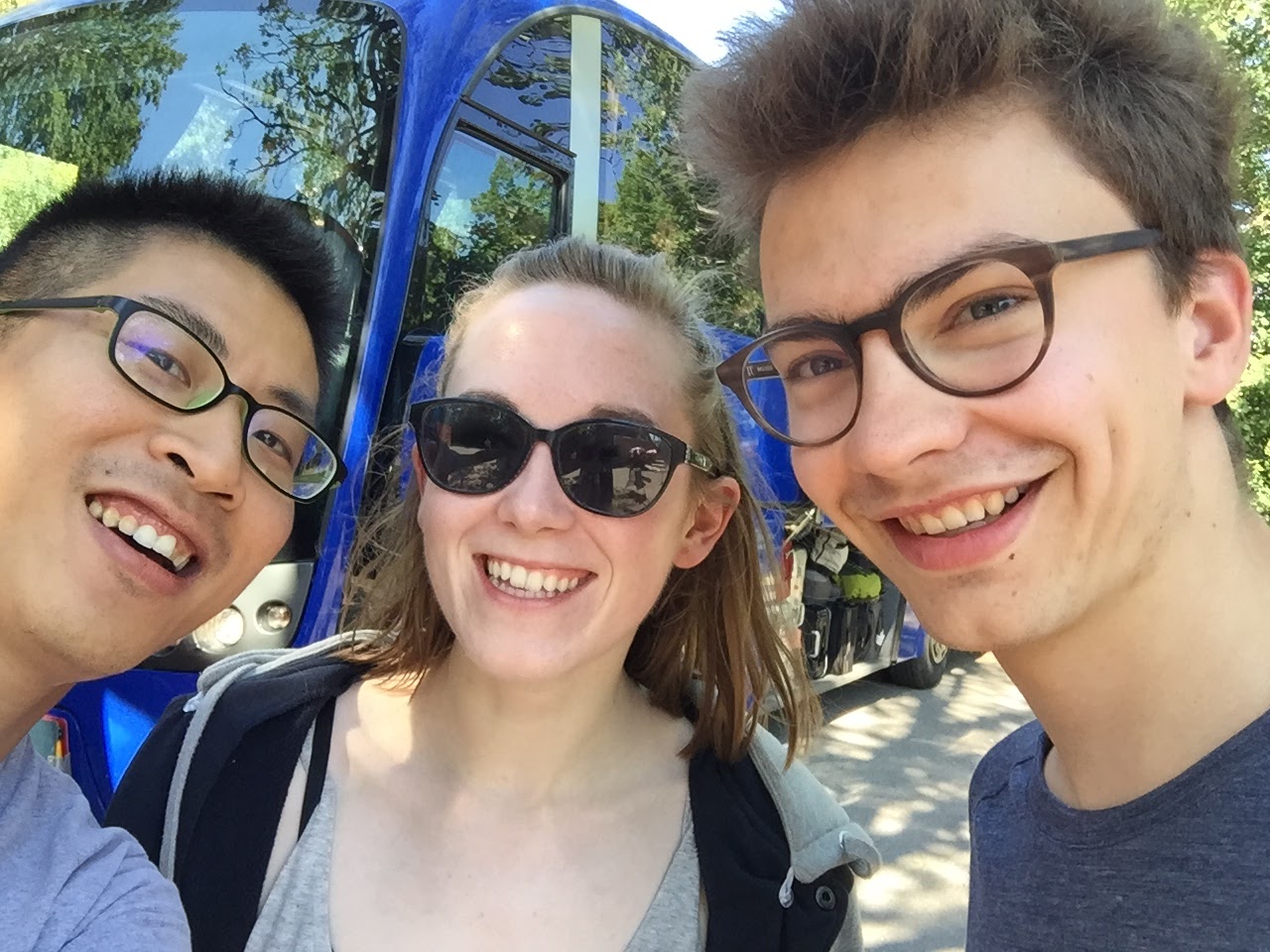
Good things eventually come to an end. On Saturday morning, they left the camp by different bus. I also needed to move my luggage to another place to stay for Week 3. We had a farewell photo:

This did make me feel a bit sad. It is really great to have friends around during a week-long workshop. Now, we do not know when our paths will meet. Going to Europe is a trip too long for me.

---------------------------------

Besides, next to my bed there were also 3 Americans. Two of them are from Oregon and one from Hawaii. The closest swing scene that I have been to near these states is probably in San Francisco or in Seattle. I met Drew (the guy) more often, since we took the same half-time session of classes.
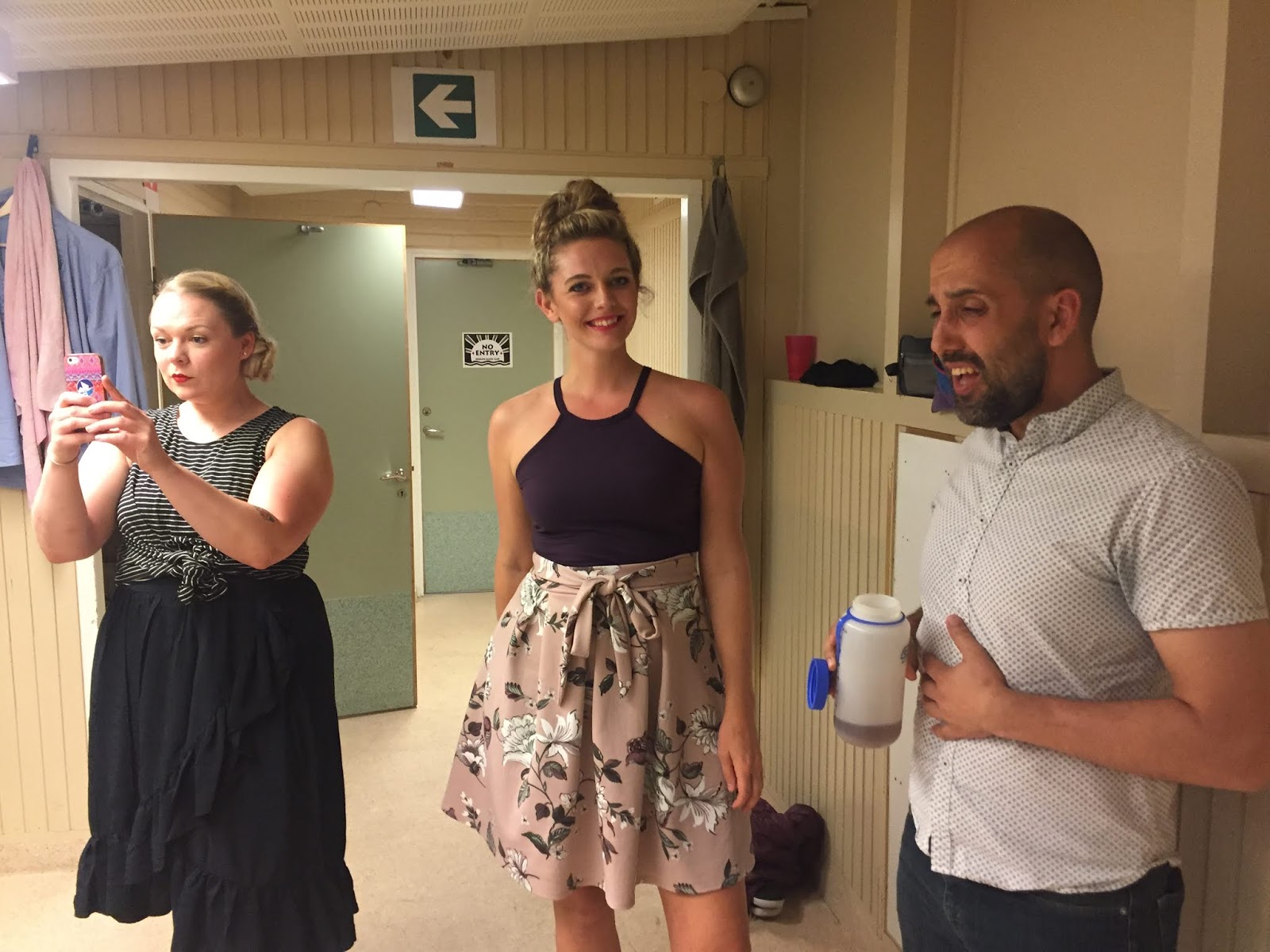
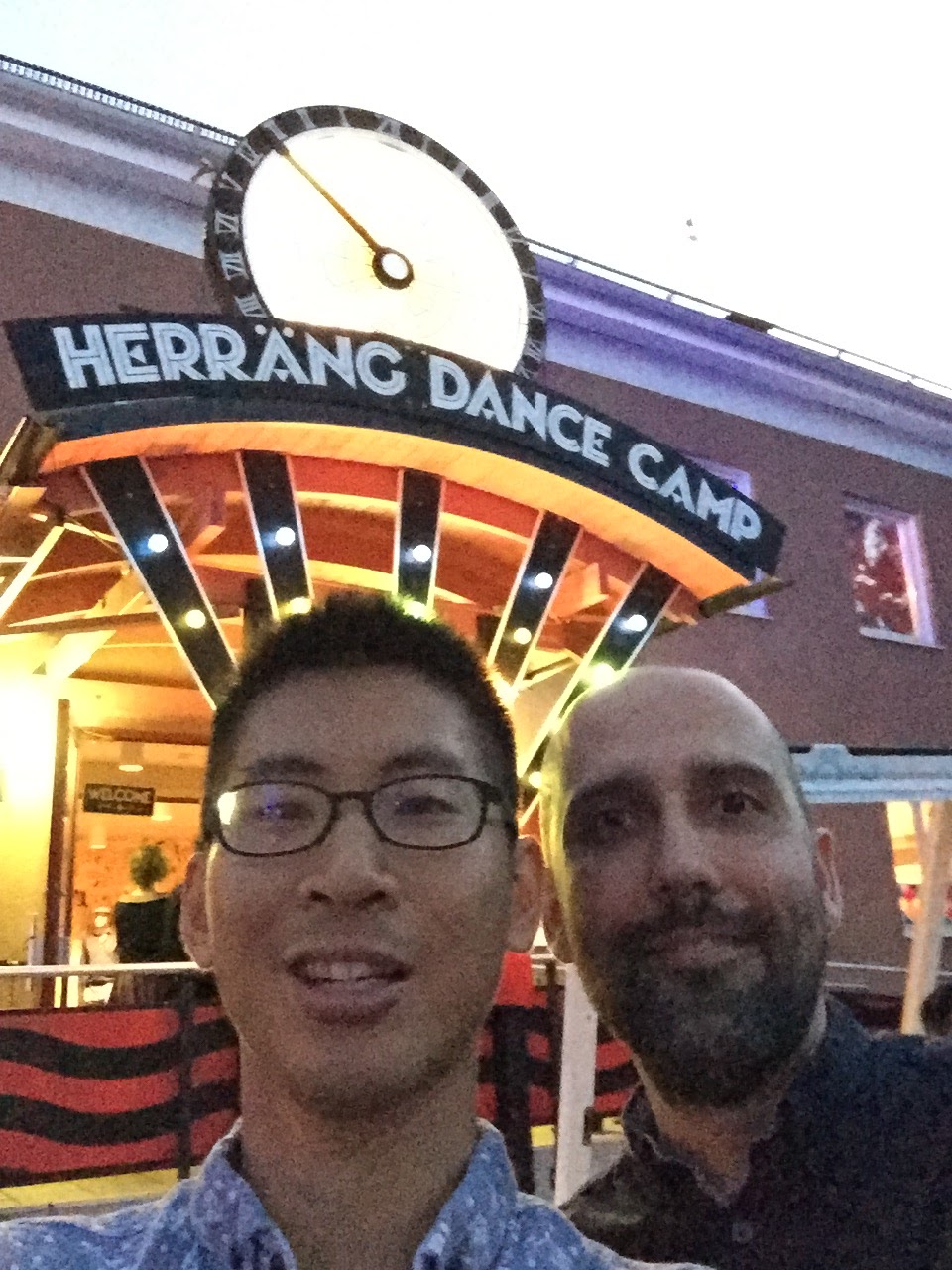

There was also a German girl who lived near me. I now forgot the name. Nevertheless, we sometimes talked about the classes and danced together.

I feel that if I go to Herrang for a week in the future, I will definitely choose general accommodation again, since I had a great experience with this housing option. General accommodation is a great place to meet new people and may forge friendship (classes are of course another place to meet new people, but I will not discuss this further here).

Wednesday, August 15, 2018

Your name, happened in trail orienteering

It was my first time to be in the World Trail Orienteering Championship (WTOC), experiencing how a trail orienteering competition at a world-class level looked like. This year, in 2018, WTOC happened in Daugavpils, Latvia. This is the second largest city in Latvia.

Background about the competition procedures

In Day 1, there was a model event to demonstrate how the two types of competitions, Pre-O (precision orienteering) and Temp-O, were organized. The Pre-O consisted of a timed control (TC) and a main course. The main course has a number of multiple-choice questions, represented by the flags placed in the field. The questions are always in the form of "which flag correctly corresponds to a point at an orienteering map". TC is used for tie-breaker: if several people answer the same number of questions correctly in the main course, whoever answers the TC the fastest (with penalty time for wrong answers) wins.

In this model event, the TC was before the main course. Before reaching the TC, some staff members managed queuing up of the competitors. At the queue, the competitors are not supposed to see any flags of the TC. The first person at the queue is then led by a staff member with an umbrella to the TC station. The umbrella staff is supposed to use the umbrella to block the view of the flags, while leading the competitor from the queue to the TC station.

Once the competitor reaches the TC station, there are three staff members blocking the front view, and another staff member guides the competitor to be seated, asks for the answering sheet, and lets the competitor choose whether to answer the questions by pointing or by speaking, and whether the question maps are bounded or not. The three staff members can then walk away to reveal 5 flags of the TC. A staff member then says this familiar line with finger: "there are 5 flags: alpha, bravo, charlie, delta, echo. Time starts now." The competitor can then open the question maps from the top to the bottom, answering which flag corresponds to the center of the circle in the map. After answering all the map questions, the total time is recorded. The staff member confirms the answers by the competitor with the record. The competitor can then leave the TC and go to the start point of the main course.

Things are simpler at the main course. Competitors just need to record the answers for each question on the map. The staff in the main course just makes sure the competitors do not get off trail and not into any restricted paths. In between some controls, there is one-way section path to forbid competitors from going back, which is also guarded by the staff. There is also a time limit of the main course, which is timed by the electronic punch. Overtime means deducting number of correct answers for the competitor in the main course.

Back to the main point

After the model of Pre-O, there is a model of Temp-O. Temp-O is basically a series of TC stations, with the difference that there are 6 flags, and there is a possibility of a zero answer -- none of the flags are correct. Thus, the procedures for the Temp-O station is almost exactly the same as the TC station.

When waiting in the queue, the staff members with the umbrellas, who were all girls, were talking to each other. Of course I had no idea what they were talking about, since they probably all talked in their local language. Then, a competitor behind me asked one of the umbrella staff why her finger was bandaged. She seemed not to be able to reply in English, so she gave a breaking sound while pointing at the fingernail -- you know, nail arts.

These umbrella staff members worked at rotation: one staff moved a competitor to the TC station, while another was standby to cover the next competitor in the queue. These umbrella staff seemed to decide who covered the next competitor, and they looked at me. Perhaps I was acting like rotating myself, and they were giggling by themselves. One of the staff then took out a phone, asking me to take a selfie with her. This was spotted by my team manager, who commented "focus on the competition". Yes I would, but I was not person who initiated the selfie. She was then the umbrella staff for me to get to the Temp-O station. At this model temp-O station, I got 1 out of 4 questions wrong and used 40 seconds in total. Not very fast, but at least I was recovering from the dismal results when I was in Lithuania.

I told about what happened to some of my teammates after the model. One teammate commented that Latvia has the highest female-to-male ratio in the world. Well, I did notice fewer guys when I got to the Baltic states.

The next few days

The story was not over. In Day 2 of the Temp-O competition, when I was waiting at a station, I felt that I met her again as the umbrella staff. She smiled back to me. She again giggled with another umbrella staff. Then, the other staff took another selfie with me, before entering the station. At that moment, I think another team member of mine spotted what had happened. Yet, he actually did not know what had happened at that point.

Something strange was happening. Perhaps I should ask. At the end of the competition, a lot of staff gathered, but I did not think I saw her. There was an opening ceremony, and heavy rain was started at the middle of the ceremony. I did not see her.

In Day 3 of the first Pre-O competition, I was a public race participant. I think I spotted her guarding at one point of the main course, since she once again smiled at me, and whispering and giggling with another staff. I wish we could introduce ourselves and perhaps get a selfie together with my phone. Yet, I could not bring a phone during the competition, and I should not do anything that disrupts the other competitors, such as talking out loud. Thus, I proceeded to the next question. Another team member of mine, who seemed to be sagacious to know what had happened, gave me a scary grin.

In Day 4 of the second model event, I did not see her at all, probably because the course was short and there was no TC station, and fewer staff was needed.

Your name...

Day 5, which was my last day in WTOC, was the second Pre-O competition. I also participated as a public race. Before starting, I saw her with the bandaged finger, at the registration with other staff members. I was also with my other team members. I mentioned to my team members that someone in the staff team seemed to show interest of me. Perhaps before the competition, my team could help me to take the picture of us. The staff was whispering in their language, and our team member discussed in our language. Finally, I asked her, and she was excited!

After the pictures, we got ready to start with a TC station. My team members cared that I did not ask her email or Facebook account. Yet, I got another chance.

She once again was my umbrella staff.

When waiting for the next person answering the TC questions, we got a chance to introduce ourselves. I knew her name, and I told her my name. Her friend once again talked in their language, and I picked up some words like "email" and "pen". So I said, "I would be happy to write down my contact, but I am competing and do not have a pen." She was then thrown with a water pen, and she asked me to write down my name. I did. I said she may search me on Facebook, but I think she seemed confused. Later, she asked me whether I have an Instagram account. I do, but when she asked, the staff in the TC station asked me to go in. Probably, she does not use Facebook (which is already one generation ago), but uses Instagram.

I did not have time to write my Instagram account name.

After answering the TC questions, she was gone. I had to continue the process of the competition by starting the main course of the Pre-O. After finishing the Pre-O, the staff was packing, and our team had to go back to the place to stay.

I planned to leave Daugavpils on the next morning because of a public foot-O race in Riga. My team members suggested me to come back for the banquet after the race, but it was too much of a hassle to travel between the foot-O race and Daugavpils, which takes at least 4-hour travel time one-way.

Thus, I was like the guy who wrote the wrong thing on the girl's hand, and God knows whether we will meet again. Looking back, this story was really like the climax scene in Makoto Shinkai's "Your Name".


Wednesday, June 27, 2018

我心目中的搖擺舞精神

本來我沒想到要鑽研下去跳社交舞。不過,當我觀察久了,發覺各種社交舞中帶和跟(lead and follow)的概念很有意思。當中搖擺舞(swing dance)的獨特之處,使我繼續留在搖擺舞的圏子之中。慢慢地,開始感到搖擺舞有一種精神在內。

以下我會列出我心目中兩個獨特的搖擺舞精神。下面的概念,或者較適合於跳了多個月或以上的人士作為參考。如果你是一個跳舞初學者,仍在搞清楚基本步法和如何帶舞,你可以只當以下的說話為你未來的目標。總之,你覺得跳舞好玩便可以了。

1) 敢於創新

搖擺舞,有一些其他社交舞沒有那麼著重的東西。

當我體驗過標準和拉丁的社交舞,發覺著重的只是編舞(choreography)。先做動作一,再做動作二,全部已經排好了。兩人也許好像看起來一起跳,也許有經驗的亦知道帶和跟的原理,但我亦見個有些初學者,只是各人背了整套動作。也許兩個人看來跳得合拍,但為何不自己一個人去跳?社交舞的特別之處,就是兩個人之間的連繫(connection)。換句來說,跟舞的如何知道帶舞的做甚麼,和要自己做甚麼。做了動作一,如何知道下一步是動作二,而不是動作三或是動作一。為了跳編好的舞而忽略兩人間的連繫,有失社交舞的原意。

我覺得搖擺舞的創造空間比很多社交舞為高,這可能因為搖擺舞和搖擺爵士樂(swing jazz)的關係密切。爵士樂的精神是即興的創作(improvisation),亦正是搖擺舞其中的一種精神。頭幾課搖擺舞,老師應該會提到學了的動作不用順序地做,只要帶舞者能清晰地令跟舞者知道要做甚麼便可以。正因如此,帶舞和跟舞的技術非常重要。而且,搖擺舞者非常講究音樂感(musicality)。簡單地說,搖擺舞者基本上可以跳得像是搖擺爵士樂團的一部分。音樂暫停,我停,音樂有特殊拍子,我跳特殊拍子。另外,由於樂團各團手的旋律和拍子可能有異,搖擺舞者只能用一個旋律和拍子去跳,所以一首搖擺爵士樂可以有十萬個演繹形式。這種以音樂為主導的社交舞,是比較特別的。可能因為如此,搖擺舞不像標準和拉丁舞有固定的課程(syllabus),因為本身即興的搖擺舞不能受太多的規範。

2) 與眾同樂

搖擺舞,比起其他舞有更多與眾同樂的精神。

未懂跳時看別人跳,覺得別人很厲害,但沒有想過想學,因為很像很難。作為一個過來人,我可以肯定地說︰只要每星期肯抽到一小時去舞會跳幾首歌的舞,即使四肢不協調的人,都會起碼跳到。肯付出時間,人人都可以學會。不一定要跳得很棒,但最少不會覺得自己學不會。

一個最理想的搖擺舞團體,是不論跳舞經驗多寡、男女老少,都能夠願意互相切磋舞術。搖擺舞其中一個最重要的宗師Frankie Manning,可以說是搖擺舞精神的學習對象。他曾經在搖擺舞興起時紅極一時,但當搖擺舞在五十年代沒落時,很少人知道他的專業跳舞生涯,而他亦不願意和人說。即使在搖擺舞復興的年代(八十年代),他亦不太想標榜自己跳舞有多本事。雖然我不知道他為甚麼可以有這種謙卑,但我估計他的謙卑對搖擺舞復興有很大的幫助。

在我從前在美國跳過其他社交舞的經驗,搖擺舞似乎可以最容易大眾化。阿根庭探戈(Argentine tango)看來優雅得太高檔,Salsa、Bachata之類的拉丁舞又好像晚晚去酒吧那麼樣,但搖擺舞的跳舞場合可以很多樣化。有時搞在公園跳可以,在舞廳內高貴地跳亦可以。比起其他社交舞的圏子,搖擺舞的圏子似乎很為沒有經濟能力的人著想。上課有為未畢業的學生提供特價,本地人免費提供地方給去一個週末跳舞的外地人住,似乎只是在搖擺舞的圏子才會見到。

搖擺舞的圏子亦較易放手給有少許經驗的舞者從事其他義務,例如DJ和老師的訓練。

搖擺舞的圏子特別尊重平等和安全。雖然帶舞的通上是男,跟舞的通常是女,但在搖擺舞的圏子沒有限制,亦有較多女和女甚至男和男跳的情況。近年來,正因為Jack and Jill比賽(一個跟舞者和帶舞者隨機分配的比賽)的名字暗示只是男和女跳,忽略兩個女的或兩個男的跳之可能性,搖擺舞團體開始不叫Jack and Jill,改做其他名字(例如Mix and Match)。至於安全,舞池通常有指引減少身體上的受傷,和處理涉嫌性侵的方法。這些指引,其他類型的社交舞比較少見。
------------------------------
我認為「敢於創新」和「與眾同樂」,是在搖擺舞的圏子特別需要捍衞的。至於如何實踐,下回再說。


Wednesday, May 2, 2018

Swing, as I know from the US

When I returned home to Hong Kong and continued the swing dancing, I referred it less as "vintage swing". I could safely say that swing dancing is usually a partner dancing with relaxed connection, downward pulse, and using swing jazz music that has an uneven "swing" rhythm.

In the US, however, the word "swing" can mean several styles of dancing that use different techniques. Moreover, different dance scenes may have different seriousness in dancing, and may result in conflicts between groups.

Here is what I observed in several of the my college dance scenes that have "swing" connotation. Somehow I feel uncomfortable to name the clubs out loud, so I will just call them Club A, B, and C.

A college club that deals with vintage swing

Club A is the one that preserves the root of swing, meaning that they are doing vintage swing style with dances such as Lindy Hop, Charleston, Balboa, and various forms of Shags. This is the place to dance with swing jazz music, with relaxed connection and downward pulse. Club A cares a lot about the history of swing. The classes will often put in information like Frankie Manning and Savoy Ballroom in different places. The beginner class always has a dance etiquette section to talk about the manners for being a social dancer. The experienced dancers sometimes form a group to practice for performances, and they compete. Yet, the focus is still social dancing.

Club A was not the first club that I learned swing from. When I was a beginner, I did not even realize that I did not do swing in the vintage swing style. When I knew, I took several years to understand a bit about the techniques. My first class was in Club B, which I will discuss next.

A college club that introduces partner dancing, mostly ballroom

Club B is the one that focuses on introducing beginners about any forms of partner dancing. This includes ballroom dancing in Standard and Latin styles, but also includes salsa, swing, and west Coast Swing. It is important to point out that in American Latin style, swing, as in East Coast Swing, is one of the dances. Ballroom dancers emphasize firm frames, and ballroom-style swing is no exception. By the way, I think the counterpart of swing for International Latin style is Jive. The posture for Jive is different from the vintage swing and ballroom swing. For a little history, the swing in ballroom style came from the standardization of vintage swing in the 1940s.

Club B was the first club that I started to learn partner dancing. The idea that having a good frame is good dancing was getting into my mind from Club B. When I got to Club A for more social dance, I used what I learned in Club B to dance. When I was told to relax the arms, I was thinking that how I can lead well when I do not have a firm frame, and I ignored the advice. I only understood that what "swing" in Club A is different than "swing " in Club B a few years later. After I did not do ballroom anymore, I put my goal to unlearn the frame and learn the relaxed vintage swing connection.

As a side note, I quit ballroom and went to vintage swing because while ballroom can be danced socially, it is more associated with competitive dancing, where dancing to a routine with perfect technical execution is the goal. As a beginner, I did not find it attractive. Swing dancing seems to offer more creativity. If I know how to lead a move, I can do many different things. Later on, I also knew how vintage swing dancers care about dancing to the music (musicality).

Before I left the US, I could see someone doing vintage swing in Club A using ballroom techniques, since I was like that person before. It was great that they still came to Club A to dance swing, though. Club B is still a friendly club that emphasizes dance etiquette, and Club A had worked with Club B before to introduce vintage swing to the beginners. I guess if the Club B beginners are reminded sometimes that firm frames are no good use in vintage swing, they may learn about the subtle differences between the vintage swing and the ballroom swing.

A college club that dances for fun only

Club C is the one that I have a mix feeling of it.

Club C also focuses on the beginners. They mainly teach swing, and sometimes have one-day lesson on other dances. Their teach style, however, is sometimes like monkey see monkey do -- no pointers on how to execute the moves. They really focus on many moves, and sometimes fancy moves -- pretzels, aerials, you name it. In many of these classes, the whole time is just figure out how to do the one move, at the expense of not doing the basics. The beginners seem to buy it, though. They are happy that they can try to learn something difficult to show off. What they do not know are that difficult moves without techniques do not make them more advanced. Yet, I guess many of them do not care to be advanced.

One of the flash mob activities that they do is to dance on the crossroads. When the pedestrian green light is on, they dance on the road for the duration of the green light, and repeat for an hour. It does have a public display power, but dancing for less than 30 seconds feels too rushed for me. Nevertheless, the college students who participate this enjoy it, so who cares?

Club A, of course, does not like what Club C is doing. The more experienced Club A members think that Club C members sometimes do something unsafe in their dances. Most importantly, Club C misrepresents swing dancing, since they almost spend no time in explaining techniques, and fancy moves tend not to be useful in social dancing environment. It is quite common in the US swing dance scene to have a rule that aerial moves (air steps) should not be performed on the social dance floor, since these moves not only may hurt the dancers themselves, but also the other dancers. When Club C members come to Club A to dance, and find that aerials are not allowed on the floor, some of them never come again.

Club C, of course, also does not like what Club A is doing. The members of Club C may think that swing is characterized by all those crazy moves. Watch the movie Swing Kids (1993). Watch the famous Gap ads. They really want to learn how these people dance! Why can't they do these moves in Club A's dance floors?

Well, Frankie Manning did them, too. However, I think he also emphasizes the importance of social dancing, and his aerials are just for the performances (correct me if I am wrong).

I guess members in Club C only want to have fun in learning to dance, and do not want to be judged. They do not care to learn things in the wrong way, since they want the freedom to dance whatever they want. Perhaps because of this, they can maintain a good number of members.

Before I left the US, a few members in Club C also stayed in the dance in Club A. They stayed for a while, but they would comment why aerials or pretzels would not be taught in the classes of Club A.

This is the struggle between Club A and Club C. If a club tries to preserve the history of swing, would that be done with the loss of fun? Unfortunately, I think Club C can attract more young people than Club A because Club C seems to have more moves to learn. Please think this in the view of the first-time dancers.

This struggle also shows why the experienced dancers should not be too judgmental to the beginners. They sometimes really don't know what they don't know. If the beginners have two left feet, making them move their legs is already busy for them, and they could not listen to the details of the techniques. When the beginners do not feel the fun of the dance because the experienced dancers avoid the beginners, the beginners leave forever. Because of this, I do not support instructors that do not spend time to dance with the beginners in the social dance floor.

A balance of the fun of dancing and the technique of dancing gives me the mixed feeling. Also, I previously said that I stopped doing ballroom because of less freedom, but what Club C does is too much freedom, at a point of no longer defining the spirit of vintage swing.

A minor pocket of west coast swing

There is not much west coast swing in my college scene for now. In other parts of the US, however, there are large events that give west coast swing workshop. Sometimes they also just call themselves swing (example here). The techniques of west coast swing are of course different from vintage swing, even though west coast swing is a direct descendant of Lindy Hop. My incomplete understanding is that west coast swing is a smooth dance (no pulse), and the most important step count is 7 & 8, also known as the anchor step. Lindy Hoppers focus on 1 - 2, the rock step. This is just another source of confusion on "what swing you are doing".

Summary

I hope this explains why I feel that it is a blessing that the swing beginners in Hong Kong does not need to care too much about the definition of "swing" too much. Swing dancing is relatively new in Hong Kong, around 10 years in history (I think). Ballroom people probably only know about jive, and west coast swing is completely new to Hong Kong for now.

It also explains my reluctance in learning some fancy moves that have little use in the social dance setting, or do not have the swing technique foundations. I always focus on social dancing. Solo jazz is just a side dish that helps me with the social dancing. If (vintage) swing is just about solo jazz, I probably will not think about dancing swing at all.

Sunday, April 29, 2018

The 10th Illinois Marathon in 2018 -- the unexpected finish

Registration

After successfully defending my research, my co-worker, Emily, asked me if I would run the Illinois Marathon at the end of the month. At first, I was against it. I may be able to run a half marathon, but I could not run a full marathon without extensive training. Yet, Emily emphasized how active I am, and she was doing a full. Since she did a full with me before I left, and this Illinois Marathon was in the 10th anniversary, I decided to register for a full if I could finish a half in a weekend.

(Besides, I felt that I would like to know my physical limit. Doing a full marathon without enough training would likely result in an unpleasant experience, but how it was like? I would like to find out. If it results in walking the second half of the marathon, or even results me to quit the race, I think it will be an experience, too. Still, I would not push myself to death.)

Thus, I ran a dog route half marathon in the weekend, and I could finish it, and registered for a full.


Training

As expected, there was no marathon training at all.

I still tried to run every Tuesday to Thursday, in a 4 mile (6.4 km) - 6 mile (9.6 km) - 4 mile (6.4 km) schedule. However, I never did long distance training (more than a half marathon distance) in the weekend ever since. My weekends were either orienteering or dancing. On the week before the race weekend, I traveled for the whole week, doing a lot of dancing and orienteering, and some biking, but not any running.

The race

Thus, I was really under-trained for this full marathon. I did not run any distance more than a half. I was not sure whether I could even finish the race. On the day before the race, I went to Courier Cafe to have a creamy soup, a piece of lasagna, and a butterscotch milkshake for the dinner, so that I could have energy to run on the next day.

On the race day, I had to run/walk about 2 miles to get to the start. I registered in the Corral C, where people expected their marathon finish time between 3:45:00 and 4:00:00. The race used a wave start. Corral A would start the race first, followed by a couple of minutes of wait. Then, Corral B started and had another couple of minutes of wait. Then, Corral C, Corral D, and so on.

There were also pacers. I was thinking of following the 3:40 pacer, but they were in Corral B. Since I was supposed to stay in my corral, I went to the front of the corral. When the race started for Corral C, I at first ran slowly to avoid hitting other runners, but I soon ran at my comfortable pace, which meant that I passed a lot of the people to the front.

In Mile 1 and 2, I was running with only 2 or 3 people, until I caught up with the people in Corral B. After Mile 2, I saw the 3:40 pacer, and I stayed with the pacer for a while. Yet, I found myself that the pace was too slow for me, so I passed. Later, I also stayed with the 3:35 pacer at Mile 5. I went to pee, which was not good because it could take more than a minute, and I lost the tempo of the race. Yet, I caught up with the 3:35 pacer again. I eventually passed it, and found the 3:30 pacer at around Mile 9.

I stayed with this pacer for quite a while. At the halfway point, I found that I used 1:40:XX, which was almost my personal best (PB) time for my half-marathon. I knew I was running too fast for a full marathon, and I guessed something wrong would happen soon. I passed the pacer a bit after the halfway point, but I went to pee for a second time in Mile 14, and the pacer passed me again.

I began to feel tired at around Mile 17. At Mile 19, the 3:30 pacer finally passed me. I could still run, but very slowly. Besides, my tummy started to feel hurt, and would like to go to the toilet for an extended period of time. I guess it may be because of the milkshake last night. At Mile 19, I got to ask for a toilet at someone's place. It was nice that the race sometimes passed through neighborhood, and spectators were willing to offer help. Based on the split time, I was in the toilet for more than 5 minutes. I thought I should just focus on finishing the race. My quads were hurt, but after going to the toilet, I felt easier to run again.

In the last 6 miles (note: a marathon is 26.2 miles), I suddenly felt a new stream of energy in my body, and I could push myself to continue running. I might not be as fast as in the beginning, but I could at least run with reasonable ease. When I passed the finish line, I found my finish time to be 3:34:XX. This was faster than my previous marathon in Chicago by at least 2 minutes!

That was great, but I also felt that my result was horrifying: with minimal training and being in restroom for three times, I could still beat my previous PB. I was quite sure that if I got to train seriously, I could easily beat the 3:30 mark.

This race also told me that:

1) I do not need to slow my current half-marathon pace to finish a full marathon.
2) Having a milkshake may not be good the day before the marathon.
3) Even without running as a training, other cross-training (e.g., biking, orienteering, dancing) helps me to stay fit to finish the race.

Post-race

After the race, I first got a lot of food that was served to the runners. This included unlimited pasta, pizza, cookies, and bananas. There was also Gatorade provided.

They also had chocolate milk:


I was waiting for Emily to finish, so that we could take pictures together for this final race. Yet, I knew that she was in trouble because from the racer status, she took almost 2 hours to reach from 13-mile point to 20-mile point. Thus, I went out to get free beer for the racers. This was not surprising for me. Along the course, I had seen unofficial refreshment like beer, or even margarita.


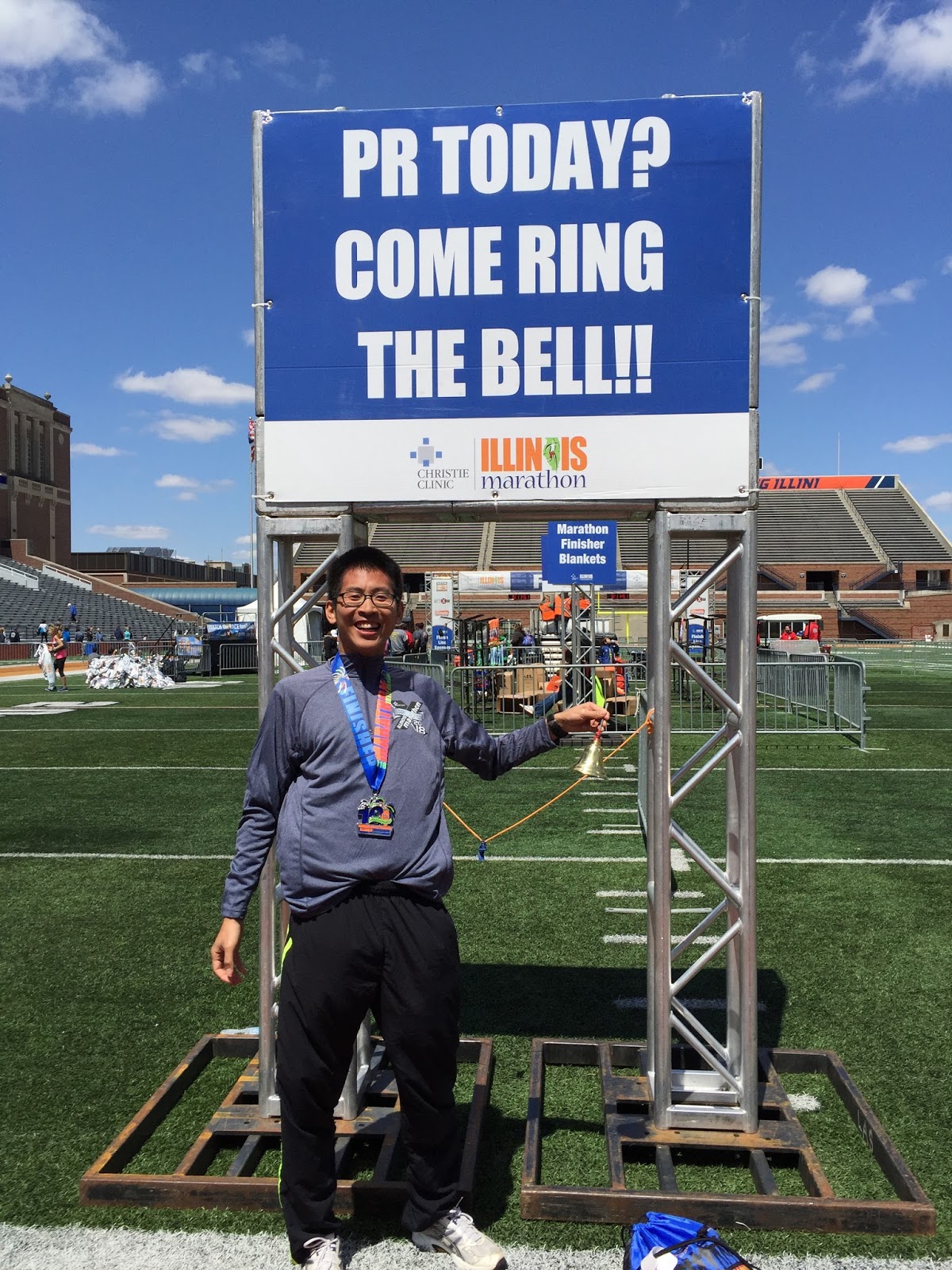
Later, I found this booth for taking picture. I did beat my PB (or PR) today!


Emily finished almost at the 6-hour mark. She talked about the leg cramping at the halfway point. I think we both did something crazy. She challenged me to finish a full marathon with minimal training, and I accepted it.


After this marathon, I probably would not aim for a better time in the future for now. There are many things in life more important than finishing a full marathon under 3:30, and I do not think I can put time to train for a better marathon time.

Still, this daring marathon experiment should be kept in my life record.

My GPS record:

(P.S. as per previous tradition, after finishing the Illinois Marathon, there was a swing dancing event in the same evening. Thus, I went swing dancing in that evening, too. I was too tired and could not dance much, though. It might be because I became old, or because I did it after finishing a full marathon. In the past, I only did a half before the dance night.)

Wednesday, March 14, 2018

2/25/2018 Y2Y O-Champ in Mong Tseng Wai (Farsta courses for the elite classes)

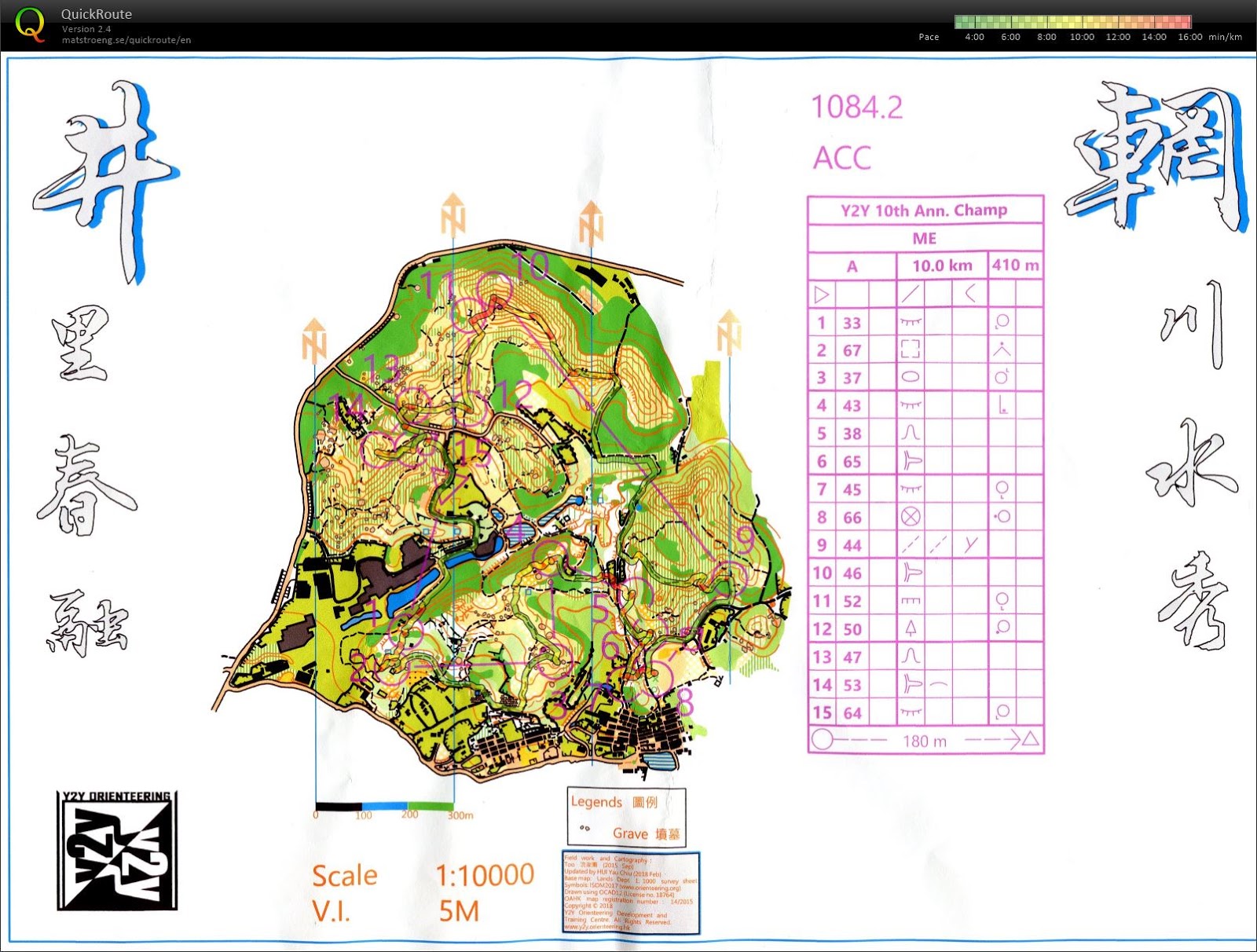
On 2/25/2018, there was a one-person orienteering relay in Mong Tseng Wai, which is NW of Tin Shui Wai in Hong Kong. Before the race, we only knew that: 1) there were 3 maps for man elite (ME); 2) the race was a mass start; 3) each competitor had different route combinations, but all competitors would complete all the courses in the maps; and 4) the length of the race.

I immediately believed that the course would be in a Farsta format. After the race, I found that my guess was correct.

What is a Farsta course?

Farsta is one of the ways to branch a one-person relay course so that competitors can start together, but they cannot always follow from one another because each competitor runs a different combinations of branches.

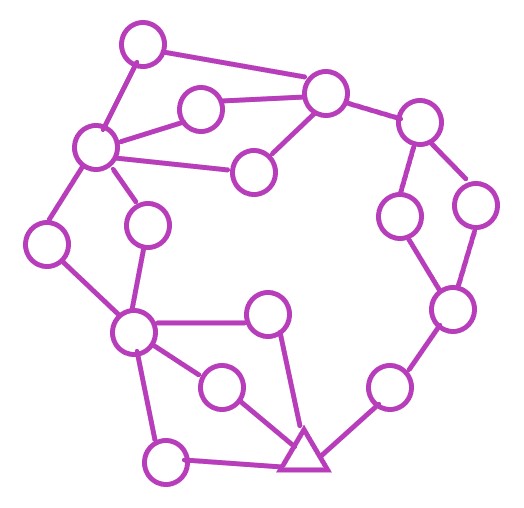
In a Farsta course, each map is divided into several segments, and each segment has several branches. If there are 3 maps, there will be no more than 3 branches. Each end of the segment has a node, where each branch leads to the same node. See the figure below.
In the figure above, there are 4 segments. Each segment contains 2 or 3 branches with one control point for each. Then, each branch meets at the same point.

In a map, one of the branches will be randomly given (e.g., 1A, 1B, or 1C). Then, the branches lead to the same node point (e.g., 2). Then, another one of the branches will be randomly given (e.g., 3A, or 3B), which leads to the same node point (e.g., 4), and so on. In the next map, another branch that is not completed yet will be given. At the end of running all maps, all the branches will be run through.

Note that in each branch, there can be more than one control. Moreover, some branches can be longer than the others. Normally, if there are 3 maps, there will be several segments with 3 branches each.

It is possible to follow the others under the Farsta format, but the competitors need to guess where the nodes are, in order to know whether they should continue to follow the same person or not. A possible hint is to see if there are people approaching the same control in different directions. Moreover, in the second map or after, the competitor should know where the nodes are by noticing the repeating controls.

One of the reasons that this one-person relay is called Farsta is that some common course setting software (e.g., Condes) puts the name Farsta as one of the options for overprinting course info on the map. Thus, setting Farsta course using software is not difficult.

The Setup of Farsta course in Mong Tseng Wai

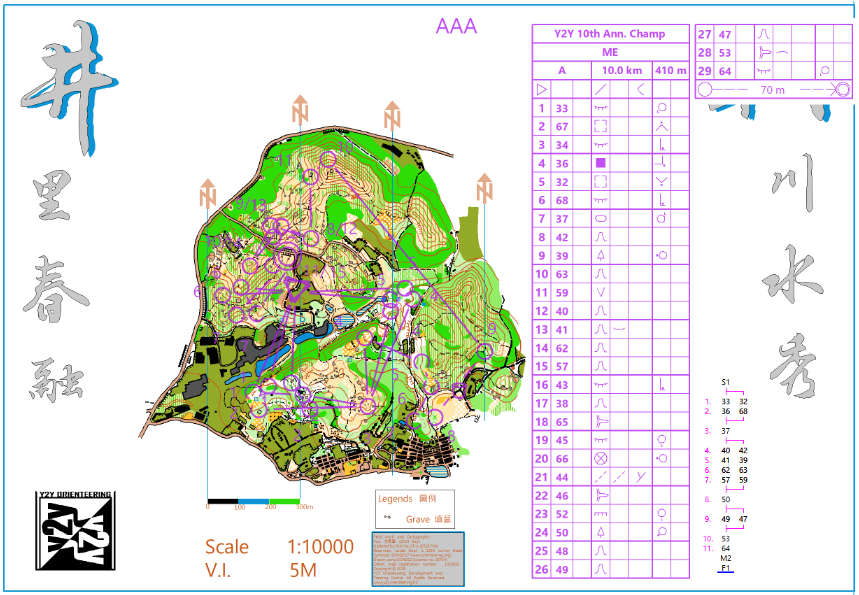
The map below shows the Farsta course, as a master map, that was done in Mong Tseng Wai:


In the above course, there are 3 segments with 3 branches each. There are 2 controls in each branch of the first segment, 1 control in each branch of the last segment. The number of controls in each branch of the middle segment varies. The nodes are control #37, #50, #53, and #64. Note that #53 and #64 are placed in the end of each course, probably so that all competitors will run the same route to the map changing area, and so that the spectators can see when each competitor finishes a map.

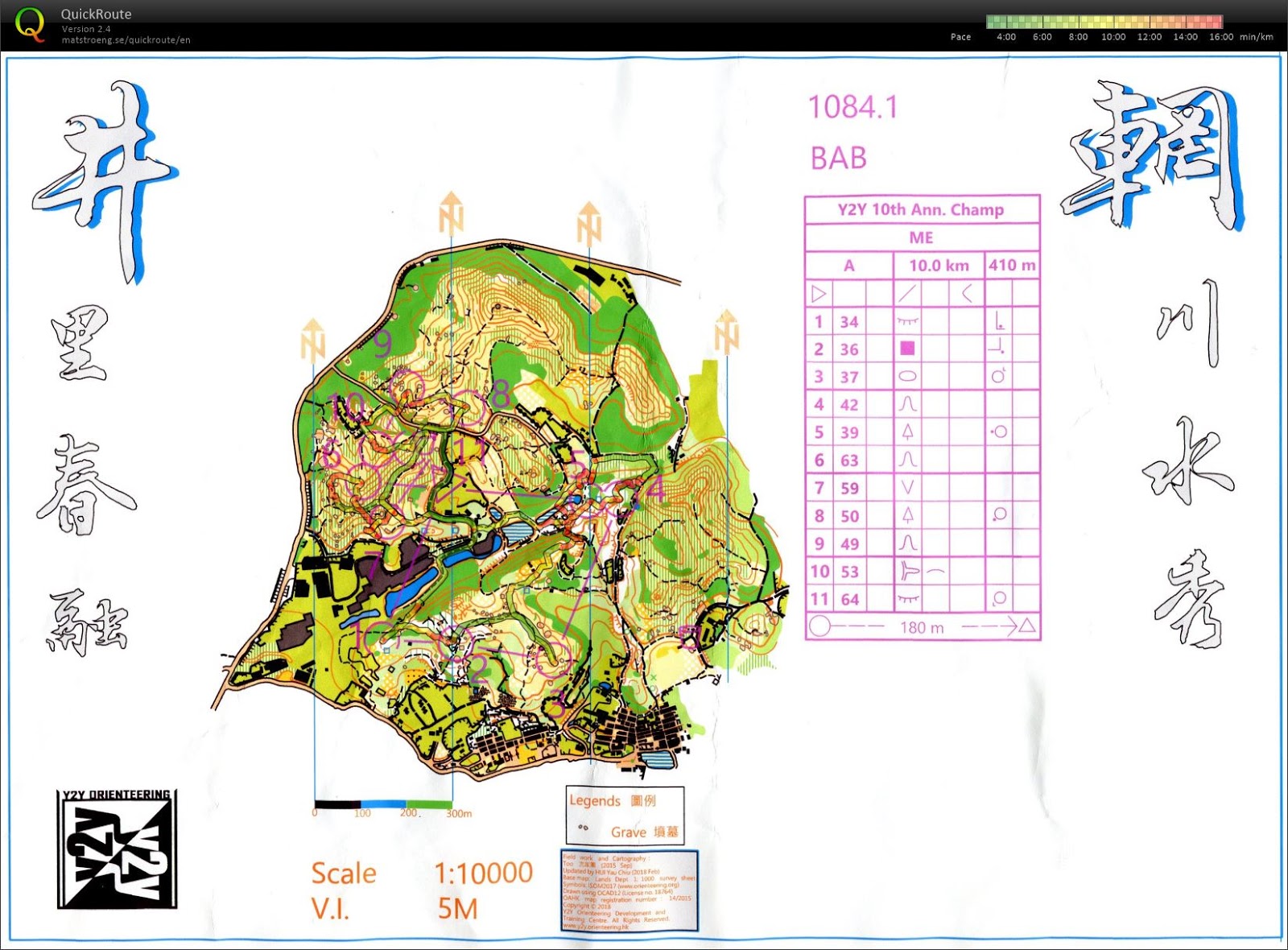
The following three maps show my branches:

Map 1

Map 2:

Map 3:

Each map has three letters on it. For example, in Map 1, it has BAB. This means the first segment is on Branch B, the second segment is on Branch A, and the third segment is on Branch B. It may not be useful for the competitors during the race, but the letters can be used to compare the legs when the competitors want to discuss them after the race -- find the map with the same segment and same branch, and then talk about it.

For those who are interested in math concerning counting, there is a general formula to calculate how many map combinations are available, if we know the number of segments (say m), and the number of branches and maps (say n), given that each segment has the same number of branches. The number is:

(n!)^m

For 3 segments with 3 branches each, there are 216 combinations.

Below is a nerdy explanation of the above formula, so you may skip to "post-race comments" unless you really want to know about why.

In each segment, the first map has n branches, so there is n possibilities. In the second map, one branch was chosen, so the second map has (n-1) possibilities. Similarly, the third map has (n-2) possibilities, and so on. This explains n! (= n(n-1)(n-2)...(1))

When adding another segment on a segment, a branch on one of the segments is independently connected to a branch of another segment. Thus, numbers of combinations for the two segments are multiplied to each other. This explains the ^m term. 

Post-race comments

It is a nice course. I just made too many mistakes on Map 1. When I want to the map exchange area, I saw only 3 other people not taking Map 2 yet. I think I did much better on Map 2 and 3.

The three branched controls in the third segment were very close to each other. It is easy to visit the other one if the map is not read carefully.

This is the first time to know that my SI card (the device that collects my control punching sequence) can only store 30 controls. In Map 3, I began to not hear beep at the control unit 41 (my 5th control). Thinking the unit may be malfunctioned, I used the spare mechanical punch to punch on the map (you can see the punch holes on Map 3 above). When I went to the next control, I could not hear beep either. I began to realize that it might be my SI card problem, so I used the mechanical punches all the way to the end. Fortunately, the results of my race got accepted. I was the only one who had this problem, since I used an older version of the SI card (SI-8). It is interesting to see that after I bought this for more than 7 years, this was the first time that I encountered the card memory problem in an orienteering race.

The organizer told me that it was time to replace the SI card. The new SI card can store more than 100 control numbers. If someone can tell me whether I can upgrade my SI card and how, it will be appreciated!

Friday, February 16, 2018

A proposal of zero-answer tolerance in trail orienteering

(Note: I will be out of Facebook for a month and a half, until Easter. You may contact me by means other than Facebook and Facebook Messenger)

One of the most highly debated topic in an elite trail orienteering competition is that what constitutes a zero answer for a control point (i.e., among all flags placed around the control point area, none of them is correct). The reason is that a flag slightly placed off the correct location can be interpreted as a zero answer, even though it is not the course setter's intention. Since all measurements bear uncertainty, having some rules to specify what conditions should the answer be zero is important.

However, simply putting a distance uncertainty (e.g., zero means no flags are within 5 m from the correct location) is a mistake. For example, if a flag is put at an inside corner of a fence, but the control description says outside corner, even though the correct location is touching together, the placement of the flag is still incorrect. If only the distance uncertainty is used, the answer will be considered correct (not a zero answer). Intuitively, there are other factors that affect how the answer for a control point should be zero.

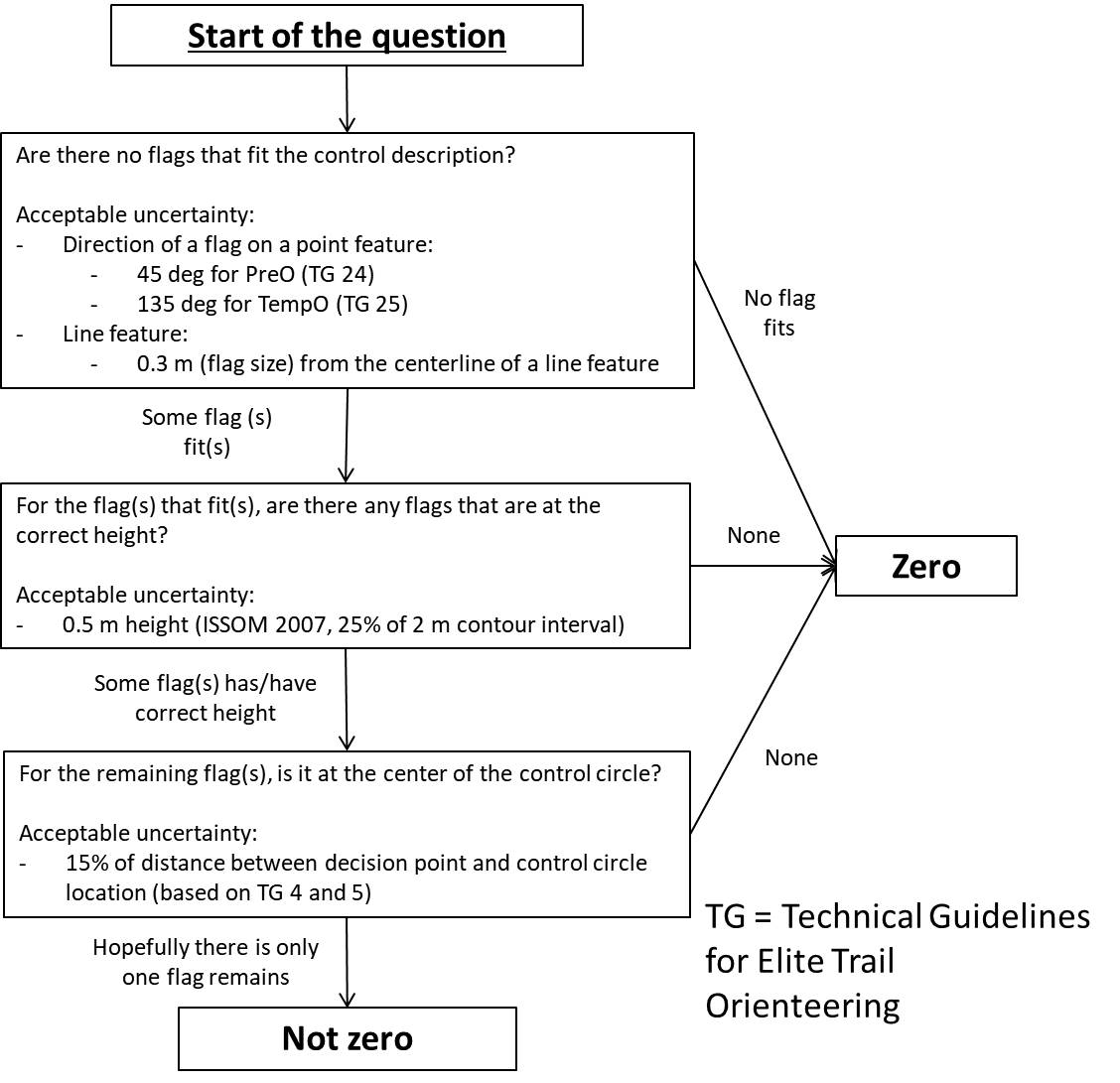
Thus, by considering other factors, I propose a flowchart on the zero tolerance. Note that the distance uncertainty is considered after the control description and height are considered, not the other way around.


Please feel free to comment!

Updates 

2/17/2018
- The bases of the acceptable uncertainty are cited. The citations are from "Technical Guidelines for Elite Trail Orienteering"(TG) and from "International Specification for Sprint Orienteering Maps".
- Acceptable uncertainty for the deviation from line features (related to control description) is included.
- Acceptable uncertainty for distance is updated. It is no longer described as absolute uncertainty (4 m), but as relative uncertainty (15% of distance between decision point and control circle).

2/18/2018

I was informed that there is a comment on the above flowchart. The comment comes from a person who is experienced in trail orienteering in the world:

I'm afraid these tolerances are far too close for me. 

The "one feature, one kite" philosophy is maybe a bit extreme for me, but it has the advantage of being easy to understand.

For the height example then for a Z I'd want the correct kite to be clearly in at least the next contour up or down AND for it to be at least a horizontal distance according to the tolerance specified (and that for me is an absolute minimum, there will be others who want things a lot further apart than that).

Also note that I think 45 degrees is too close since canes can lean in wind, flags can get blown around and Planners shouldn't want to plan controls where the control is SW or SE instead of S - in fact I don't believe having N vs S is good planning since if it is a point feature then by accurate map reading you've found the right feature so it is anoyign (sic) when you are tricked by the planner (although in TempO if BOTH are present then that is OK to pick the right one).
The bottom line is that Zeroes should be obvious, you should never have to think "is that close enough".
An ideal flowchart would be [is there a kite clearly at the correct location with the correct description] / YES: choose letter; NO: Zero.
After reading it, I think I should explain the following items:

1) The difference between course planner's and participant's perspectives

The zero tolerance flowchart is intended to be for the participants only. For the organizer, the distance between two flags (kites) may be increased to make answers (including zero) clearer. I agree with the commentator the tolerance flowchart should be the absolute minimum. I also agree with the commentator that "the bottom line is that Zeroes should be obvious", which echoes with TG (page 39). Yet, how the course should be set (course planner's perspective) should be different from how the question should be answered (participant's perspective).

The reason is that I notice that some course planners do not necessarily follow "one feature, one kite" philosophy. This usually happens when the question is intended to be solved by distance judging or by sighting lines. If examples are needed, go to page 13 and 15 of the TG. It is known that some course planners require participants to be more precise, while others think that "identifying the correct location with the correct description" is good enough. However, the participants may not know the type of course planer beforehand. I think that for fairness, there should be a maximum requirement of participant's map reading accuracy in a competition, whether we know the course planner or not. As long as the participants know that the flag is off because of placement location uncertainty, and not because of intended zero answer, then I am happy with it.

This is one of the reasons why I take the risk to write out the zero tolerance, even though I know this is a hot topic. This relates to my point #2.

2) The reasons to quantify uncertainties

In one competition, I read that one of the definitions of the zero answer is something like "there is a flag described by the control description, but the distance is substantial". As an engineering student, what do you mean by "substantial"? How large the error is considered to be "substantial"? There are good reasons to quantify uncertainties, which is to provide a ground to accept or reject a complaint. One reason that I propose this zero tolerance flowchart is to quantify uncertainties, as long as the flag is placed in accordance with the control description.
----------------------------------------------
I will here answer the rest of the commentator's concerns:

- The commentator raises a good point that the zero tolerance flowchart may be abused by the course planner for setting questions to trick participants, like intentionally put a flag on the SE side of a boulder, even though the Pre-O question asks for the S side (45 degree separation is the allowed uncertainty in Pre-O, TG 24). I think it is good to add a few sentences for the above flowchart to say that "the zero tolerance flowchart is intended for the participants to decide whether an answer is zero; the course planner will nevertheless make the best effort to place the flags as accurately as he/she can".

- Concerning the flowchart may scare away the trail-O beginners, we may still say up front, qualitatively, that the basic for zero answer is that it is supposed to be clear (bold it if needed). Then, for the details, read the flowchart.

- Concerning the height example, I put height as a higher priority than distance because some places in Hong Kong can be pretty steep. As an extreme example, one flag is placed above a cliff, while another flag is placed below the same cliff. Even though the horizontal distance between them is perhaps just a flag size away, the location can be intuitively interpreted as different. Separate the height element from the distance element allows height judgement questions in trail-O, where distance plays little part.