Sunday, October 15, 2017

Report on Lindy Hop Event - 2017 Singapore Lindy Revolution

(Negative energy alert: if you want to read about something about dancing is fun, don't continue to read. Part of what I wrote here will probably not making someone happy.)

I could finally take 2 days of leave to go to Singapore, for the reasons of experiencing a Lindy Hop dance event, as well as meeting a list of people that I have not seen for a while. I was struggling whether I should go or not for a while. Adding the flight, the event with evening dance only, lodging, and other living expenses, I expected I would use ~5000 HKD (~ 620 USD) for the 4-day trip. With the two reasons above, I decided to go.

I only got a pass for only evening dances but not the workshops because: 1) the workshops cost extra, 2) the workshops focus more on solo dancing, which is the area that I do not have strong interest in (I may write about why I like the partner part of the lindy more than the solo part of the lindy later), and 3) I would like to leave more time to meet with the people that I have not seen for a while.

On Friday night, I could catch up a one-hour solo class before the evening dance. After doing it, my view of a solo dancing class was still the same:

"why should I follow this routine?"
"I will probably forget the routine after going home, making what I learned in this hour useless"
"I do lindy hop because there is something unique about this partner dancing. If I do solo, what not just learn other line dances instead? After all, all those other solo dances are more popular in HK."

So, I longed for more on the social dance part. After being in several lindy hop events in the US, I have an item checklist in my mind that I would try to accomplish:

1) Dance with people that I do not know, and try not to dance with people that I know.
2) Dance with at least one instructor.
3) If not too expensive, try the competition that was once called the "Jack and Jill" competition (competition with unknown partner, reasons that the lindy community would like to change the name of the competition can be found in this link). Someone probably knows that I am not interested in "Strictly" competition (competition with known partner) at all.

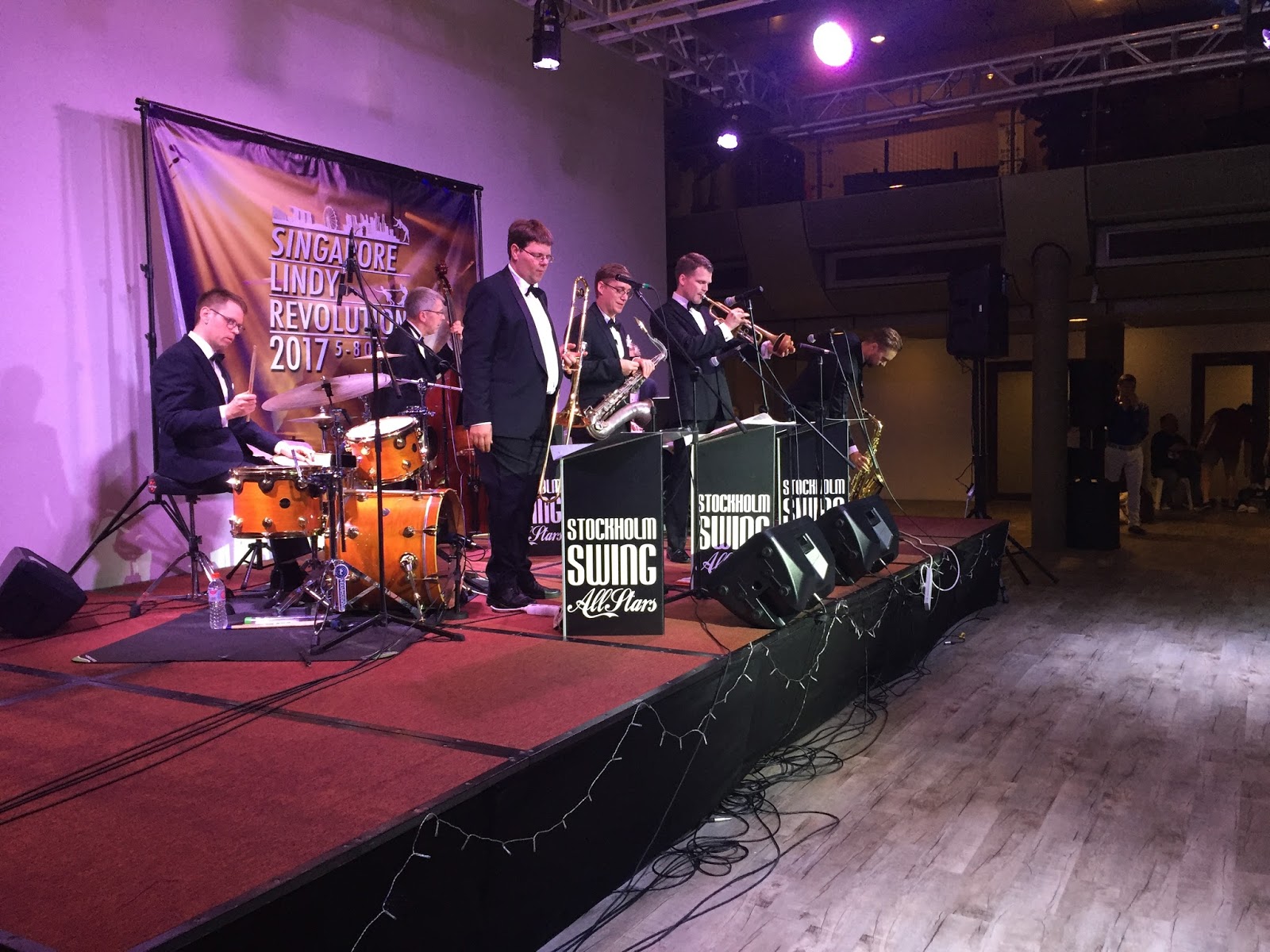
For Item 1), it was the easiest thing to do. Dancers came from places like Malaysia, Thailand, China, S Korea, and several others. The evening dances were well done. A band from Stockholm, Sweden was invited to play for all three nights. Barring from that music was repeated each night in different order, I think the band gave excellent music for people to dance with (I bet finding several bands overseas would be cost-prohibitive for me, so I would be generous on the issue of having the same band for 3 nights). The MC, Sinclair Ang from the local, was excellent! He even sang with the band for a few songs! With respect to the abilities of the follows, most of them are pretty good. The proportion was to a point that I was wondering whether there were any beginner-level people participating this event. There were still a couple of dancers that I found them to be beginners, but there were also a couple of dancers that I enjoyed the dance very much, and I thought their levels were beyond my reach (hey, didn't I write about this feeling before?).

Stockholm Swing All Star -- Excellent
For Item 2), it was a bit more difficult. There was not formally a queue to dance with the instructor, but it seemed to me that the instructors spent half of the time dancing with other instructors, and other time with more advanced dancers. Perhaps it was just an illusion when I was under some dance blues that weekend, and I probably should think that dancing with an instructor is a honored opportunity. In the end, I got a chance to dance with Caleb from New York during the weekend, and that was it. He actually came to Hong Kong for the social dance the week before, before going to Singapore, so I vaguely remembered his face. Thanks to the organizer, each instructor got to teach a group of us on a dance sequence on Friday night as a fun group competition. My group was with Alice Mei, a famous instructor from France. It was great to see the event organizer makes the event friendly.

For Item 3), I was often battling in my mind whether I should even do any competitions. I am not a dancer from the cream of the top, and I should not just compete for the others to tease at. However, the competition format that was called "Jack and Jill", and is now called in various ways such as "Luck of the Draw", "Mix and Match", etc., is fun. The dancers are judged by dancing with 3 different and random partners for the heat round. Years ago in swing classes, I was often encouraged to take part in competition. When I felt that my lindy hop improved in the last few years, I thought I should try participating novice competition, for fun for the most part and much less for the hope to win.

After participating the competition, however, I was concerned whether my own scene can support dancers that are not as advanced. It seemed to me that after the competition, these more advanced dancers stayed away from me.

Then, my thought went downward spiral: it seems to me that the more advanced dancers seemed to form their own circles, and danced with only these people. I thought about whether the more advanced dancers in my own scene can really support the newcomers.

With such negative but not fully substantiated thoughts, I was mentally burned out on the first night, as well as the subsequent nights, with respect to dancing. On Saturday morning, I really hoped that meeting old friends could balance out the negative feelings.

Sunday, September 17, 2017

9/17/2017 Y2Y公園定向巡迴賽2017 – 第二站 暨 香港定向排名聯賽(短距離) - 禾輋、瀝源邨

(此文將會不斷更新,因為相片和影片整理需時)

9月17日,是2017定向排名聯賽(短距離)的最後一場。幾天前見到比賽地點在瀝源邨,我竟會上港台翻看70年代的「小時候」,原因是拍攝地點正是瀝源邨。而且,從上次看「小時候」知道,瀝源邨是沙田第一個公共屋邨。在70年代,城門河可能才剛剛填海填成一直線。「小時候」有很多沙田的歷史片段,所以我發少許夢,看看可否在賽區找到「小時候」的拍攝地點。

其實是有經過的,MO組5去6會經過,以下是例子一︰


所以,我懷著懷舊的心情跑這場排名賽。即使交通對我三頭不是岸(搭港鐡去沙田或火炭,或搭182巴士,都要走一大段路才到賽事中心),我都對本賽事滿懷希望。而且還是Y2Y搞,心想Y2Y的主要人物許先生,經常被讚「必屬佳品」,所以應該好玩。

未走到賽事中心前,已收到遲15分鐘出發的消息。好,可以施施然地走。在賽事中心吹幾句水,再喝多一些水,就要走很遠的1.5 km到起點。不過,今天真的太熱。到了起點就想喝水,不過,周圍都無水,而且出發時間又遲多5分鐘。我走入最近的商場和球場,都沒有水機。只好回起點等。

今天又用SI-AIR指卡,心想「好了,打point不用停下」。這次指卡又沒有壞,好好享受SI-AIR的樂趣吧。

這是MO組的地圖︰


出發開頭還不錯,頭4個point都沒有多大問題,只是第三個point好似要指卡很近個point才算打point成功。

不過一到第5個point過橋後就出事了。那麼多路不准橫過,還有一條很重要的橋不准過。那只有轉左,然後過兩條橋。可是,過了一條橋就會進入商場。定向是不能進入深灰色的建築物的。所以,我要先下樓梯到地下,跑到另一條樓梯再上橋。在橋上想跑的時候,又有大批假日的人群。心想︰何必設計一條這樣的路線去誘人犯規呢?要捉,就要用很多人手去捉,因為有太多對犯規者有利的route choice了。

去6繼續用天橋。如果不是趕時間,就會經過多個「小時候」的拍攝地點。由6和7開始,不知為什麼打point不能用隔空形式,只能用插孔形式。預了自己不用減速,結果要停下打point。

到8,頂!又要跑過兩條橋的路線?很悶。接著,發覺越來越多point不能隔空打point。到第10個point時,我開始想橋下是否可以過呢(因為沒有紅色間線)?所以,我嘗試橋下過路,反正有安全過路處。結果,我不是在橋底過,犯規。

到最後幾個point已經沒有什麼心機去跑,經常擔心有沒有犯規,亦擔心指卡感應不到個point。在第14個point,指卡不只隔空打不到,連插孔都感應不到,插了我三次才有「嘟」聲。

結果,在跑了不少因要守規矩而冤枉的路下,用了27分鐘才完成。

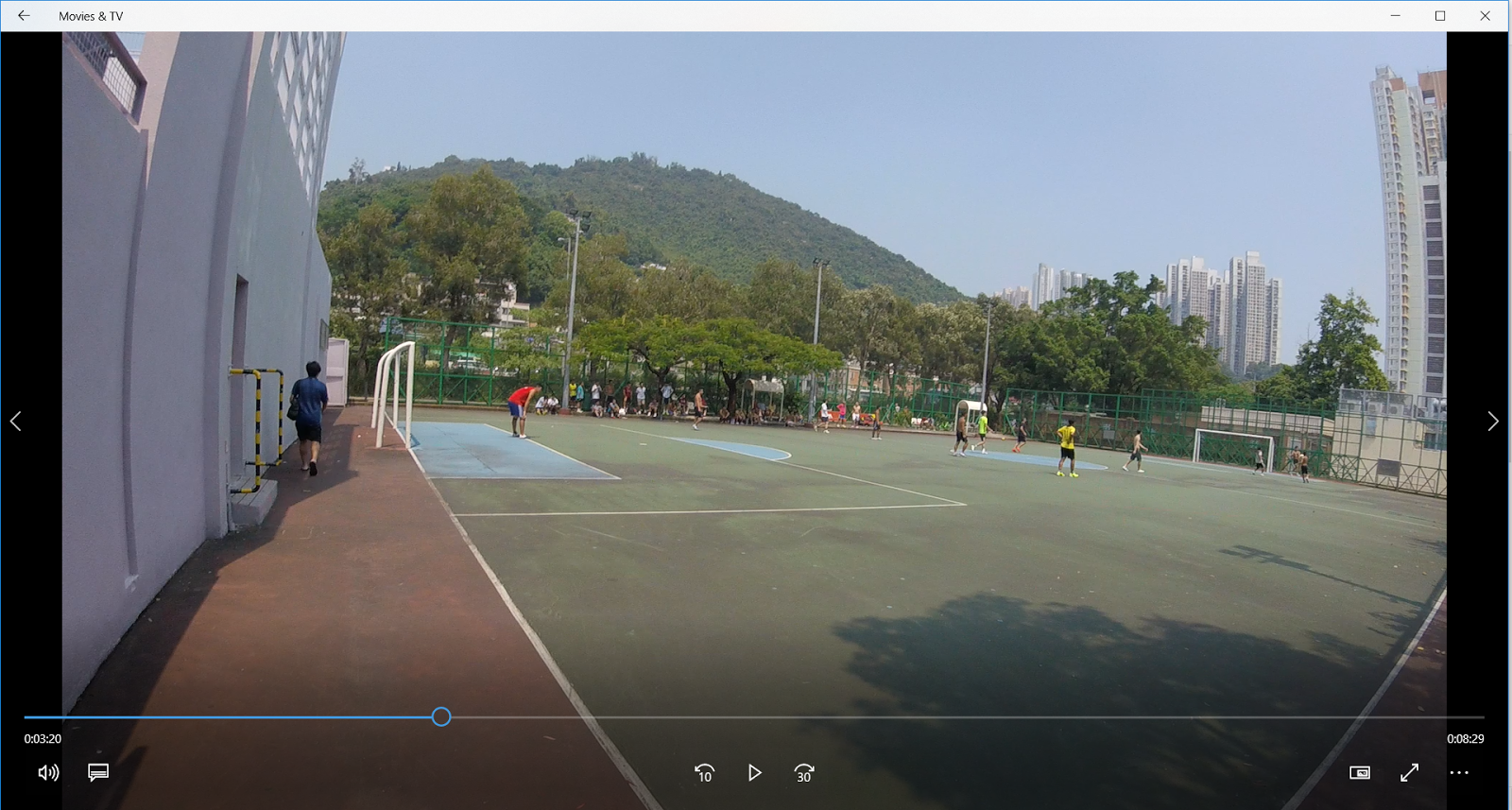
以下是我head cam的video,試找出其他犯規之處。我想我起碼有兩處犯了規。


以下是我的路線︰


賽後,我相信一定有很多人討論。為什麼要誘人犯規?要人犯規,你們有人手去捉嗎?在這個賽區,因犯規所賺取的時間,實在太吸引了。

另外,為什麼那麼多point不能隔空打point?對一些plan定接著幾個point怎麼跑的人來說,不用減速來打point可以省時間。

有人又說,起點沒有賽員出發時間,沒有叫某出發時間的人入格。那麼,如果在起點不記得出發時間怎麼辦?賽事中心又離起點那麼遠。

結果,這場排名賽的成績除了最年輕那組外,全部取消。為什麼Y2Y今次賽事會搞成這樣呢?不是「必屬佳品」嗎?

其實,跑完並不是這麼不高興。能夠在這個有歷史的地方跑定向,是一個榮幸。只是,很多人對排名聯賽有一定的要求,所以會有那麼多人有意見。

Sunday, June 18, 2017

Out-of-town dance report - Swing Canton Anniversary

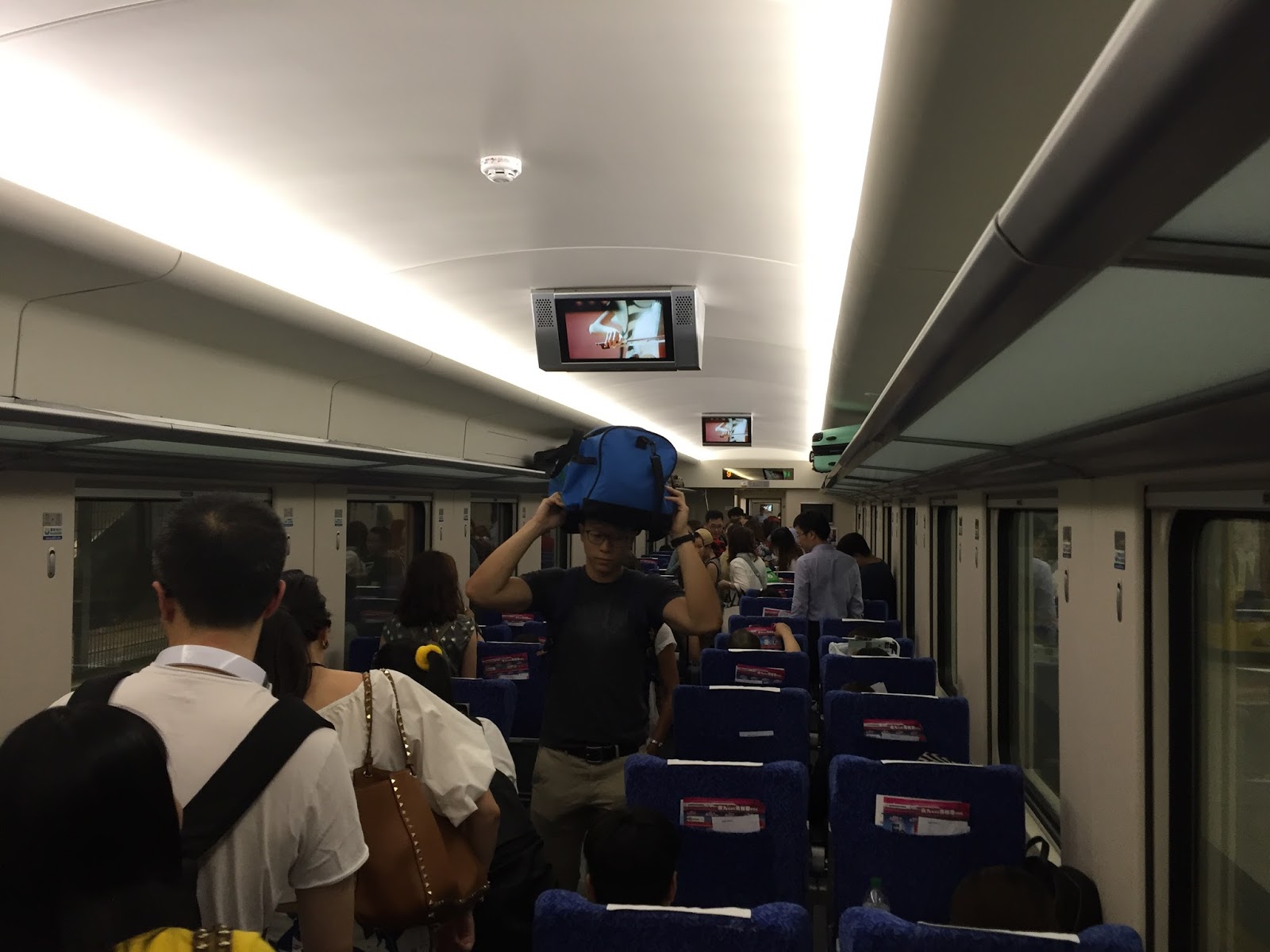
On June 9 (Fri), 2017, I was with a group of swing dancers from Hong Kong to take a train to Guangzhou for a swing event - Swing Canton Anniversary. The train ride was about 2 hours. When I was a kid, taking a train for two hours was very long. After travelling in the US often, I feel that such trip is now not a big deal.


Once we got to the Guangzhou East Station, it was already past 9 pm. We lined up for taxi and went to our places to stay first.


I was with 3 other guys - Toby, John Lie, and Angus, living in an interesting service apartment. The place is a typical multi-floor apartment building. However, since there are often rooms in the apartment that are not sold, there is a kind of business of renting these empty rooms for travelers. Our plan were to have 2 people per room. Each room has 2 beds. In reality, there were 3 beds in one room, and the place was large. The rent was inexpensive. It was ~ RMB250 per person per day.


When we got to the dance venue, it was already 11 pm. The distance between the service apartment and the dance venue is quite long. The Jack & Jill competition (some may prefer the term "Mix & Match") was already started. I wish I could be early to participate, since I like this competition format the most. I am not very serious about the competition, but this competition format has some social aspect that I like. I probably do not know the partner, but we can introduce ourselves before we make the dance work. To maximize the worth of going outside to dance, I think it is important to dance with people that I do not know.


I stayed and watched the competition. The three guys that came with me decided to have dinner first, since we all did not have dinner before the train ride. I was hungry, too. However, I found snacks and drinks on the side of the dance floor, so I made use of them to maximize my dance time in Guangzhou. The mission of this trip was to dance, and not anything else.

The following video was taken during the Jack & Jill competition:


During the open dance between the heat and the final of the competition, I chose to dance with people that I did not meet before. It was great to see some HK dancers thought in the same way. At one point, I randomly met Yancy, who was one of the instructors in the HK swing scene. She immediately asked someone else to dance, and told me something that I should dance with other people. I was not only not offended, but I felt that should be the spirit of attending a foreign dance event!

While this event was organized as a weekend workshop format, most of the people from HK (including me) would not participate in the workshop. I was told that the workshop was tailored towards the beginners. Since workshop costs extra, I would just treat this event like a lindy exchange. Still, when there are instructors participating in a workshop, I would be happy to dance with them once.

This time, I met someone who seemed to be a pretty good dancer. We danced a song, and she seemed to like it a lot. Thus, we introduced to each other. When I heard that her name is Ari, I felt that I was honored, for I was dancing with one of the instructors in this workshop. I guess Simon and Ari are on the way to be famous in the world of swing dance professionals. They won the advanced strictly competition in the Camp Swing It 2017 in South Korea, and they seem to have a tour of instruction. They taught in the Swing Canton workshop. The week after, they also give a workshop in Hong Kong. Ari would like to dance one more song, so we danced one more.

Toby, John Lie, and Angus could watch the Jack & Jill final after their dinner. A few more songs later, however, the dance concluded and we needed to go to the late night dance venue, which was within walking distance from our service apartment. The venue is a bar. We danced till 3 am there. The organizer wished the dance could be longer, but bars in Guangzhou closes early.


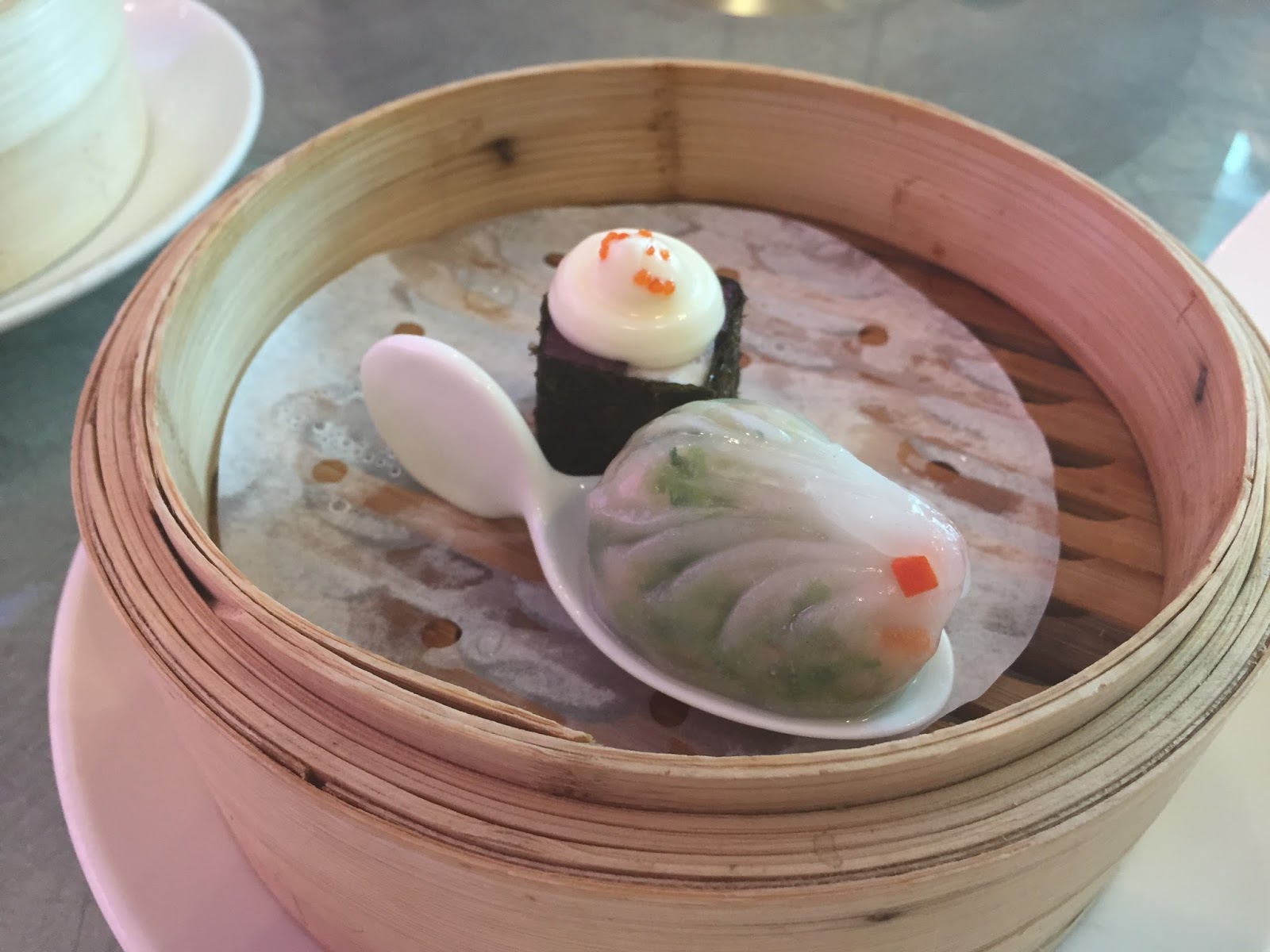
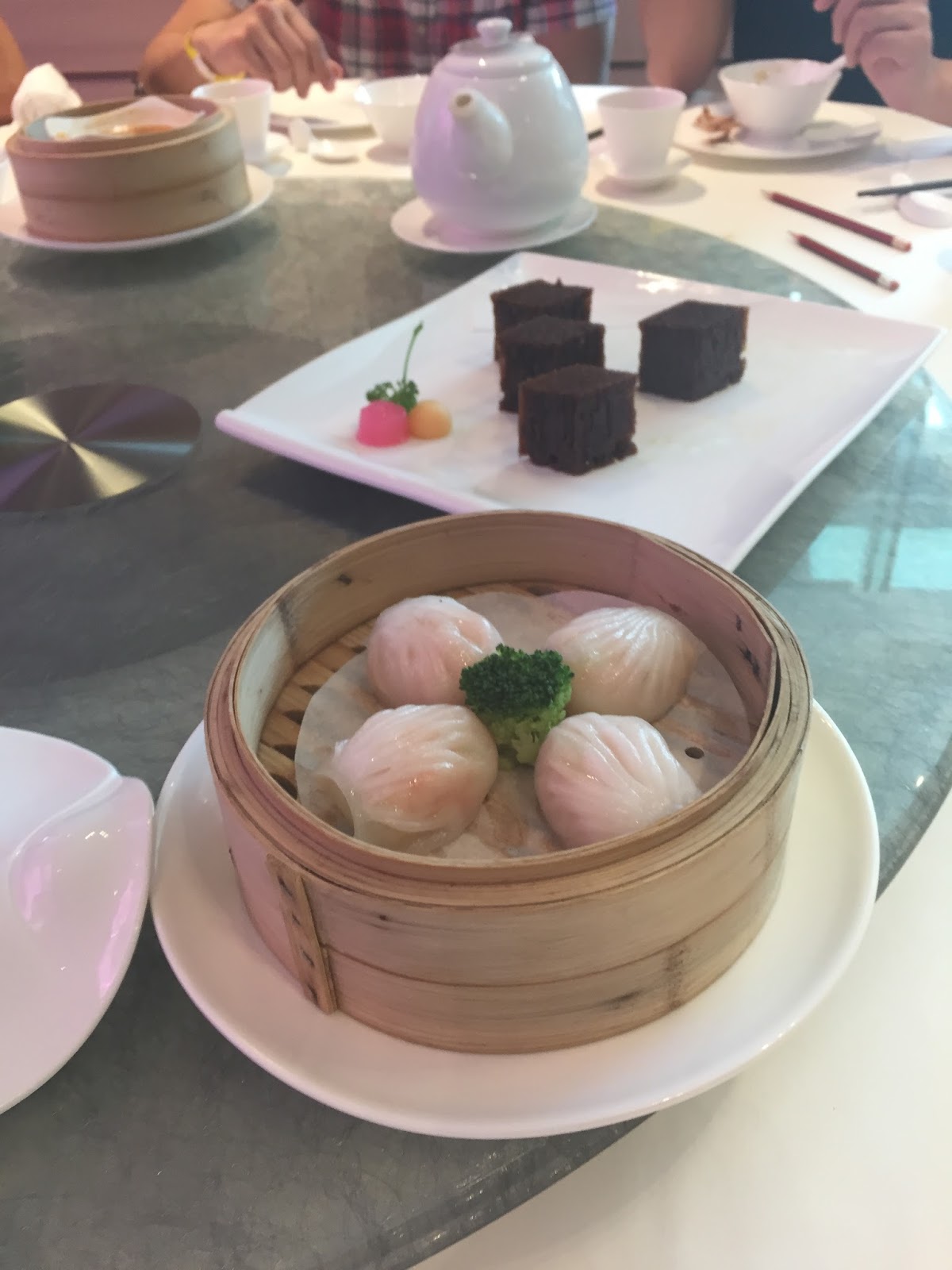
On the next day, the Hong Kong swing people met at a dim sum place in the afternoon for brunch. As usual, people would be still sleeping in the morning. The food was not only good, but was also decorated well. This is something I seldom see in Hong Kong dim sum.


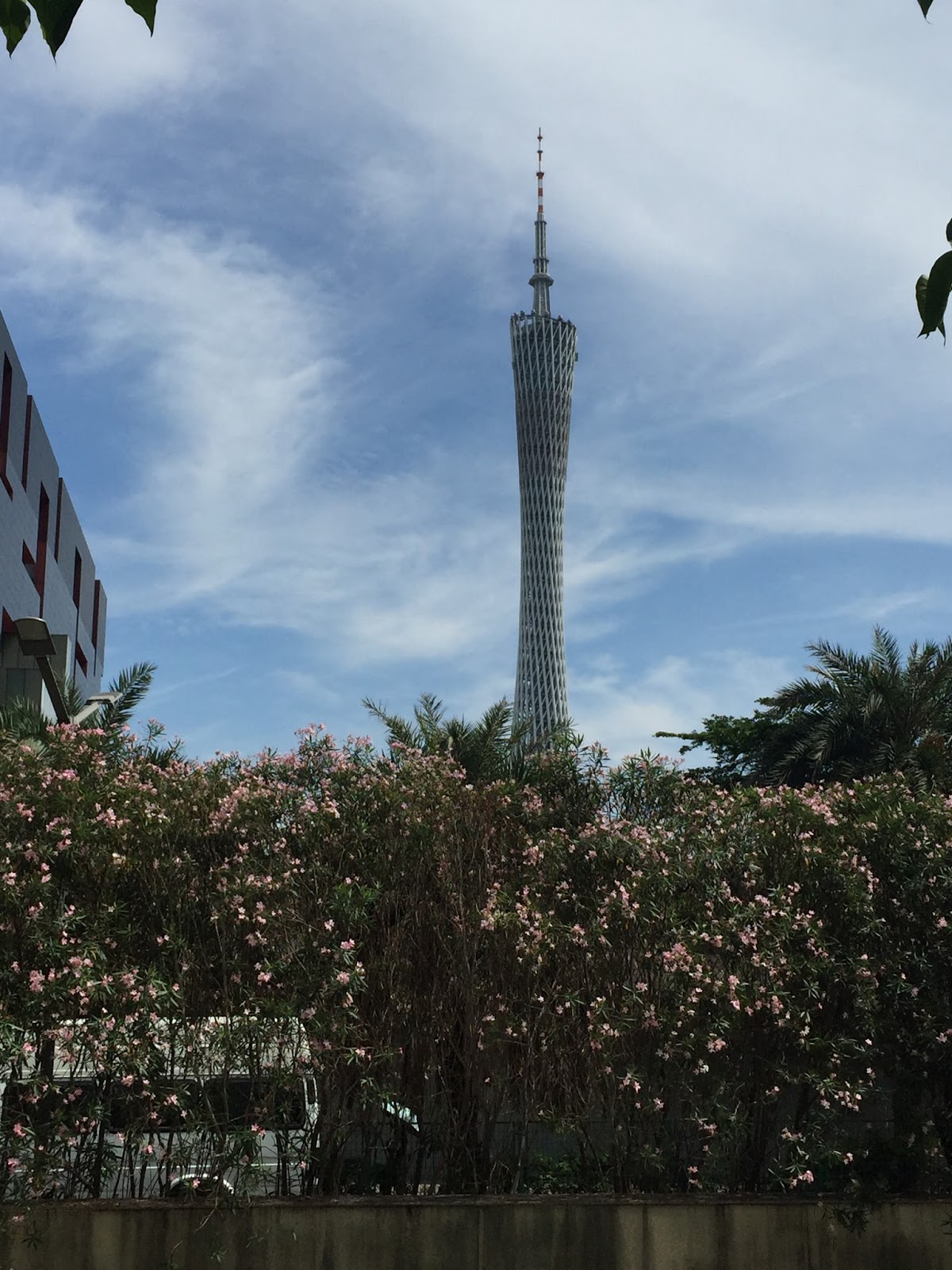
We four guys were then walking around. This is the Guangzhou Tower. I was just leading them to a geocache nearby.


In the afternoon, people split. Some would like to get massage, while others would like to go shopping. I just went back to sleep, since I wanted to spend as much time for dancing in Guangzhou as possible. Before taking a nap, I took a picture from where I stayed.


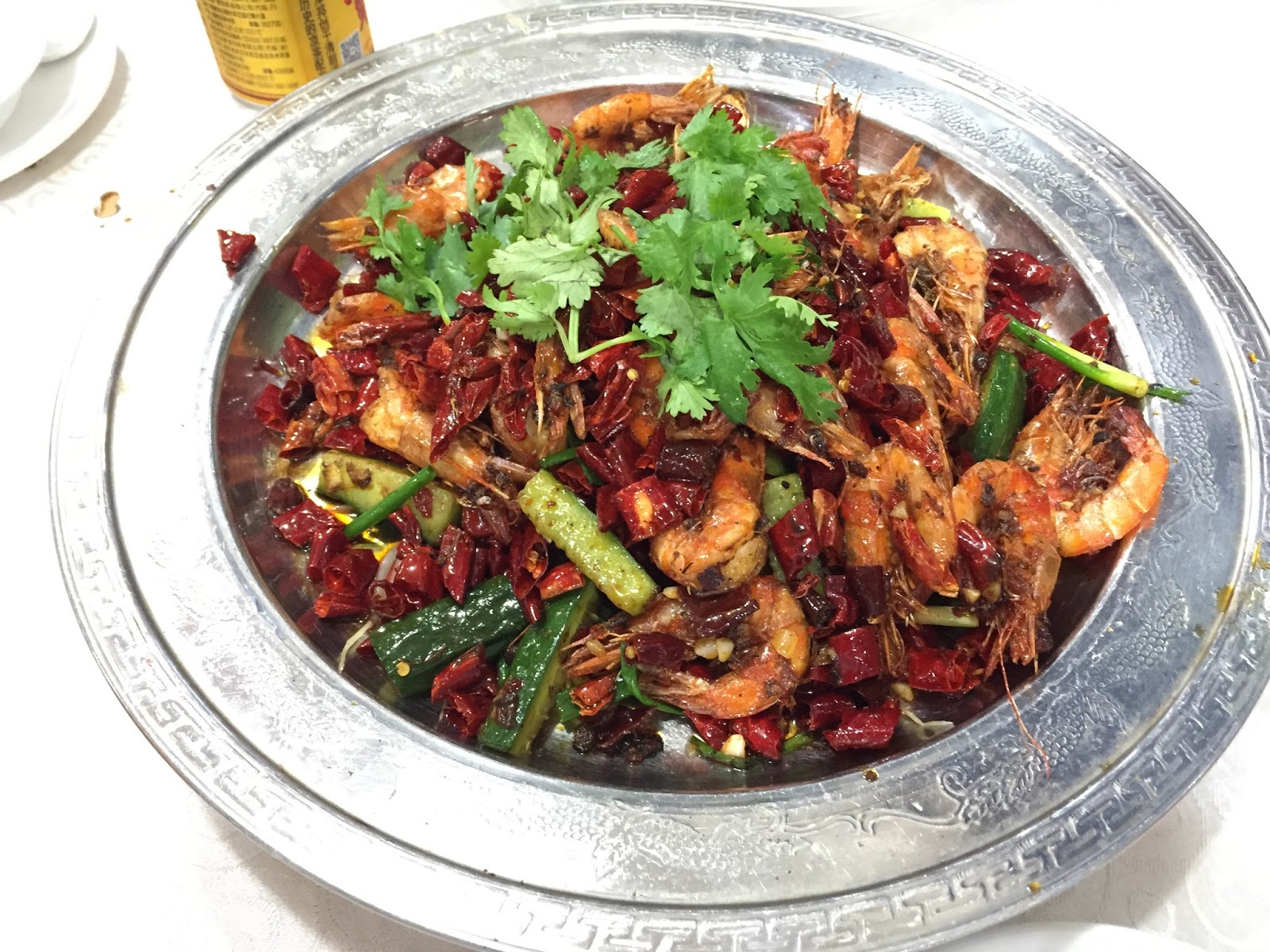
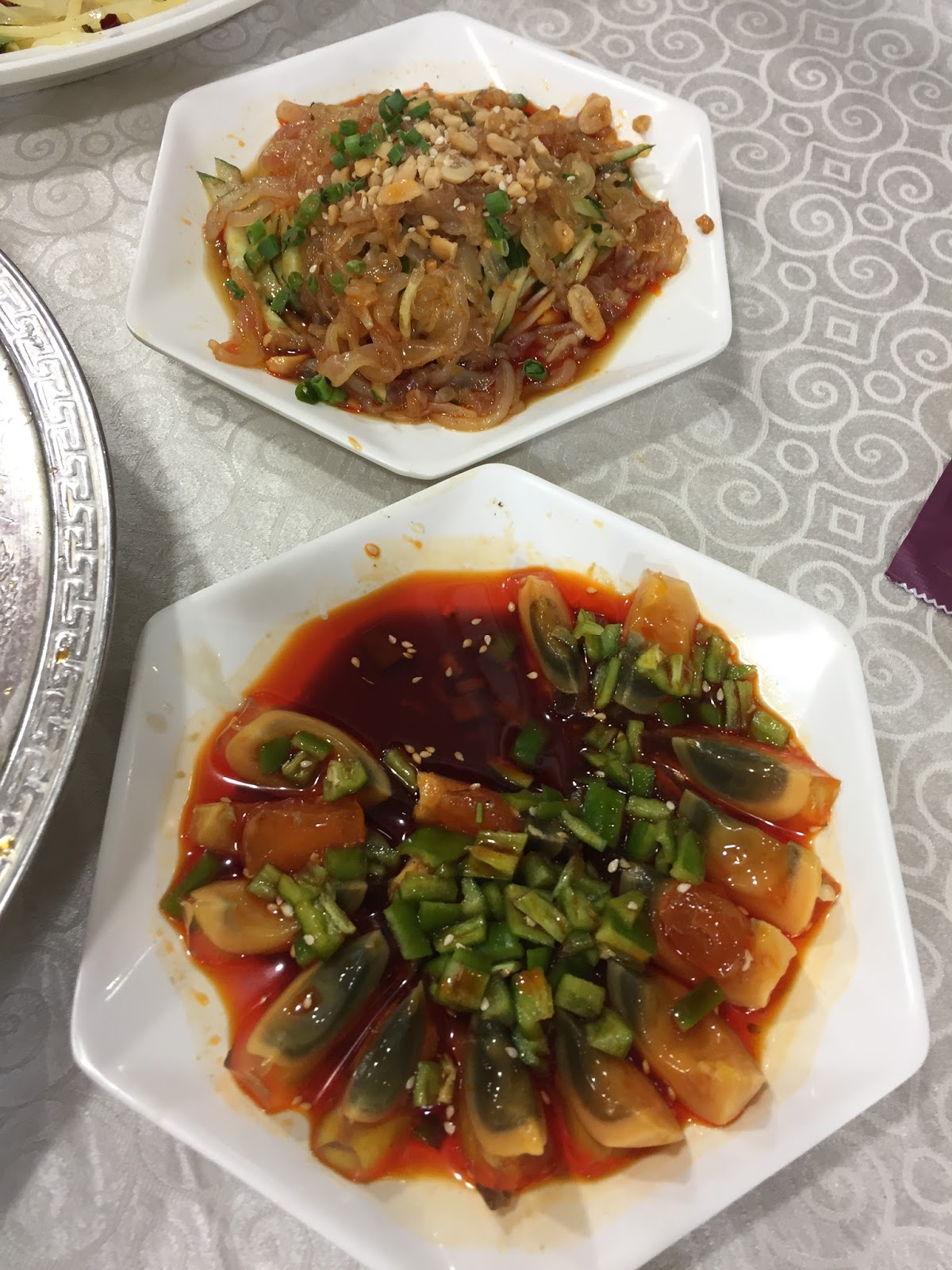
In the evening at 6 pm, we four guys went to a Sichuan restaurant for food. It was great that all four of us could eat things that are a bit spicy. Great restaurant choice!


The Saturday dance and late night dance were quite similar on Friday. There were strictly competitions. There were performances. There were a fast lindy competition that I thought about joining, but seeing that no Hong Kong people join, I held back and did not do it. This thought made me feel strange. Having a group to do things together is great, but having a group for everyone to conform to a standard is something that I have a feeling of concern.

This trip, I also met a person that I knew I have seen him before, but he probably did not know me. His name is Yulai.

I heard of his name before I left swing for a while in the US. In 2013, when I was with a group of swing dancers from the UIUC travelling to Purdue, I saw him often got into finals of the competitions, along with my UIUC fellows who became advanced dancers so quickly. I was amazed with what they could do, but I knew that I could not do yet. We did not formally talk. I thought that I was not inside that swing circle.

Now, I met him again in another country, but my thought about swing dancer was a bit different than 4 years ago. I felt that I could say hi to him, and he is actually pretty nice. Although we still did not talk too much (if he wants to know about the recent swing scene in Purdue, I could say a few things), I feel that we may still meet in the future, if I attend more swing events around Asia.

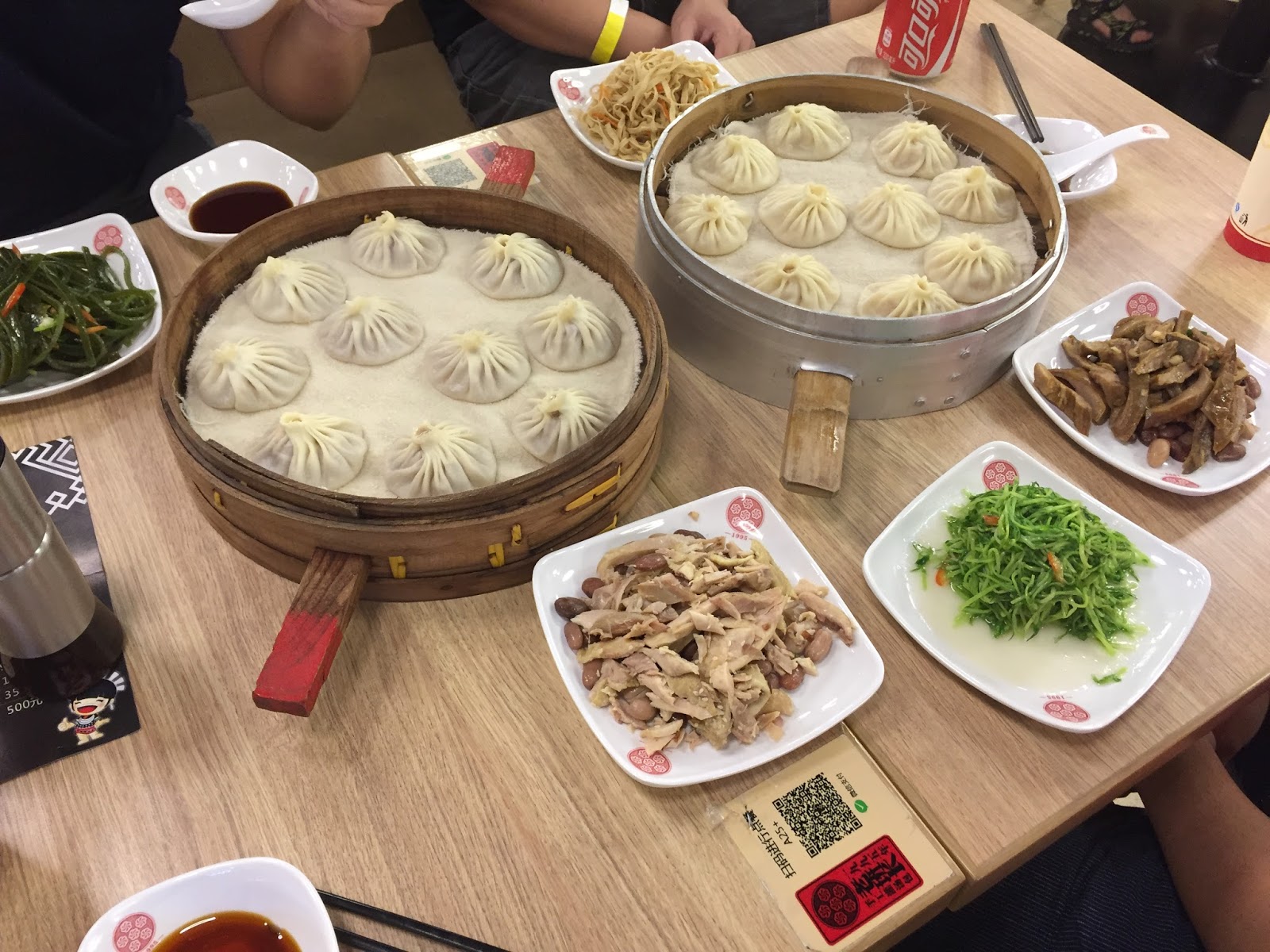
On Sunday, before I left Guangzhou. We four guys had a good lunch for many baos.


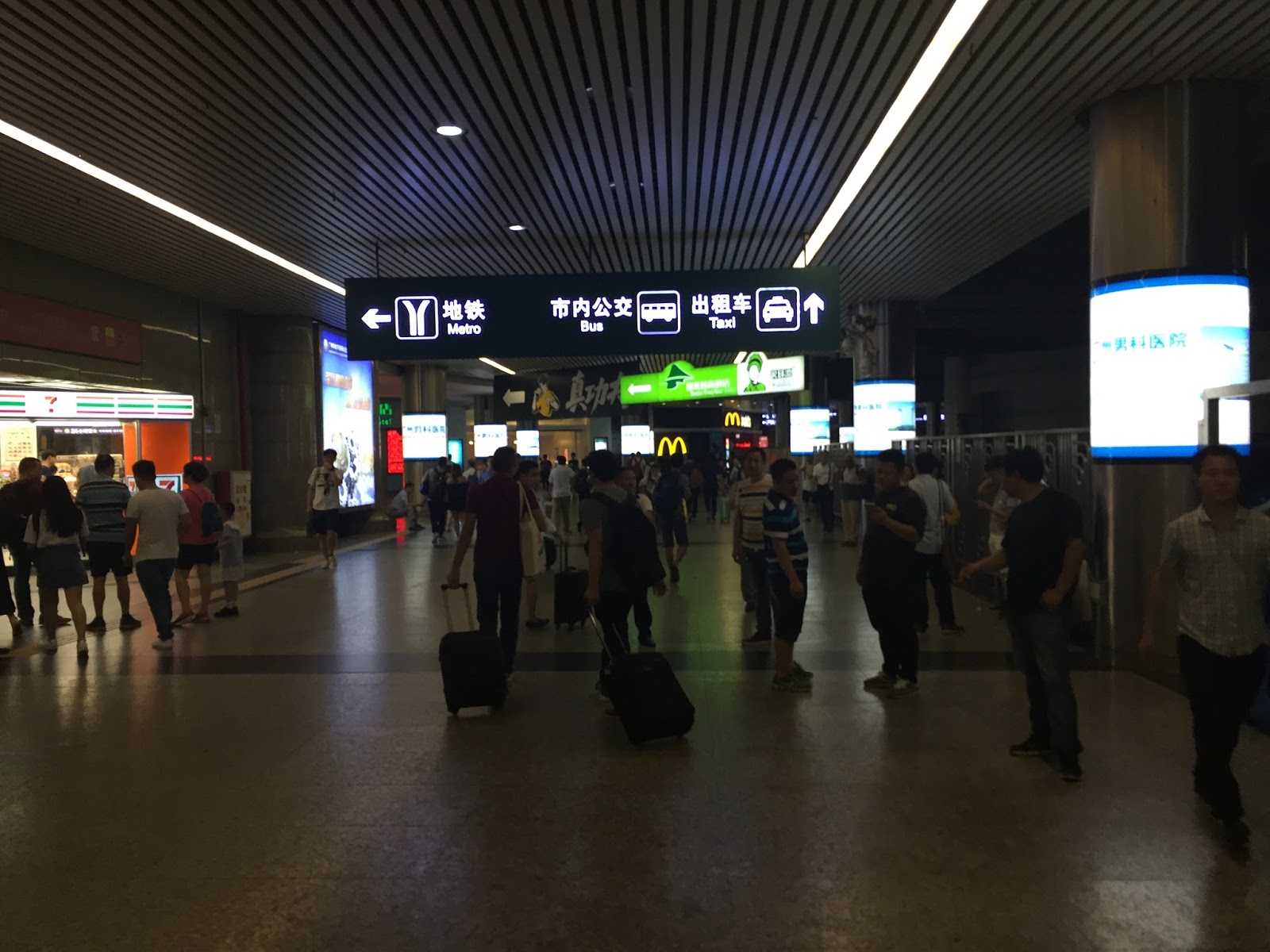
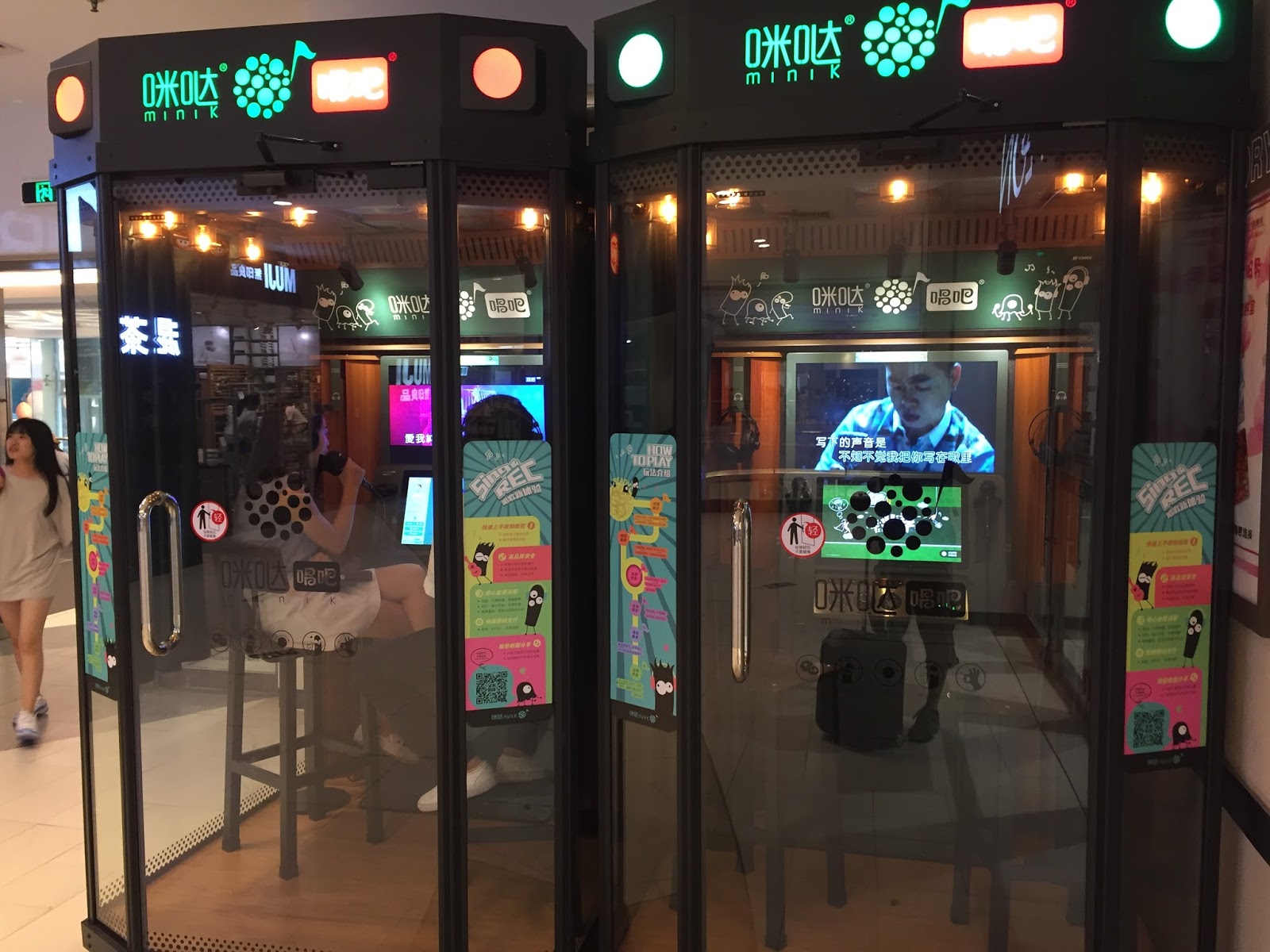
Then I went to the Guangzhou East Station alone. While waiting for a train, I found this booth for karaoke. Interesting.


Then, I took a fast train back to Shenzhen, and then back to Hong Kong.


After this trip, I got an experience on how I fit into a swing dance scene in Asia, and what possible issues that I may face.

Monday, May 29, 2017

5/24/2017 World Orienteering Day - photo questions, running after rain

On last Wednesday, it was the World Orienteering Day (WOD). Different countries organized different orienteering events on this weekday.

It was brutal for the organizers in Hong Kong. In the morning, the Hong Kong Observatory put the first Black Storm Warning of this year. Rain was heavy at many places in Hong Kong. When I left home in Sheung Wan, I spotted a few checkpoints labelled MetOC. With the rain, I wondered if anyone would bother reading the checkpoint information on the street.

Photo Hunt

There was one WOD event that did not require to go outdoors. There was a photo trail-O event on WOD, asking participants to identify the correct checkpoint flag in 25 pictures. The following link shows the photos, the maps, and the solutions.

 https://drive.google.com/file/d/0B68fxJcatQoBdDNpcEFDN0NwZnc/view

I played it when I was communing in subway (MTR) to the office in the heavy rain, and completed it during the lunch time. There were a few questions that I hoped I could find an alternative way to verify my answers, which told me some time.

I was happy that in the end, I got them all correctly.

Sprint-O in Victoria Park

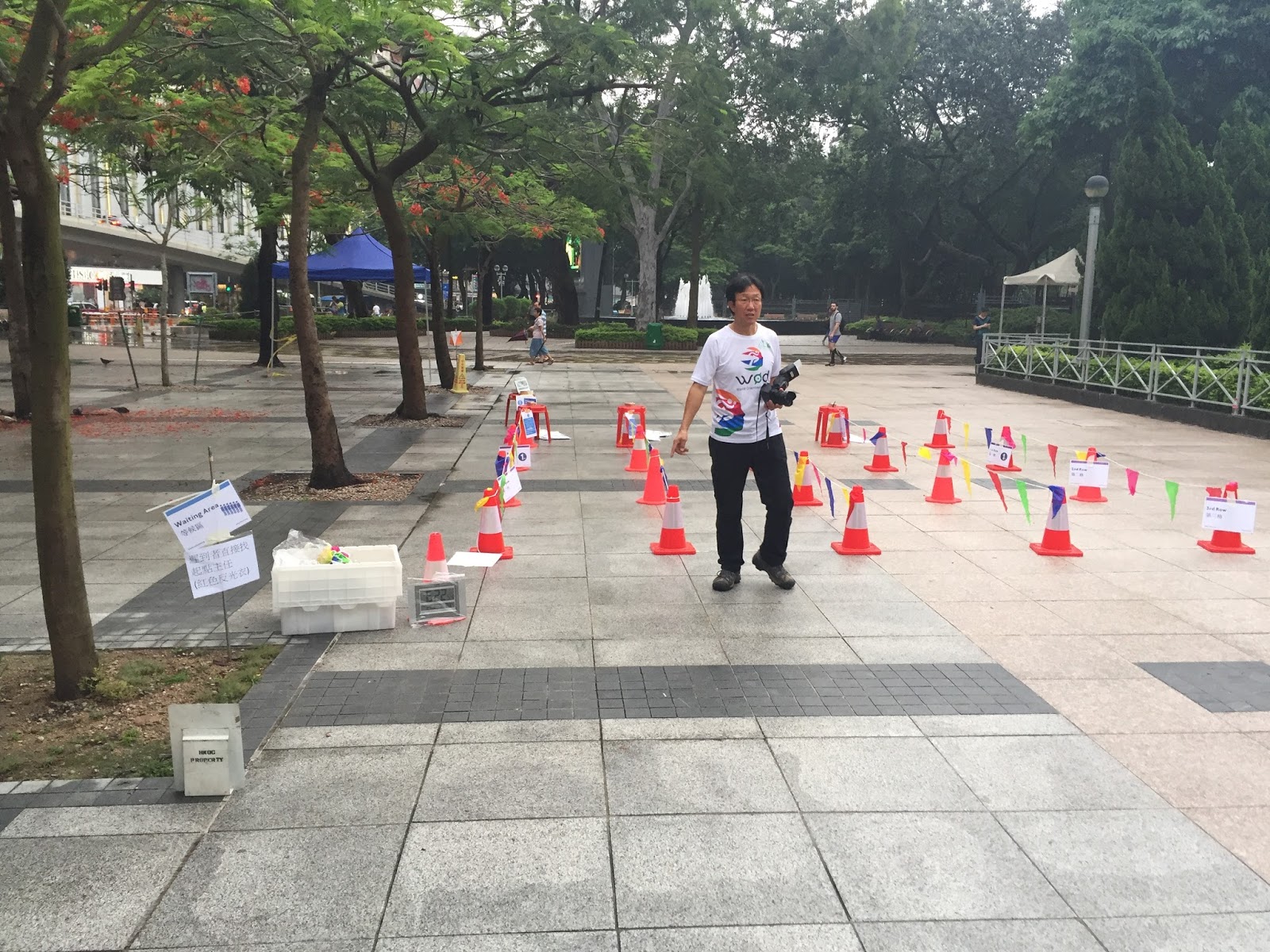
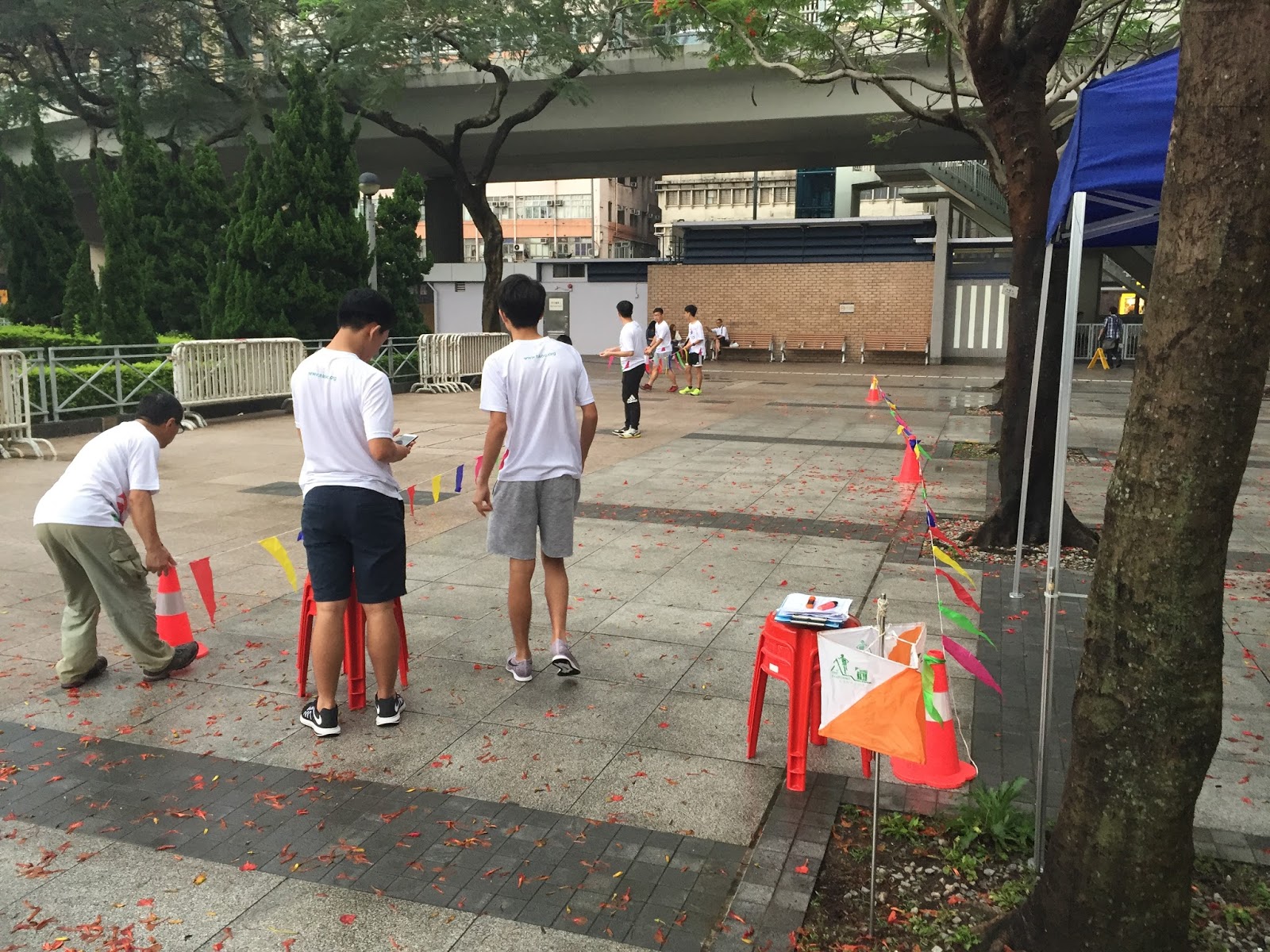
The sprint-O happened after rain. Fortunately, I did not need to work OT in the office on that day, so I had time to change my clothes in the office for this event. The photo below was the event center:


The next picture was the start:


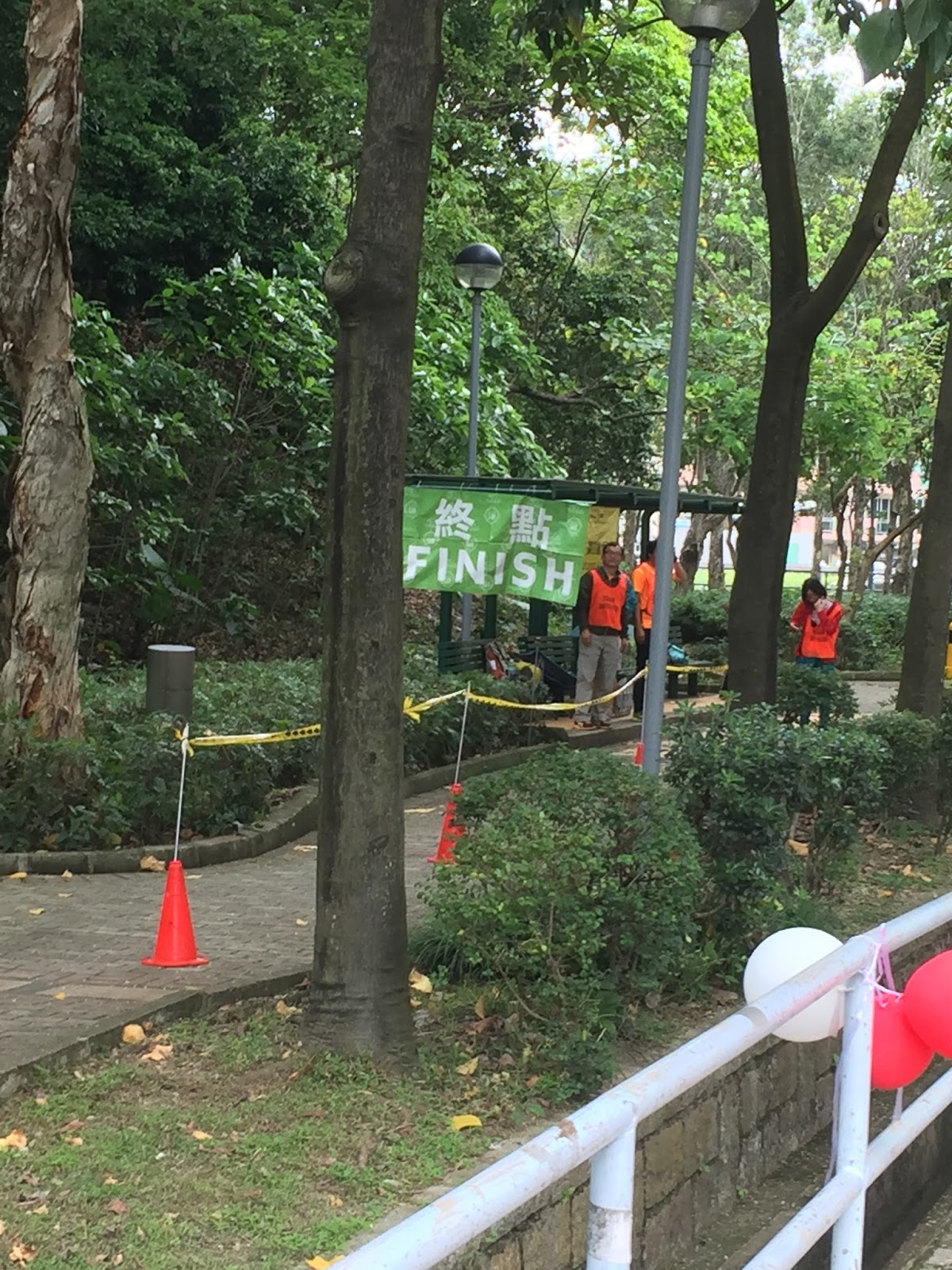
The next picture was the finish:


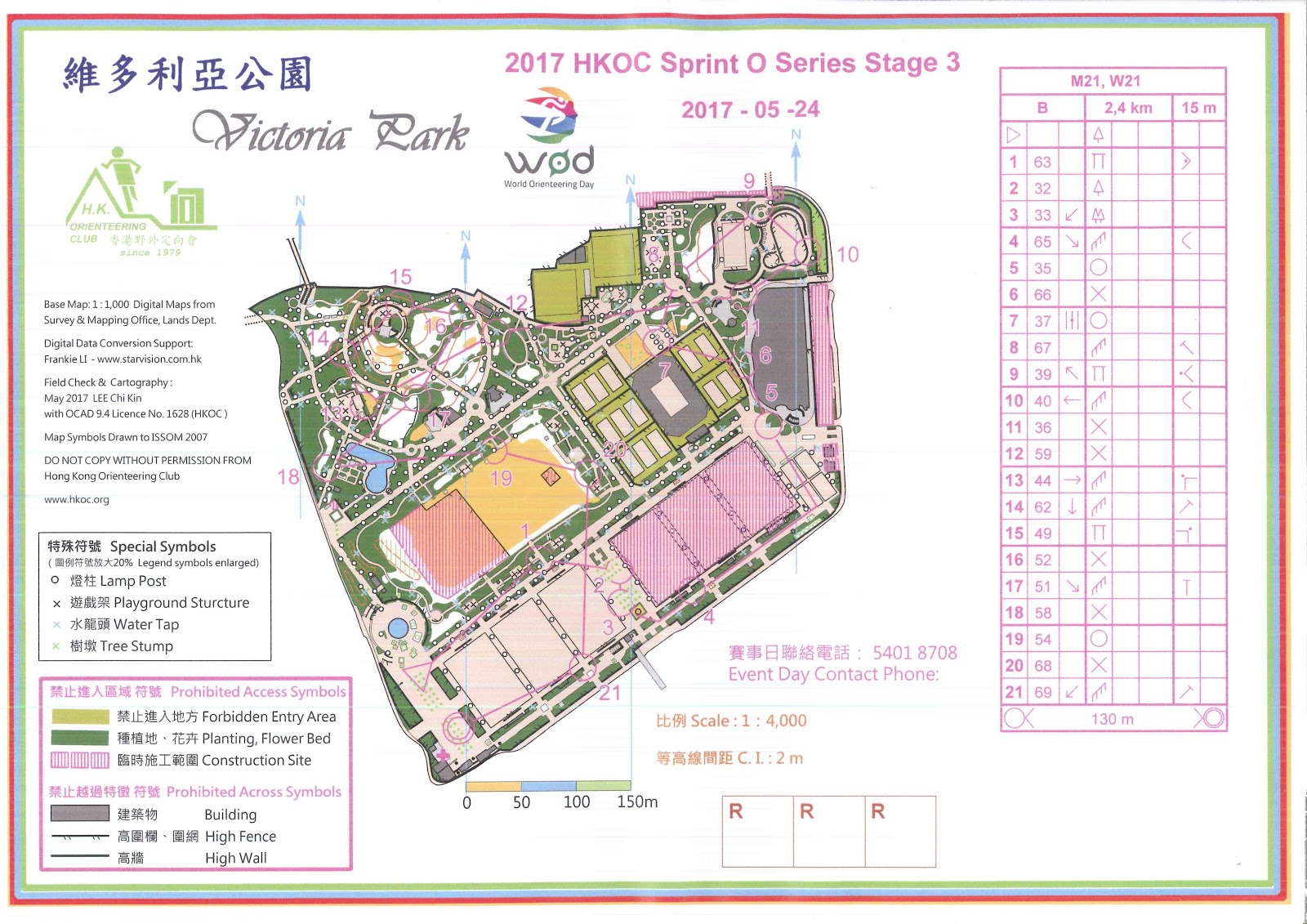
The following was the map of the event (for M21):


Here is my sport camera video:


In general, I was not satisfied with the result. This course could sometimes be tricky. Perhaps I was tired after work, I made many wrong decisions (#4, #6, #9-11, #17). especially #9, where I ran out of the map.

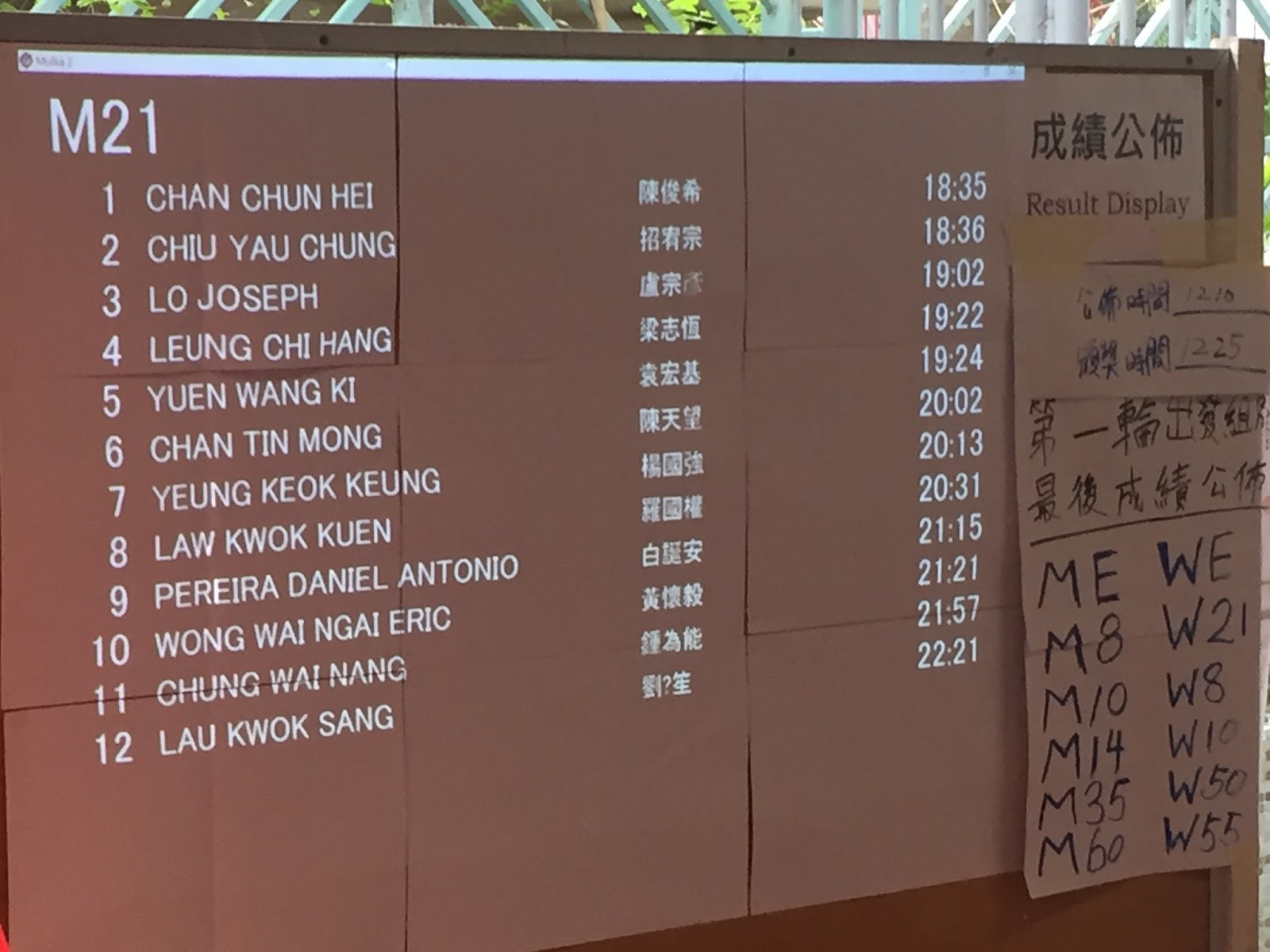
In the end, however, I got a third place. I started to see the pattern that while map reading and navigation skills are important for sprint-O, running speed is more important. I hope that I made less big mistakes in the future.

5/21/2017 Sprint-O at Fung Shue Wo, Tsing Yi, HK

The day after the wedding, there was a orienteering ranking event for sprint. Ranking events not only decide the annual overall ranking of the competitors, but for M21/ W21 competitors, they also decide whether the competitors can enter the elite group (ME/ WE).

This ranking event occurred in Tsing Yi. The event center was at a school. The following video shows the surrounding of the event center. It showed the official time, the result processing station, the real-time result display, and the number bib station.


Yesterday's VIP, 40,000, was also in the race, despite the wedding ceremony:


The start was outside a park. Each lane was for different competitive group.


The map for M21 is as follows (see the enlargeable map here):


Before the race, I did not check who was 1 minute before me. When I checked the video, I realized that he was one of my orienteering mentors: Ricky Law. In fact, I followed him most of the time, but I did not realize it. Thus, I will refer to the annotated map and the YouTube video often.

The annotated map (enlargeable map here) shows my route in orange, but I also show alternative routes in purple and red.
The YouTube video is my sport camera record.


To #1, I suddenly stopped in the middle of the road because I thought the road was not legal to cross (red vertical lines mean forbidden areas). Upon more careful reading, the red lines did not appear on the road, so I proceeded.

To #2, I did not know whether I broke the rule. When I saw my checkpoint, there was a small wall that was easy to step up, and it was mapped. I expected the wall in the map should be gray in color. However, it was black. In International Standard of Sprint Orienteering Maps (ISSOM) 2007. Black walls are not legal to pass, while gray walls are okay to pass. In this case, I would rather map it as a gray wall, but I did not know it was the mapper's intention. If the mapper thought this 50-cm-tall wall is impassable, then I broke the rule.


To #3, I still thought that the northern route was faster. Anyone ran the southern route (in purple)? Moreover, in the north, I should use the red route to shorten the running length.

This was the point that I met Law Sir. Here, it is nice to see that we used different route to #4. Law Sir used the purple route (I guess), while I used the orange route. However, I made a 1-min big mistake when approaching the checkpoint. In the end, he was ~10 seconds faster than me. Without the mistake, however, I think my route was better.

When going to #5, I think I saw Gilbert taking picture of me. When approaching #5, I saw Law Sir leaving #5.

Seeing that the drainage was dry, that route to #6 should have an absolute advantage. Thus, there were just a lot of running going to a different area of the map.

#8 I did not know why I took the orange route. Taking the purple probably needed less thinking, and slightly faster.

#10 is somewhat tricky because it was intentionally a dog leg (same route when going in and out) when coming in and out of the checkpoint. This was the point that I caught up with Law Sir. Then, I felt that I followed him most of the time at #11 - #14. I tried to run a different route if possible, but sometimes following was the best option. After #14, I ran ahead of Law Sir and I was on my own.

To #15, I think I broke the rule by crossing the yellowish-green area (permanently out of bounds). Sometimes I was not sure how these permanently forbidden areas were mapped. Common sense should tell me not to walk into hedges and flower beds. However, when someone mapped the grassy areas as yellowish-green, I might absentmindedly enter an area that I should not step in. Part of the reasons was that I simplified the map for this leg.

To #16, I made another mistake by running too far out. I think I was tired and not memorizing my personal reminder properly. I told myself to run two more blocks after a small park-ish area. Then, turn left and keep running to another park-ish area to find the checkpoint. However, I did not memorize that the park-ish area was on the left, not on the right. Thus, I made probably another 30 sec mistakes here.

Finally, I got to the finish:


At the finish, I thought the first place could finish at 17:xx. However, I was surprised that first place was only <1 min faster than me. What happened to them?


Thus, while I was at top 5 of my group, I felt lucky that my two substantial mistakes did not affect my ranking too much.

Sunday, May 28, 2017

The Wedding for an orienteering couple (2017-5-20)

This year in March, I briefly mentioned an engaged couple participated in MSF Orienteering in Lamma Island. It turned out I had heard both of the names, since both had some publicity in orienteering. The groom, nicknamed "40,000", had discussed with me on orienteering matter when I was still in the US. The bride, Julie, was not introduced to me yet, but I thought I had seen some orienteering blogs written by her some years ago. Since the orienteering community looks like a big family, I got a FB invite about their wedding ceremony.

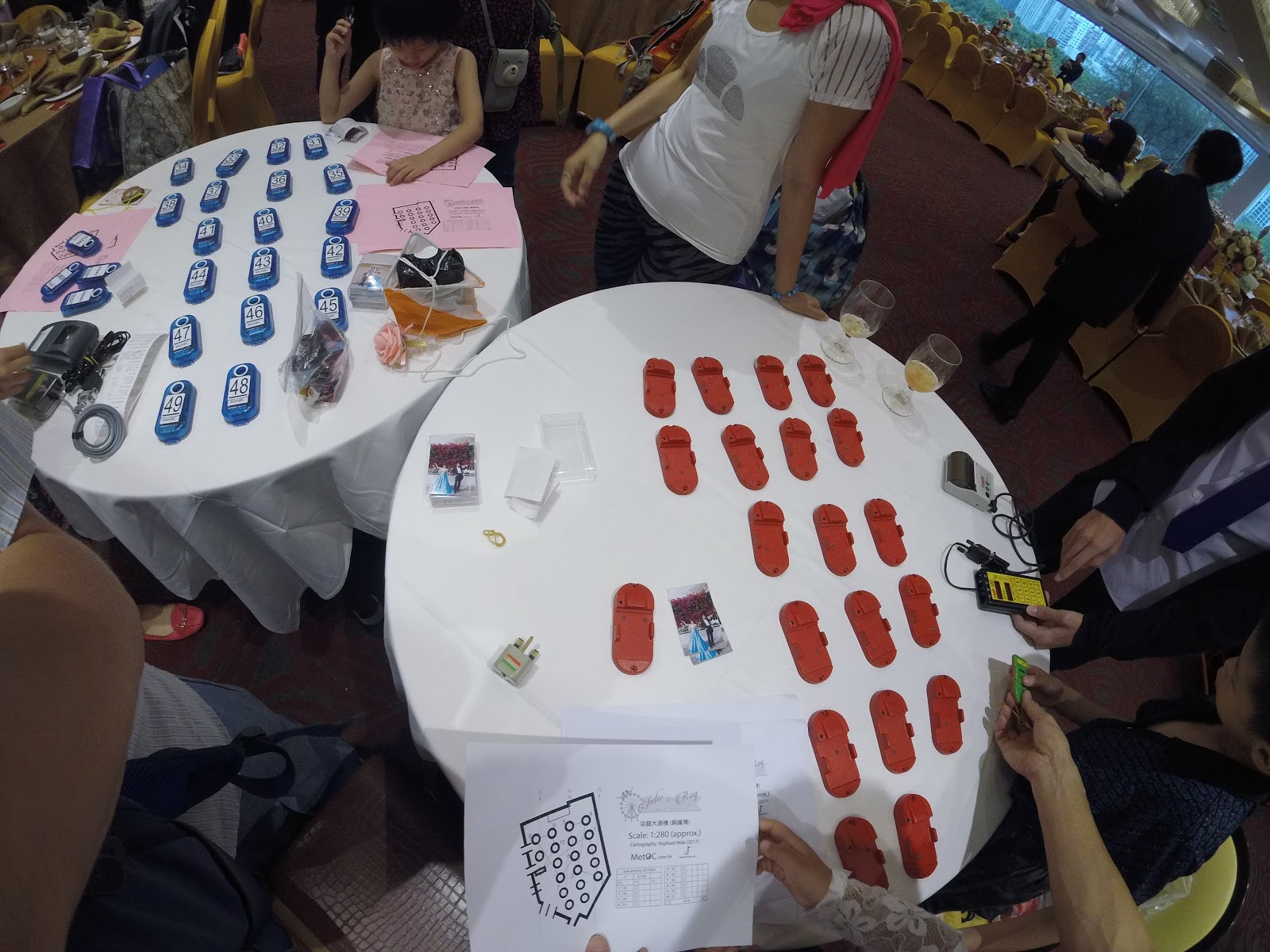
The wedding was in 5/20/2017 (Sat). To Chinese, this is a lucky date because 520 sounds similar to "I love you" in Mandarin Chinese. The wedding was organized in a Chinese restaurant, which I think is a common way that Hong Kongers organize wedding. During the reception, there were places for taking pictures, signing names, accepting gifts for the couple, and having marjong tables. What was unique was that since both were orienteers, someone also promoted orienteering by laying out electronic checkpoint punches on tables, and allowing everyone to use a map to punch these checkpoints in a certain order, as fast as possible.


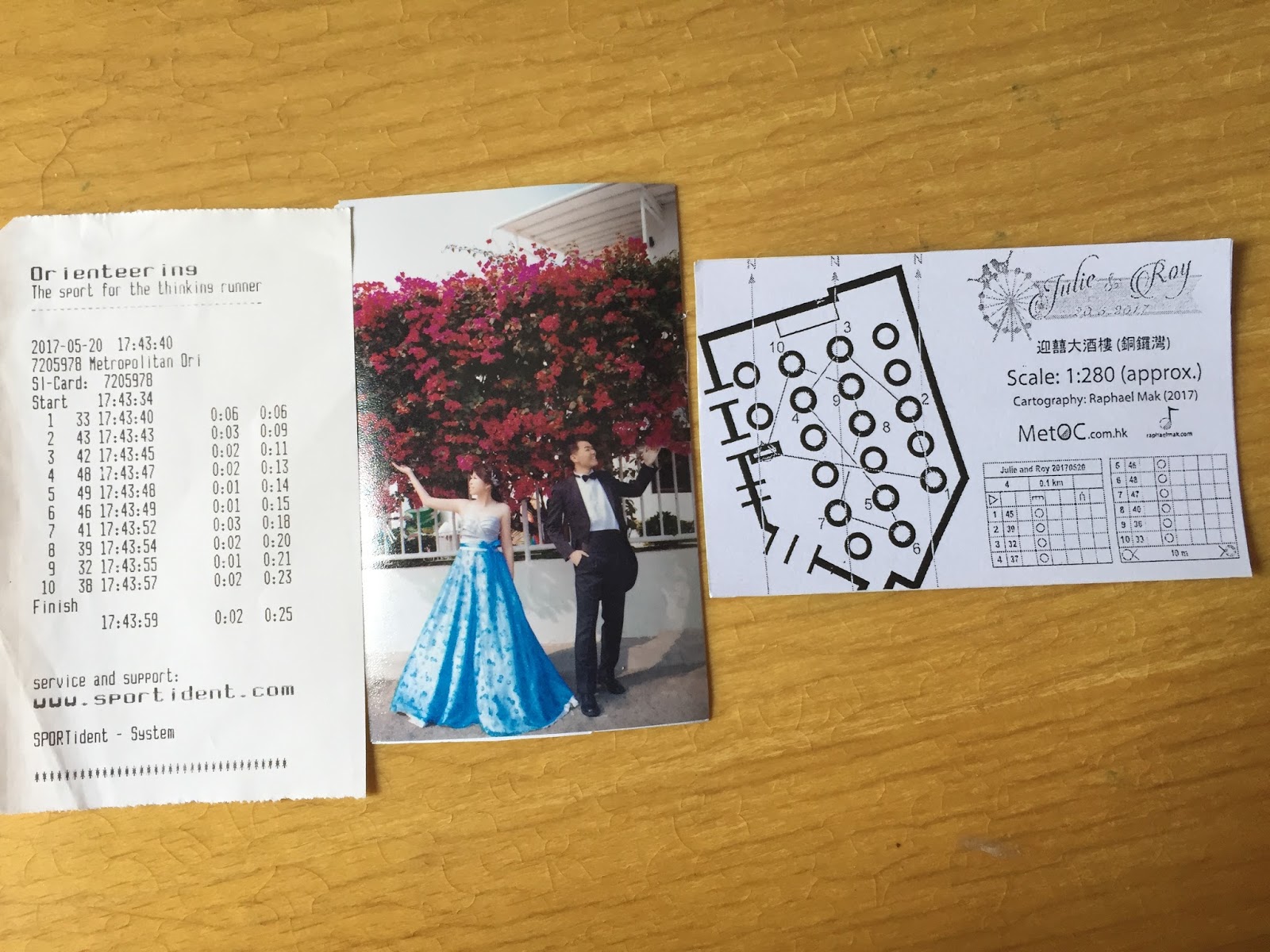
After finishing the tabletop orienteering game, each person could get a card, with one side printing the wedding picture of a couple, and another side printing the map layout of the Chinese restaurant. Each person also got a result sheet showing the finish time and split time.


I also found that there were also several board games near the marjong table. Perhaps this is the younger generation style for the wedding reception?

The following video summarized the above:


Near 6 pm, more and more people came in. There seemed to be at least 3-4 tables reserving for the orienteering family, so I could recognize many faces in this wedding. Some people brought the maps from a city orienteering event on the same day. Another person brought maps from the World Master Orienteering Championship (WMOC) in New Zealand. There were also some people coming late because they had to prepare for the Sprint-O Ranking Event on the next day.

I did take the video for the entire wedding ceremony, but I decided not to put it here. The wedding ceremony is formal and legal, and I bet someone else has a better video. Thus, I decided not to put it on YouTube. To me, it was eye-opening, since I did not have a lot of wedding experience.

I thought I would only stay in the wedding ceremony, take a few group pictures, and leave. While I was invited in the FB event, I did not receive an official invitation for this wedding, so I felt that I should not stay for the dinner. However, a few orienteers did want me to stay. A couple of them even helped me to ask if there was room for one more dinner seat. Thus, I left the restaurant for a while to get the gift from the bank. In Hong Kong, it is acceptable to give gifts in a form of cash.


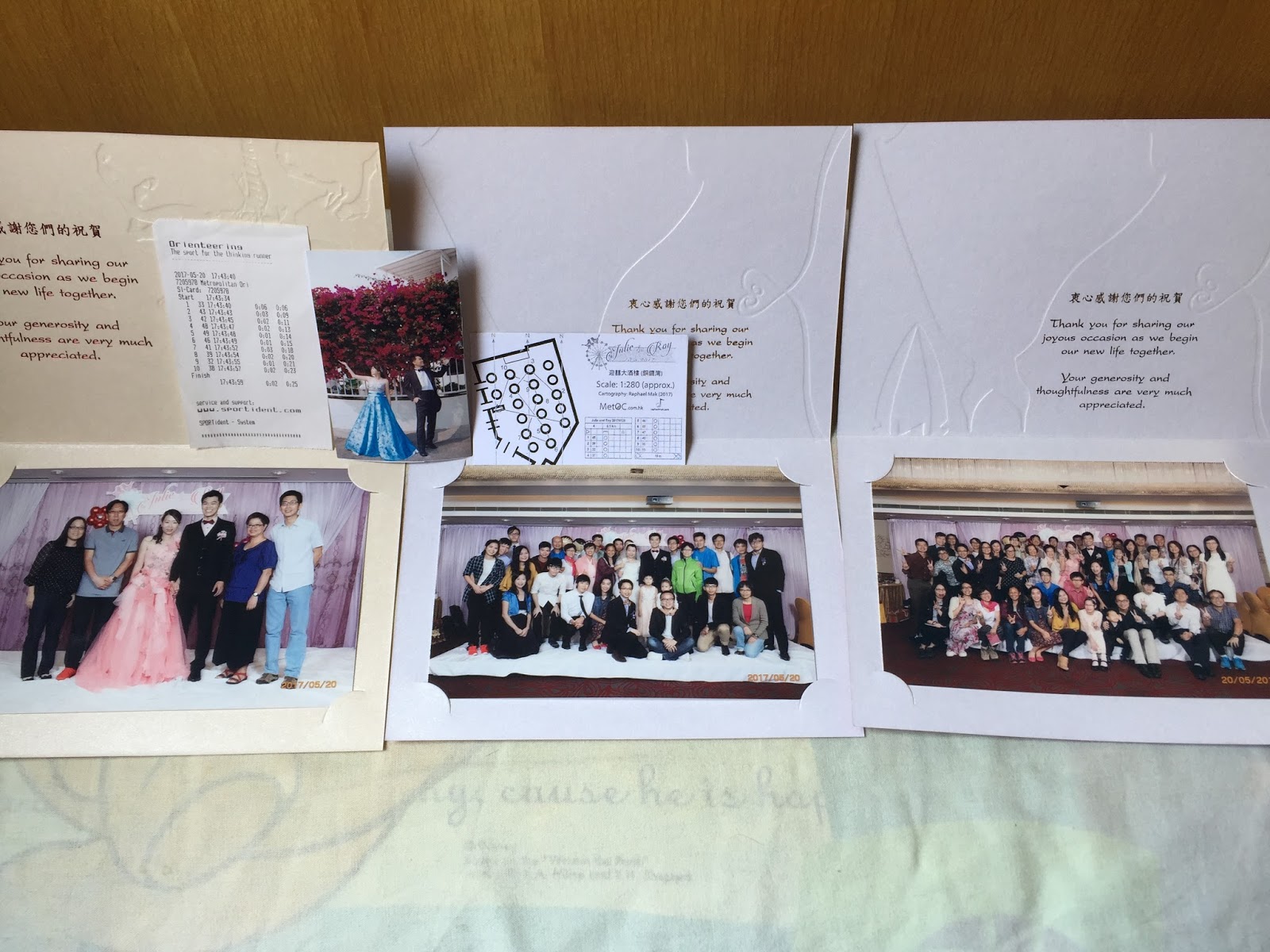
At the dinner, I was invited to sit with an experienced course setter/ mapper in Hong Kong. We had some great conversation while eating. During the dinner, we saw their young pictures and how they met. They had their sharing time, the moment of singing Karaoke, and the cheers to each table. I felt happy for them, and wished them good luck for the next stage of life. Group pictures were returned to each guest during the dinner, which seemed fast, since the pictures were taken about an hour ago. When guests were about to leave, the bride, the groom, and their maids and men formed a line to say goodbye to each one. After watching the video on what they did in the morning, they must be very tired at that moment.

Besides having 3 pictures with the couple, there were also souvenir from the orienteering in the restaurant. Thank you for your FB invitation. Congratulations and wish you both having better future!

Wednesday, May 3, 2017

Apr 29, 2017 Kowloon Park (九龍公園) in Hong Kong -- A Continuation on Trail Orienteering

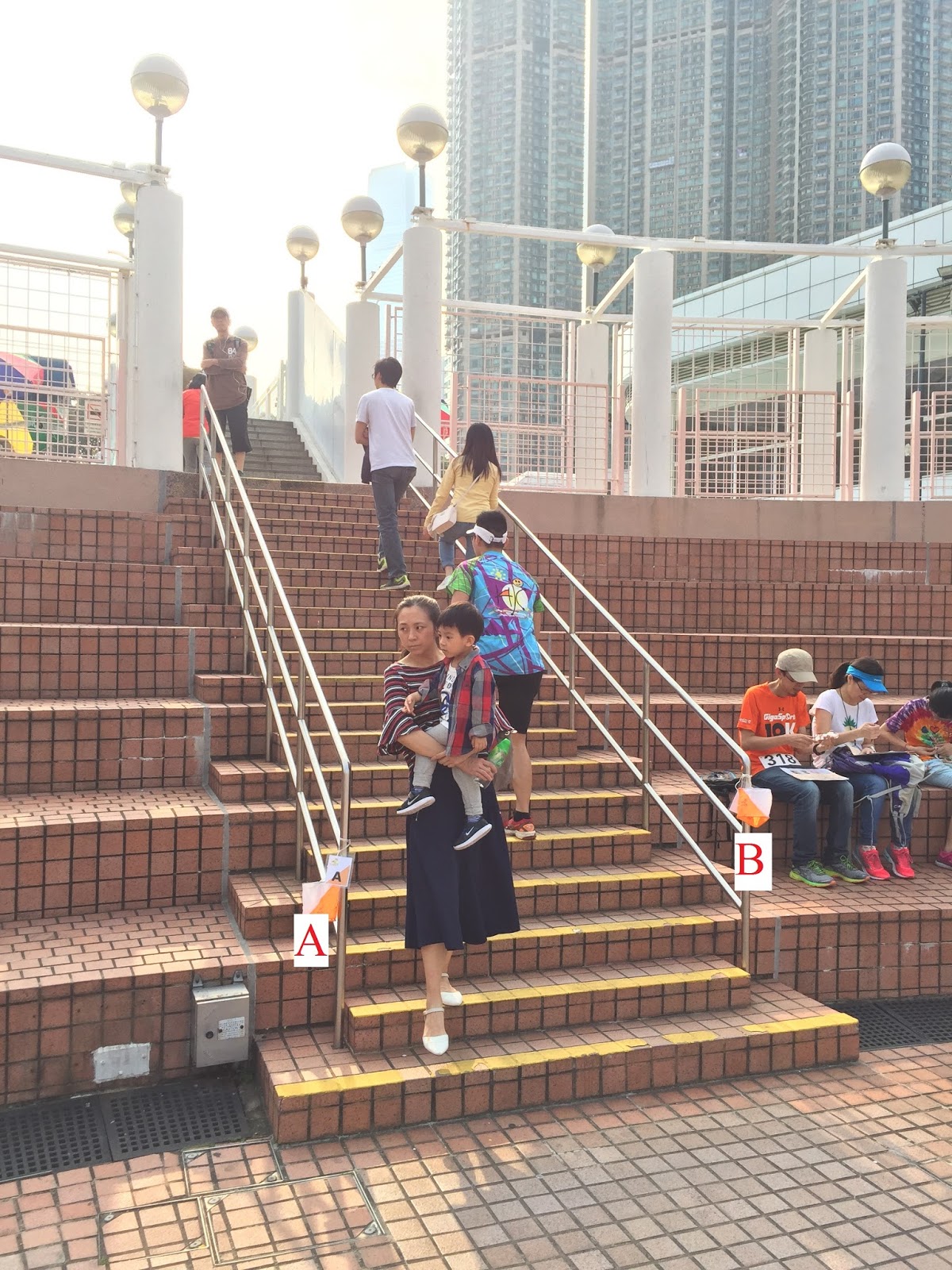
This is my second time to write about trail orienteering (trail-O). For the basics of trail-O, please check my previous blog post. In a one-sentence summary, trail-O is a multiple-choice problem set that asks competitors which one of the multiple flags (or none) best describes a location on the map.

On April 29, 2017, there was a practice trail-O event in Kowloon Park (九龍公園). The purpose of the event was to promote trail-O, which is relatively new to Hong Kong in the history of orienteering. Although this was only my third time in doing trail-O, I like it a lot partly because trail-O focuses more on problem solving than physical running. To classify further, this trail-O is a precision trail orienteering (pre-O) event, meaning that most questions in this trail-O competition are not timed.

In this blog, I will cover all the controls in this competition. The emphasis will be on problem solving methods. A few technical terms will be defined as follows, since I will use them several times:
  • Controls: checkpoints, or the center of red circles in the map. In trail-O, these controls are the ones that competitors need to identify out of several markers.
  • Decision points (DPs): the location where competitors identify the designation of the marker choices (i.e. A, B, C, D). In this blog, the first picture for each control was taken at or close to the DP.
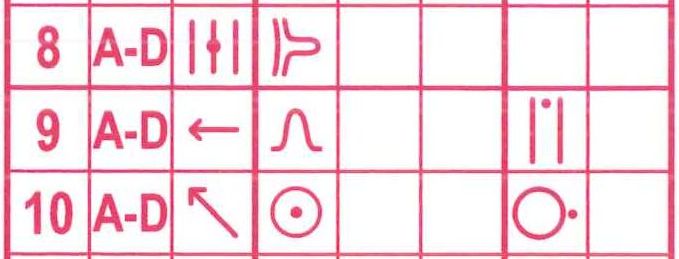
  • Control descriptions (clue sheet): the 8-column boxes that describe the locations of controls, using IOF symbols. They will be translated in English below each clue in this post.
  • Re-entrant (山窩): a large gully, or valley. A contour feature where elevation is concave in. The opposite of a re-entrant is a spur, which is convex out.
Here is the map for the trail-O event. All the answers will be at the end of this blog.


Control #1 and #2 -- Warm Up

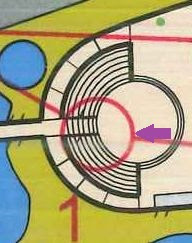
Good to see the first 2 controls that could serve as a warm up for those who have not done trail-O before. In Control #1, there are two flags to choose:
Purple arrow: photo taking location and direction

Control #1: 2 flags, the south fence, east end
This control can be easily solved by reading the control description: it is the south fence. From the photo, one flag is on the north fence, and the other flag is on the south fence.

Purple arrow: photo taking location and direction
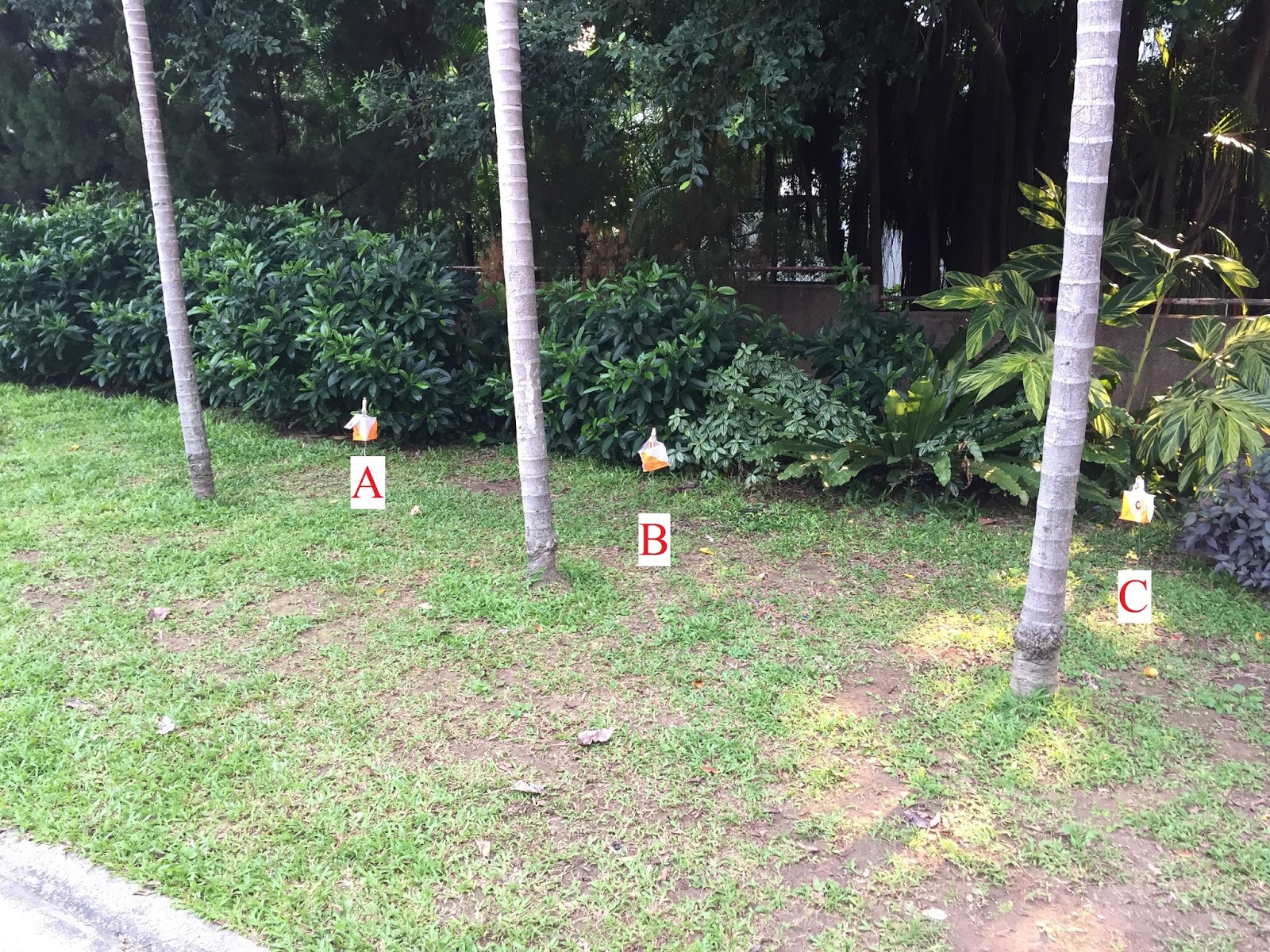
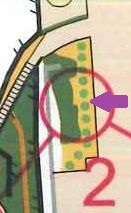
Control #2: 3 flags, thicket, NE corner (outside)
Control #2 is also easy. The corner of the thicket can be seen easily. To verify the answer, one may also count the number of trees to this thicket corner.

Control #3 and #4 -- Getting a Bit Challenging

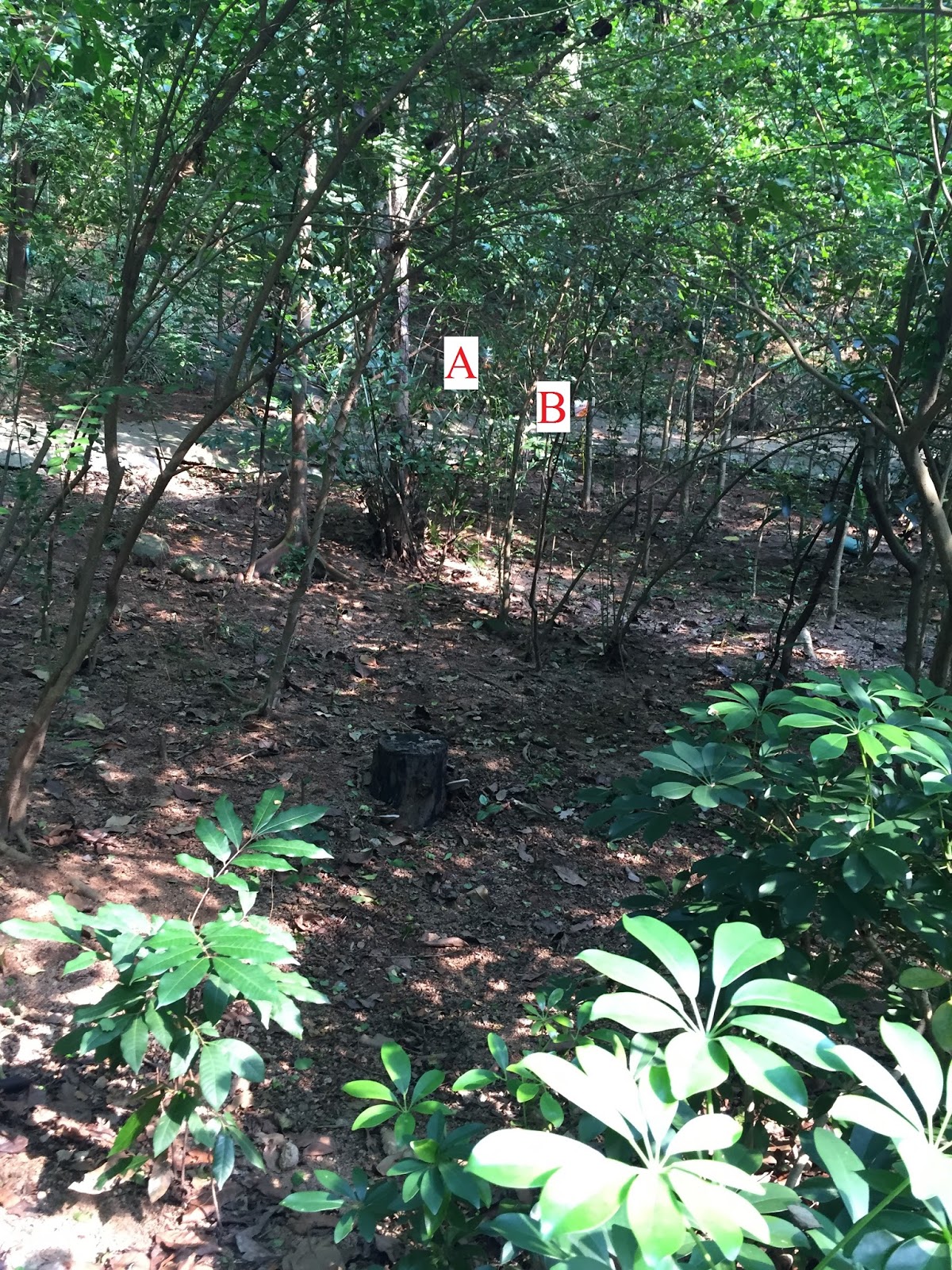
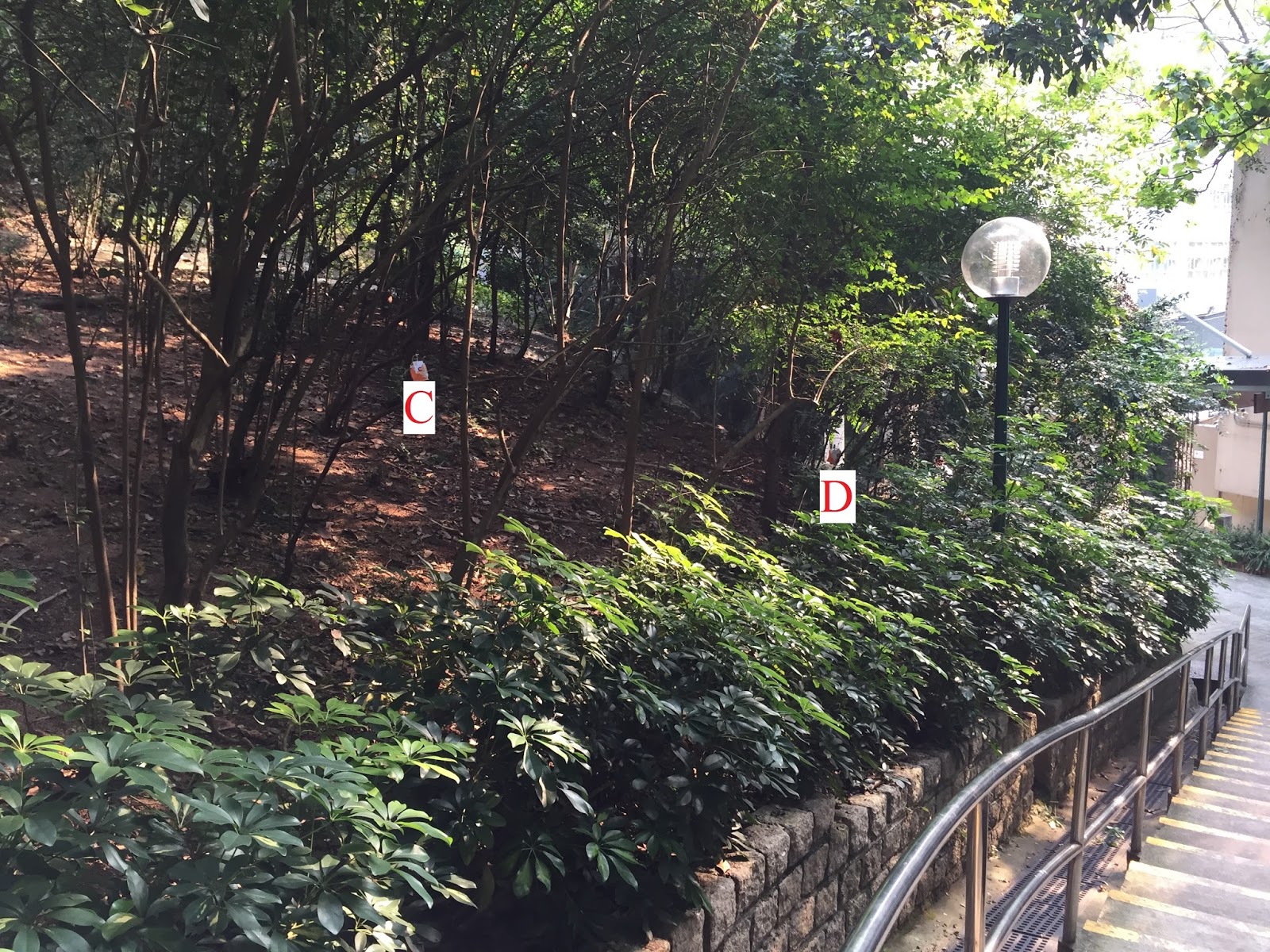
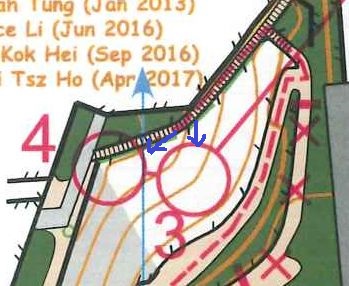
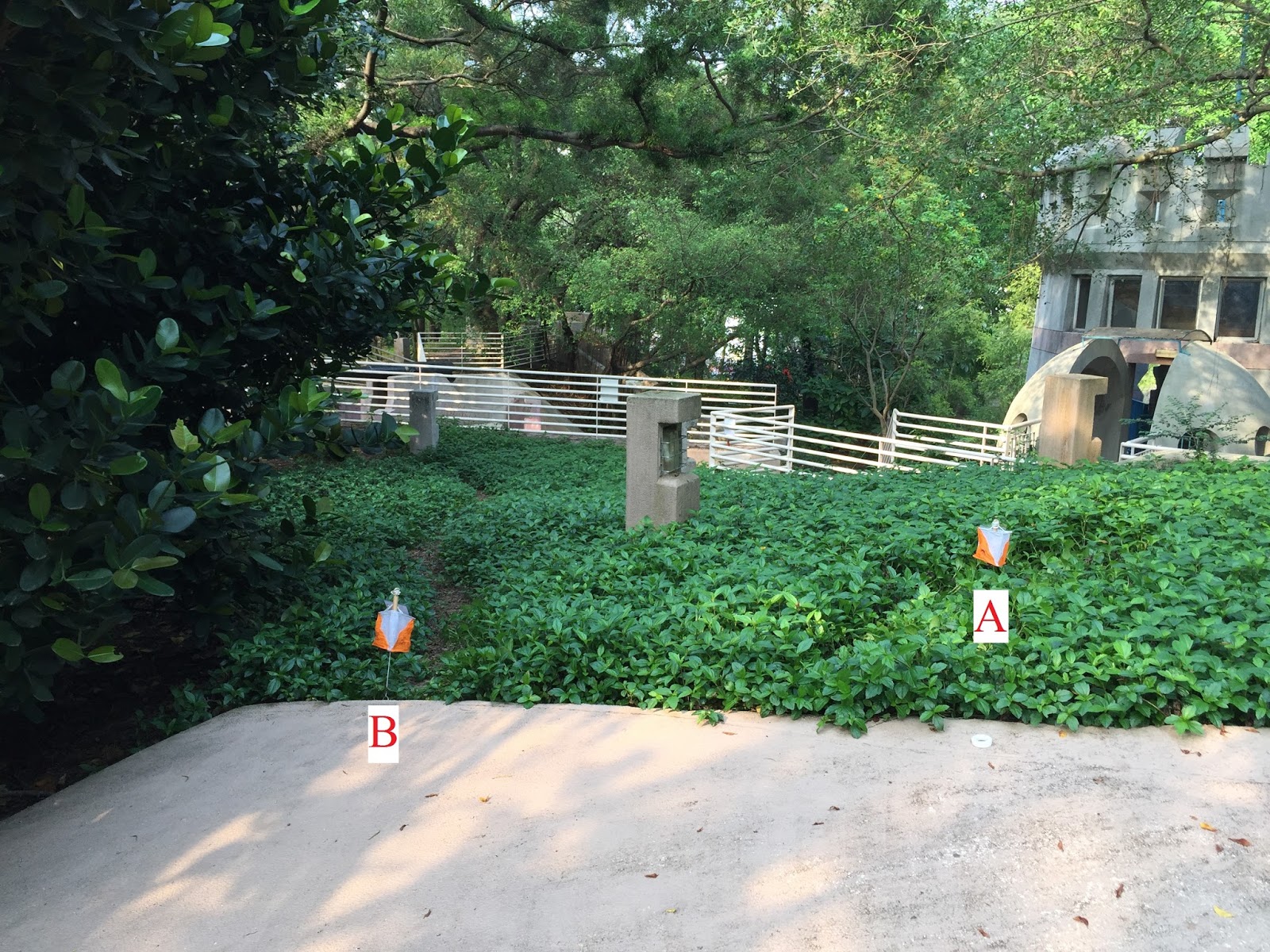
The next two controls could be seen in the same DP. I separated flags A and B and flags C and D into two pictures, since A and B relate to Control #3, and C and D relate to Control #4.


Blue arrows: photo taking locations and directions

Control #3: 4 controls, re-entrant
Control #4: 4 controls, spur
Control #3 started to get difficult. This control tests the height judgement. The contour is the best hint. The key is to realize that the contour in the map extends to the opening of hedges next to the stairs. Thus, from the opening, if the flag can be seen horizontally, that flag is likely to be correct.

Control #4 was easier. It would be good to double check by walking down to the bottom of the stairs and seeing if the flag is next to the rock face. Then, return to the DP to answer the question. This brings to one of the most important points in this blog:

Control #5 -- Importance of Leaving the Decision Point (DP) to See in Different Angles

Do not stay at the DP to make all the decisions! The DP is only for identifying which flag is A and which flag is B. As long as the trails are not shown in the map to be forbidden to enter, competitors are allowed to walk anywhere on trails.


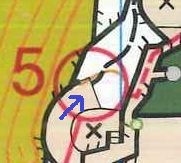
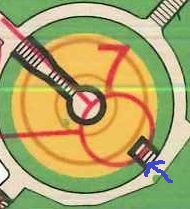
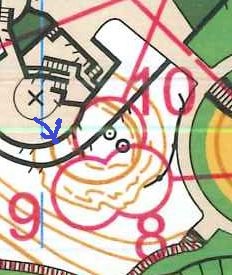
Blue arrow: photo taking location and direction
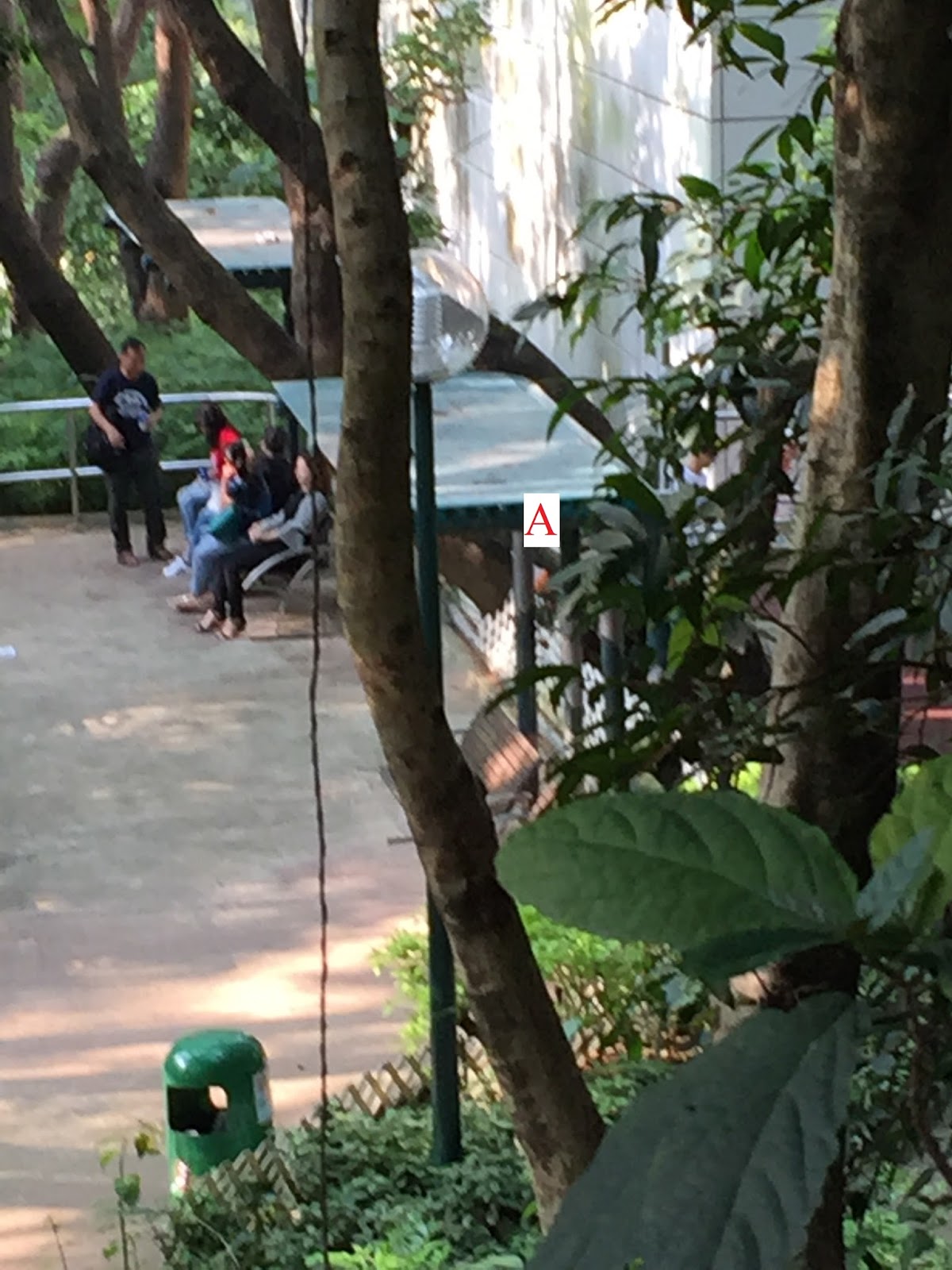
Control #5: 2 flags, trail, SW end
For Control #5, it is not as easy to see where the trail ends. However, it was allowed to walk to the other side to view the flags. See the picture and the map (with blue arrow) below:


From this angle, it is easy to see where the trail ends. Thus, answering this question can be done more confidently. When going back to the DP to answer the question, it is needed to remember which flag corresponds to which flag letter. In the above case, the two viewing angles were 180 degrees opposite to each other. Thus, when flags from left to right are ordered as A and B on one side, the order becomes B and A on the other side.

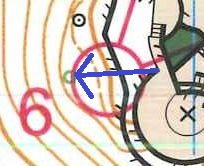
Control #6 -- Sighting Line Technique

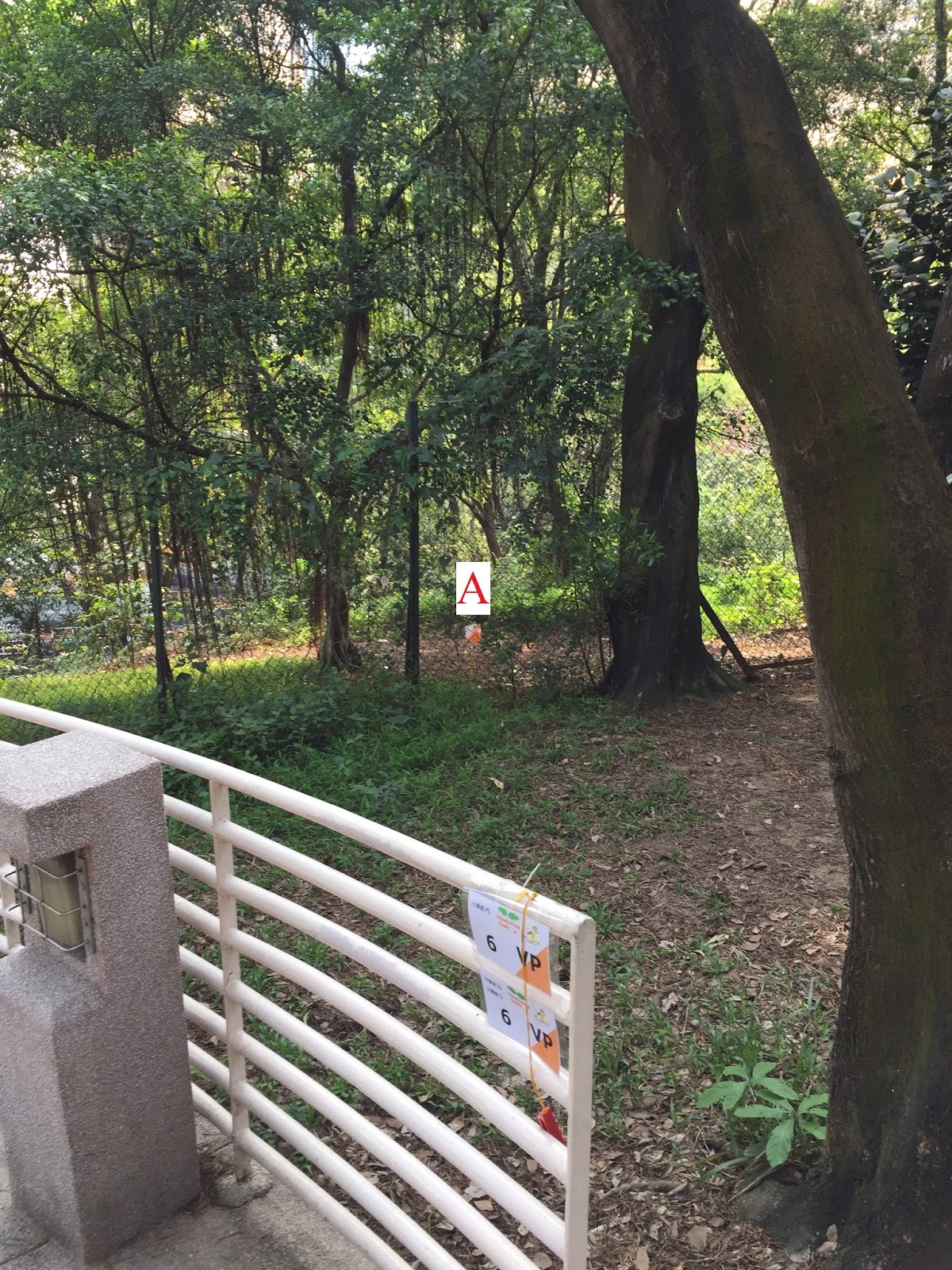
There is only one flag for this control, so it is a true (A) or false (Z). The angle of the picture was chosen for readers to answer this question.


Blue arrow: photo taking location and direction
Control #6: 1 control, re-entrant


To decide whether the flag is at the correct location, the best way is probably using a sighting line: form a straight line between the distinct tree and the end of the fence (the blue arrow is larger for this reason). In the competition, you may use the straight lines marked on the compass to form this straight line. You should also see that the straight line is slightly off center of the red control circle to the north. Thus, if the flag is slightly on the left side of the sighting line from the viewing location, the flag is likely to be placed correctly (I got this question wrong because I did not know that the sighting line does not pass through the center).

There is still an issue: a smaller tree closer to the observer was not marked on the map. I actually wondered if this tree needs to be marked or not. This small tree seems to be quite distinct. With this tree marked on the map, the answer for this question would be pretty clear.

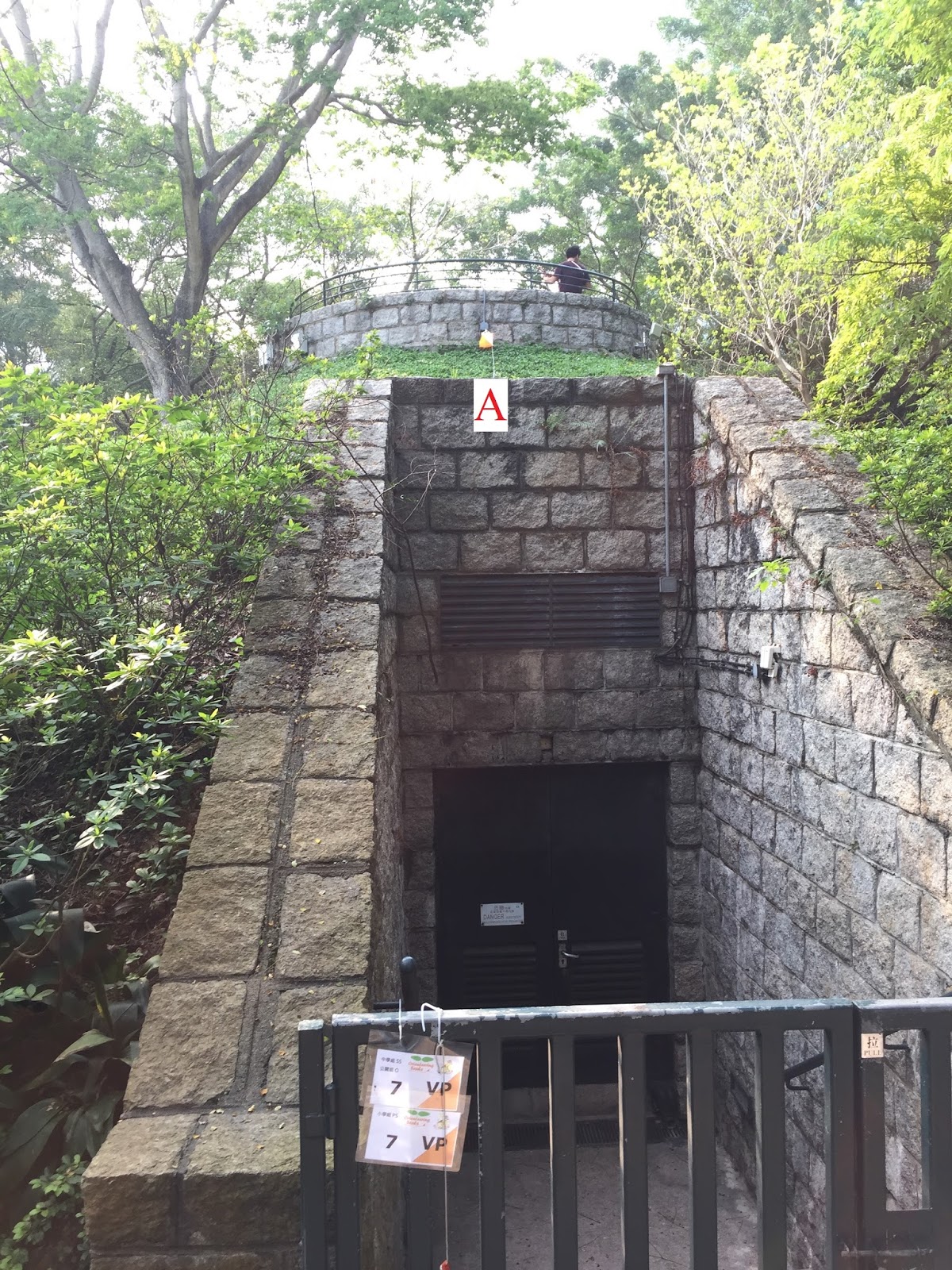
Control #7 -- Easy Control

Another true or false question. This one is pretty easy. It is easier to see the flag location if you get to the top. You may decide the answer of this question from this photo alone.


Control #7: 1 control, between two stone walls

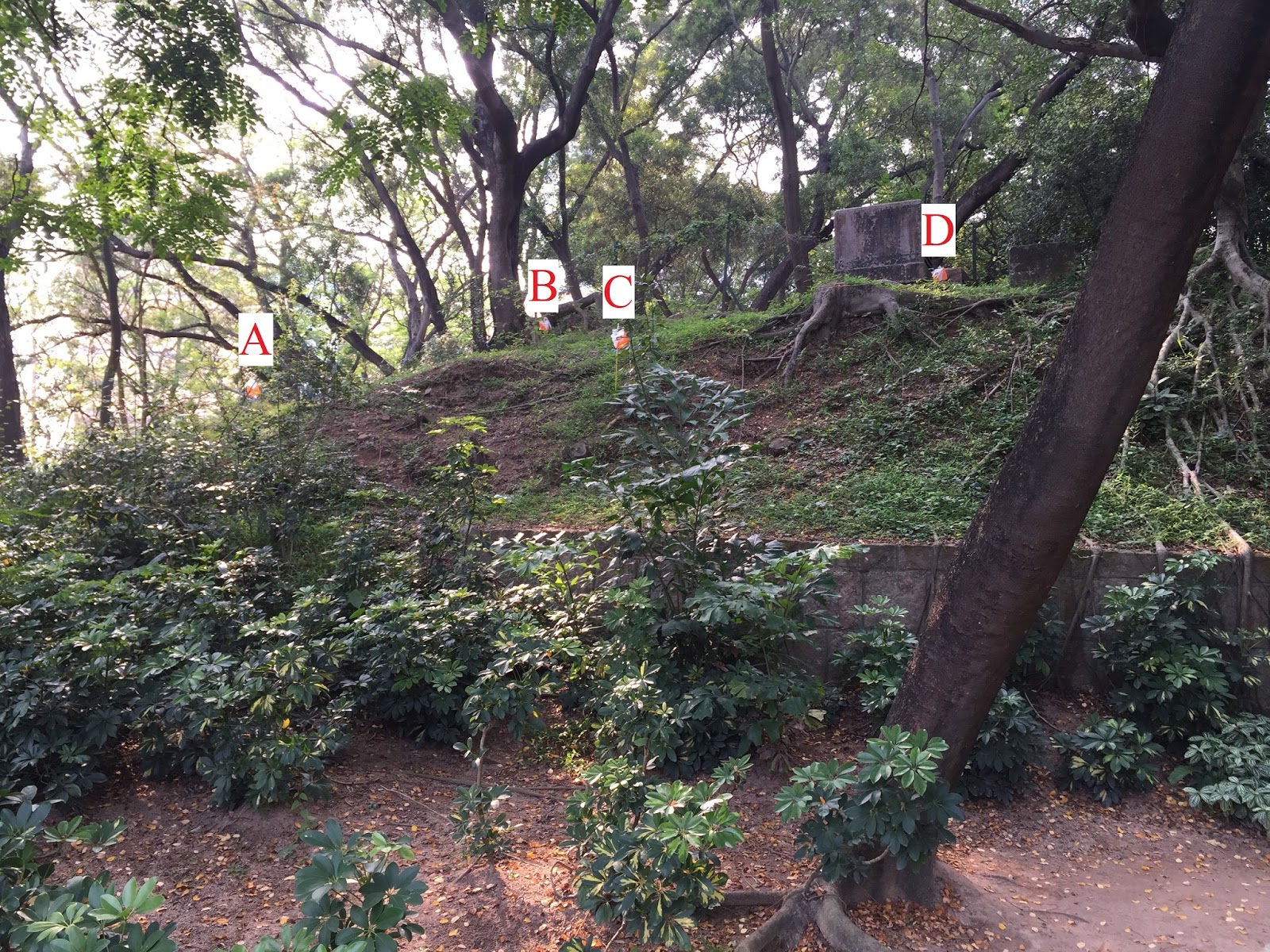
Control #8, #9, #10 -- Hidden Features

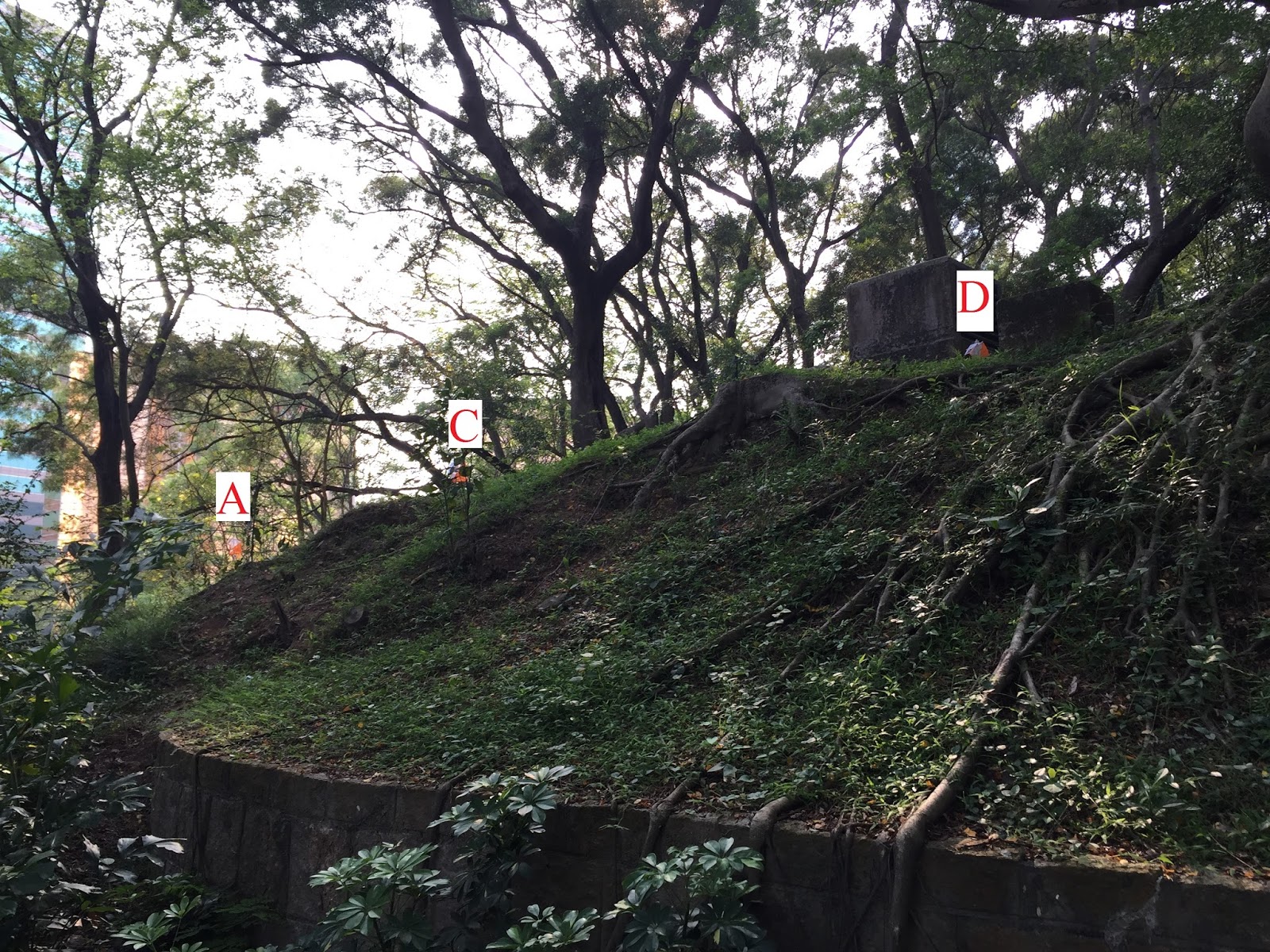
The most challenging problems are this Controls #8, #9, and #10 cluster. Remember that it is important to leave the DP to get different perspectives?


Blue arrow is close to where the DP is
Control #8: 4 flags, the middle spur
Control #9: 4 flags, the west re-entrant, top
Control: #10: 4 flags, the NW man-made stone (cairn), east side
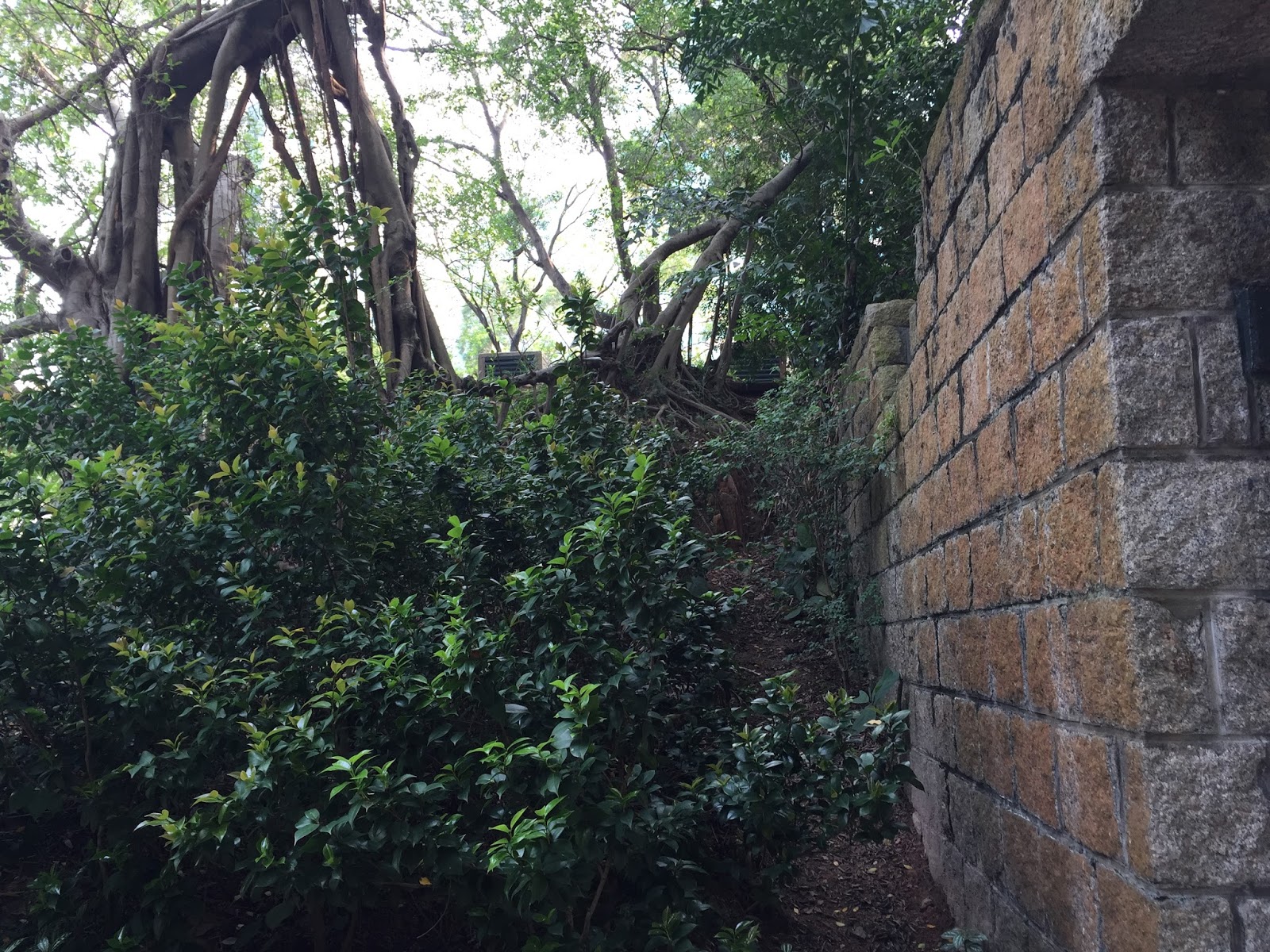
Let's look at Control #8 first. Merely standing at the DP will not help solving this cluster of problems. First, let's walk to a point tangential to the end of the stone wall (see below).


From the map, the spur is directly above the end of the stone wall. When walking closer to the stone wall, it would be easier to see if the flag is really placed like the map is described.

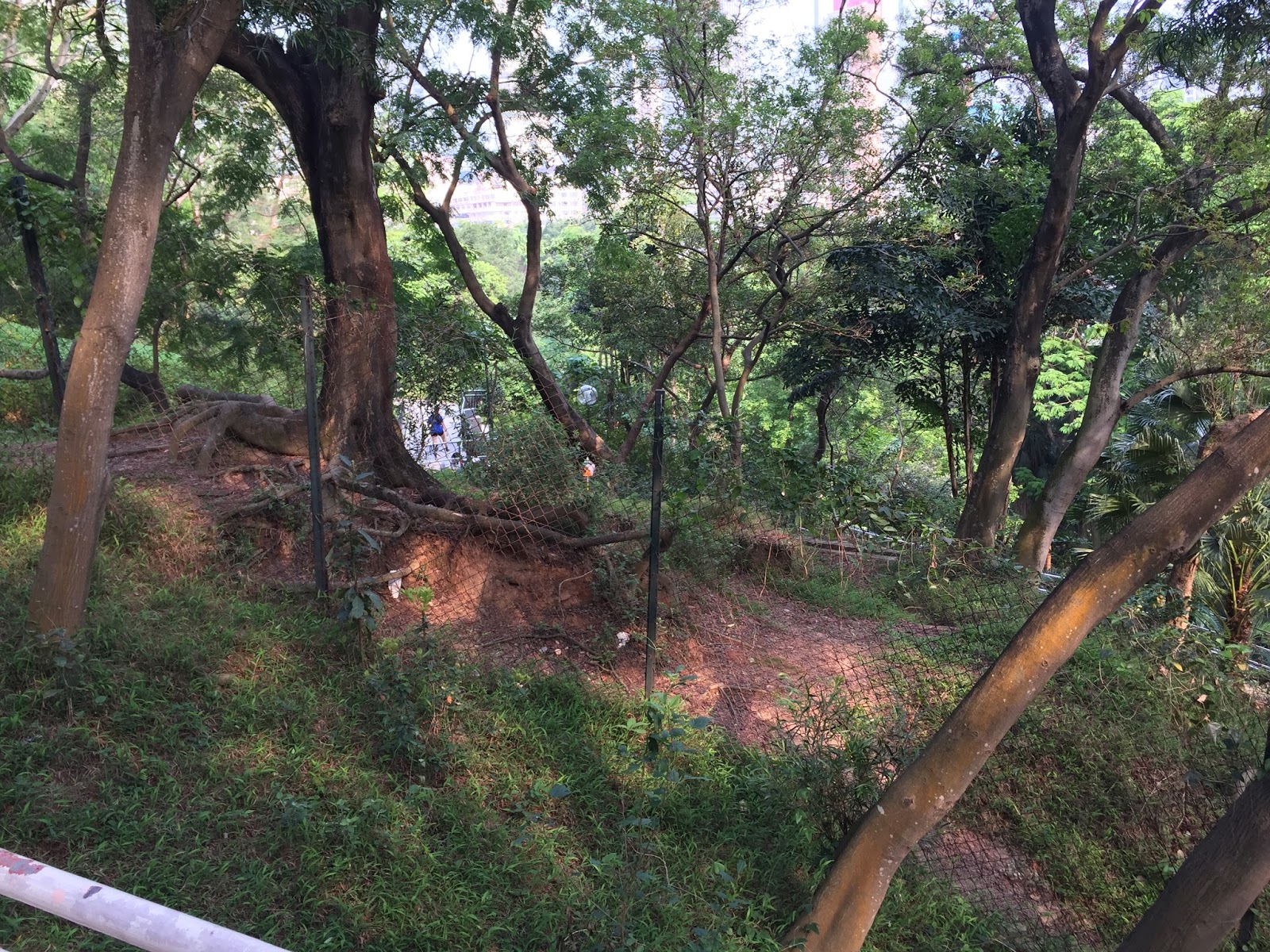
Then, we look at Control #10. It looks like Flag D is next to the man-made stone. However, there should be two stones, and the control should be the NW one (the inner one). To check the inner stone, one may walk to the location below:


Then, one can walk back to see which stone Flag D is at. It turns out that this cluster of controls does have "none of the above" (Z) answers.

Control #10 demonstrates the idea of "hidden features" -- control features that cannot be seen from the DP. In many cases, as long as one walks away from the DP, the hidden feature may become visible. Thus, answering these controls properly requires leaving the DP. 

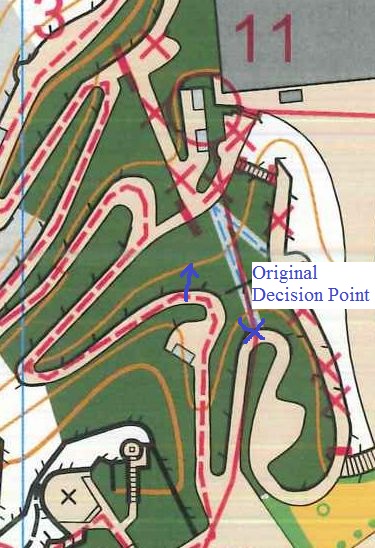
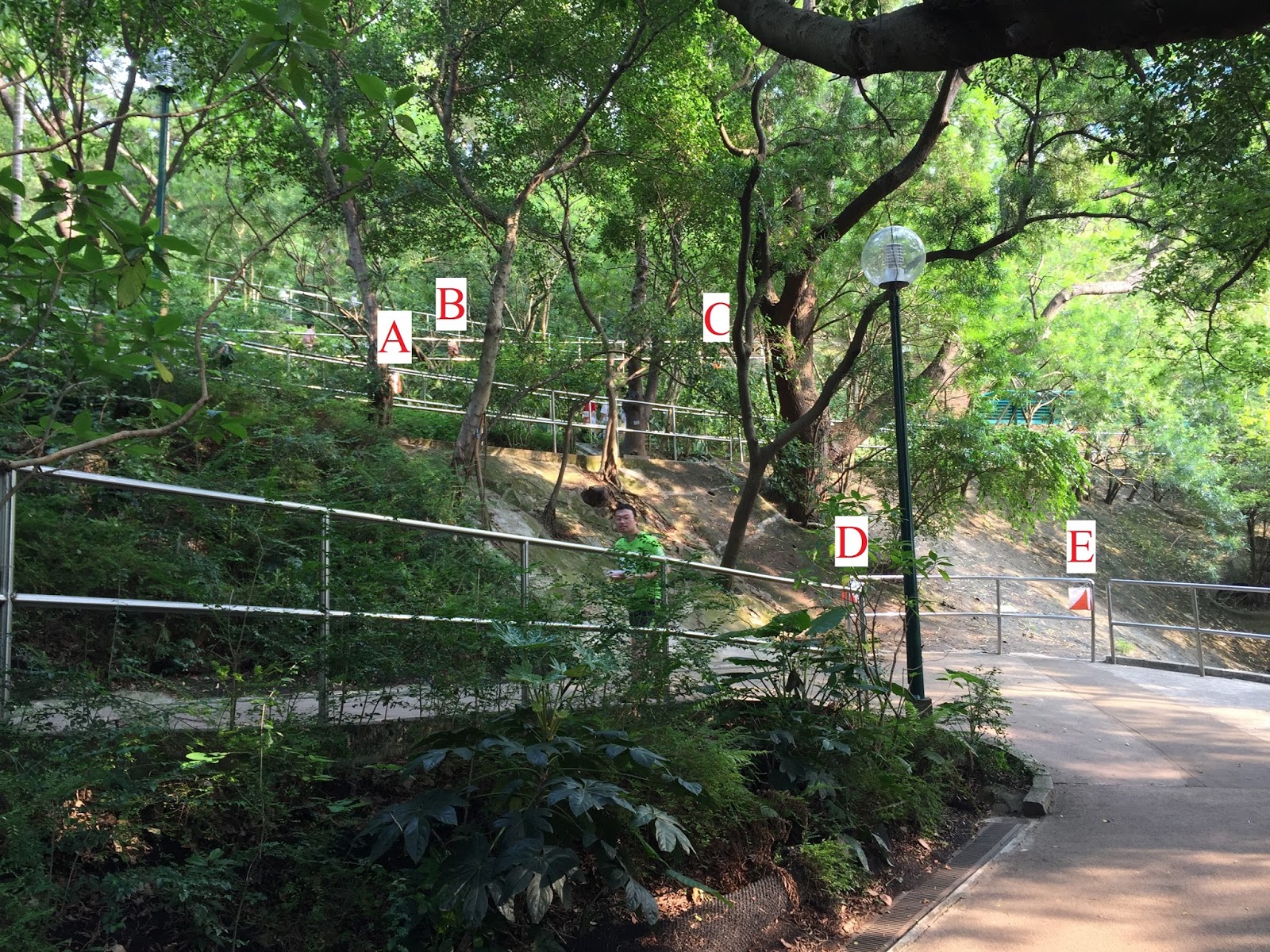
Finally on Control #9. Would Flag A be the correct location? It turns out that Flag A is incorrect (I got this wrong, too). This is a more difficult "hidden feature" problem. The re-entrant (small gully) is further west from Flag A and cannot be seen from the DP.

There is still hope to see the control feature in this case, but one needs to walk quite far away from the DP. See the photo and the map (with blue arrow) below:


One needs to walk all the way back to Control #6 to view from the top. From this point, the re-entrant may be easier to see, by looking at the two possible spurs (on the picture one quarter to the right, and about half between top and bottom). Then, one can decide that the re-entrant does not have a flag.

Control #11 -- Long Range Control

This control demonstrates a control where one is required to view far away. The following photo was taken at the blue arrow on the map, and was zoomed in. The photo was not taken exactly at the DP because it was a bit difficult to capture the flag and the surrounding environment.


Control #11: 1 control, the north shelter, SE corner (outside)
This is not a difficult control, as long as one can find the good spot to see the two shelters. If one finds difficult to see them, walking closer to the control can be an option. However, one should not walk in the trails where red crosses and red lines are marked in map.

Timed Control

The timed control was originally supposed to be done between Controls #4 and #5. However, since 1) there was a long line, 2) there was only a time limit of 60 minutes, and 3) timed control is for demonstration only (not counted in the result), I was allowed to return to this to try for the timed control. In this timed control, there were 3 questions. The competitors needed to answer the questions correctly as fast as possible. In the real competition, the fastest person will win if there is a tie for the pre-O (given that all questions were answered correctly). Wrong answer will result a time penalty. There are no "none of the above" (Z) answers in timed control.

Below was the photo and the map (with 3 questions) for the timed control:


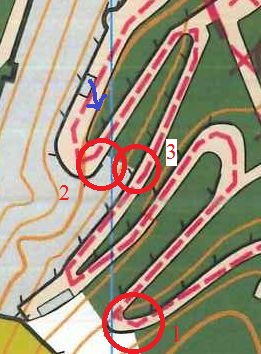
Blue arrow shows the viewing location and direction. Red circles are the questions. In the competition, the viewing direction is always pointing upwards.
I thought I could identify the trail bends quickly and correctly. In the end, however, I made one mistake for 3. Fortunately, this question was not counted in this event.

Post-event

When I returned and got the solution map, I found that I made so many mistakes (Controls #3, #6, #9, and 1 timed control). CH Ho, one of the most famous trail-O people in Hong Kong, discussed with me on some of my mistakes. I found that this discussion helped me to learn. Some of the strategies that I wrote above came from this discussion. In addition, Mr. Ho thought this event was quite challenging. For a seasoned trail-O competitor, this may be a fun event. However, I wondered if the first-timers can understand the expectation in this trail-O competition. Will they find this event, as a promotional event, too difficult?

Since this was a promotional event, I was allowed to return to the competition area to take photos of each control (hence the photos in this blog). On the way, I got a chance to talk to the course setter, including questioning about Control #3 (concerning contours). After this discussion, I learned the best way to solve this problem (as written above).

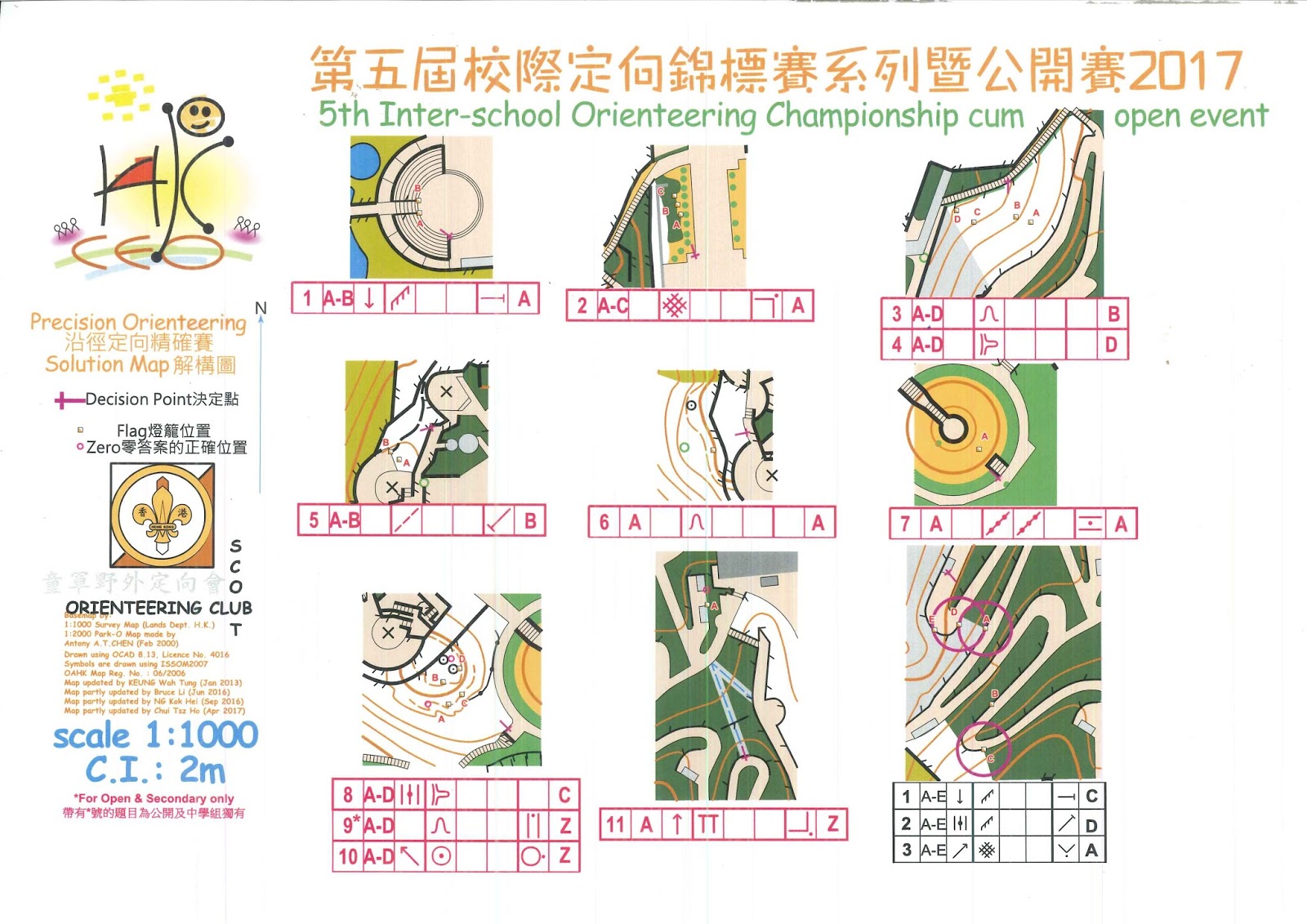
Below is the solution map for this trail-O event:

The course setter later asked in FB for the event evaluation. I think I agree from one of the comments that the course setter should try to organize a post-competition analysis tour to the finishers to explain the control solutions for each site, so that the new trail-O participants can learn some strategies in solving trail-O problems.

(P.S. I may later update this blog with more videos. If the videos are uploaded, I will announce it)