Wednesday, March 22, 2017

Two-day orienteering event in Cheung Chau (3-19-2017) - Part 1: Night-score-O

(Note: this is Part 1 of the orienteering report for Cheung Chau. Part 2 is here.)
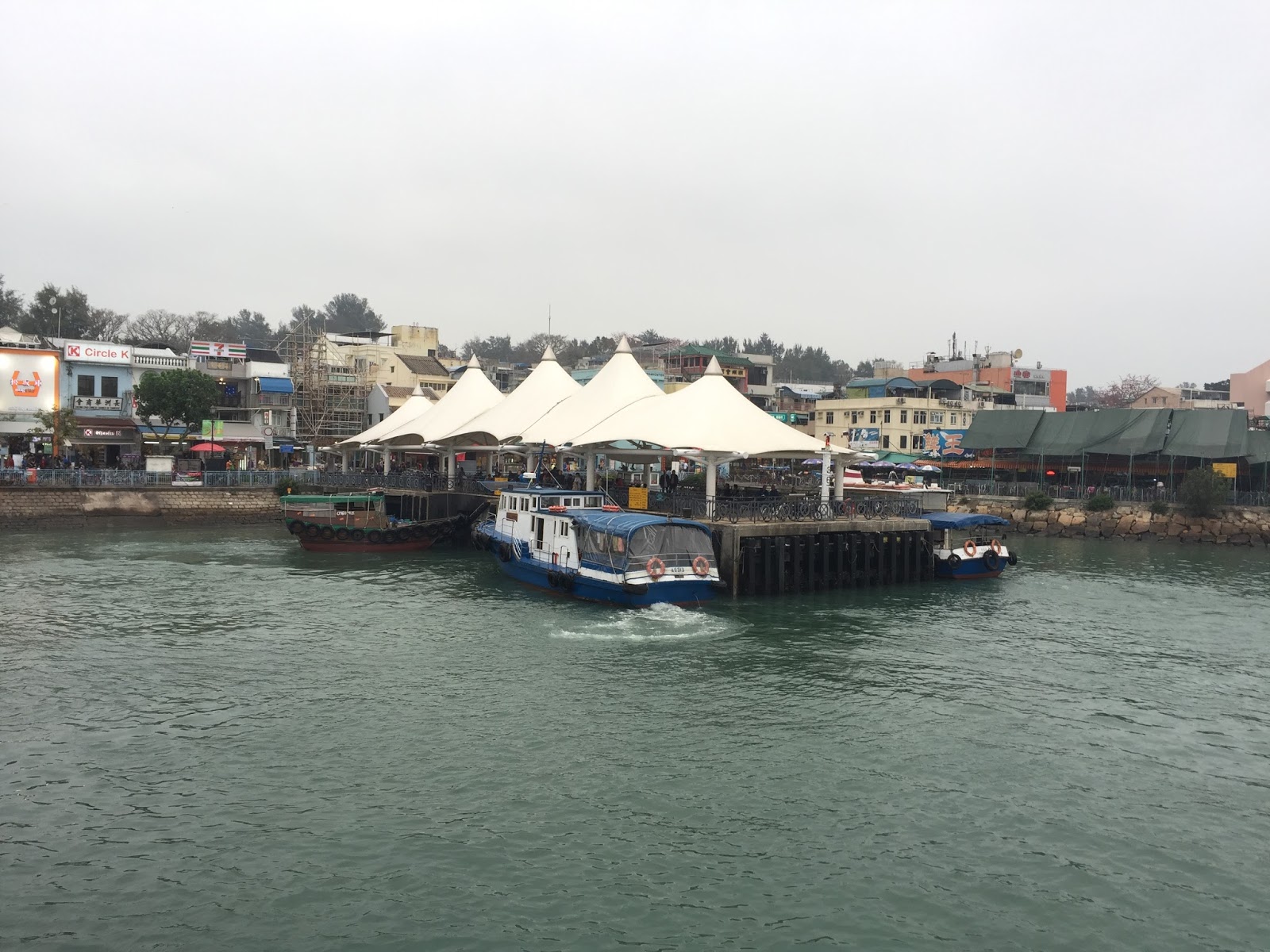
 

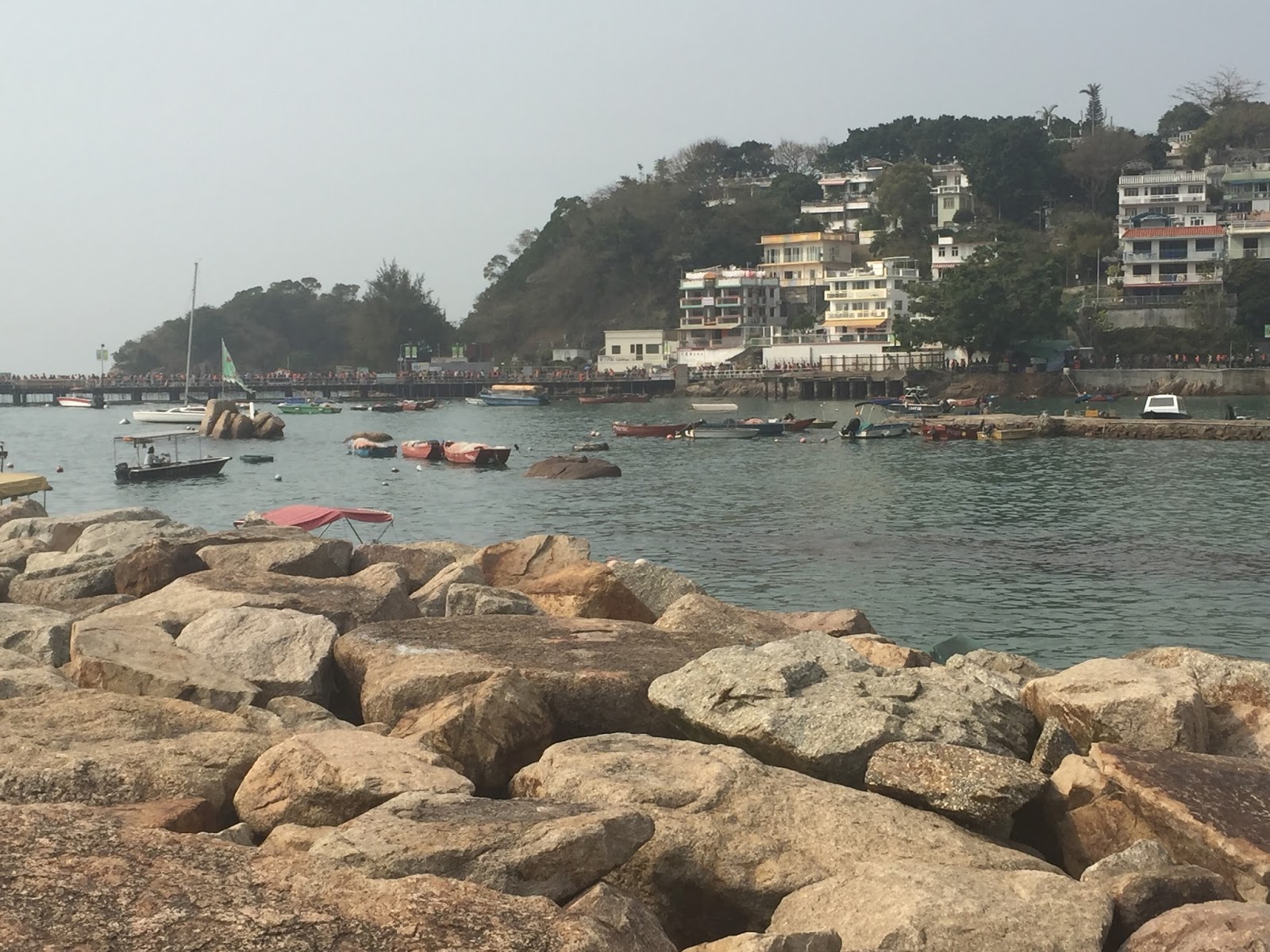
About Cheung Chau

Cheung Chau brought me back a lot of childhood memories. When I was a kid, my parents often brought me to day camps or night camps here. I swam at the beaches there, and Cheung Po Tsai Cave always brought me excitement to walk into.

In a geography class during secondary school, the teacher talked about Cheung Chau as a tombolo -- an island formed by connecting two islands by a deposited sand bar. The natural deposition results in a dumbbell-shaped island.

Since I went to the US for my study, I had only been to this island once, and that was ~7 years ago. When I started being more serious about orienteering in these years in the US (at a point that I started a college club), I talked to Jan, a Czech guy, about the orienteering map of Cheung Chau and how nice a sprint orienteering place it can be.
Sprint orienteering: an short orienteering course (typically 1-3 km long, with winning time of 10-20 minutes) where quick decision and high-speed running are tested. Dense villages with confusing networks of paths are often difficult places for sprint orienteering.
Last week, I got an opportunity to run on this map. There were a night orienteering (night-O) on Saturday and a team orienteering on Sunday. Like many other orienteering races in Hong Kong, one needs to register a few weeks ago in order to participate.

On Saturday at 4:15 pm, I took the slow ferry to Cheung Chau, which takes about an hour (the fast ferry takes about 30 minutes).


The event center was where the childhood memory kicked in: Oi Fai Camp. which is at the middle of a small hill. Ming Fai Camp, which was where I would get a sleep, is located on the top of the same hill. The two camps are connected by a long stairway. It took about 20 minutes to walk to these camps from the ferry pier.

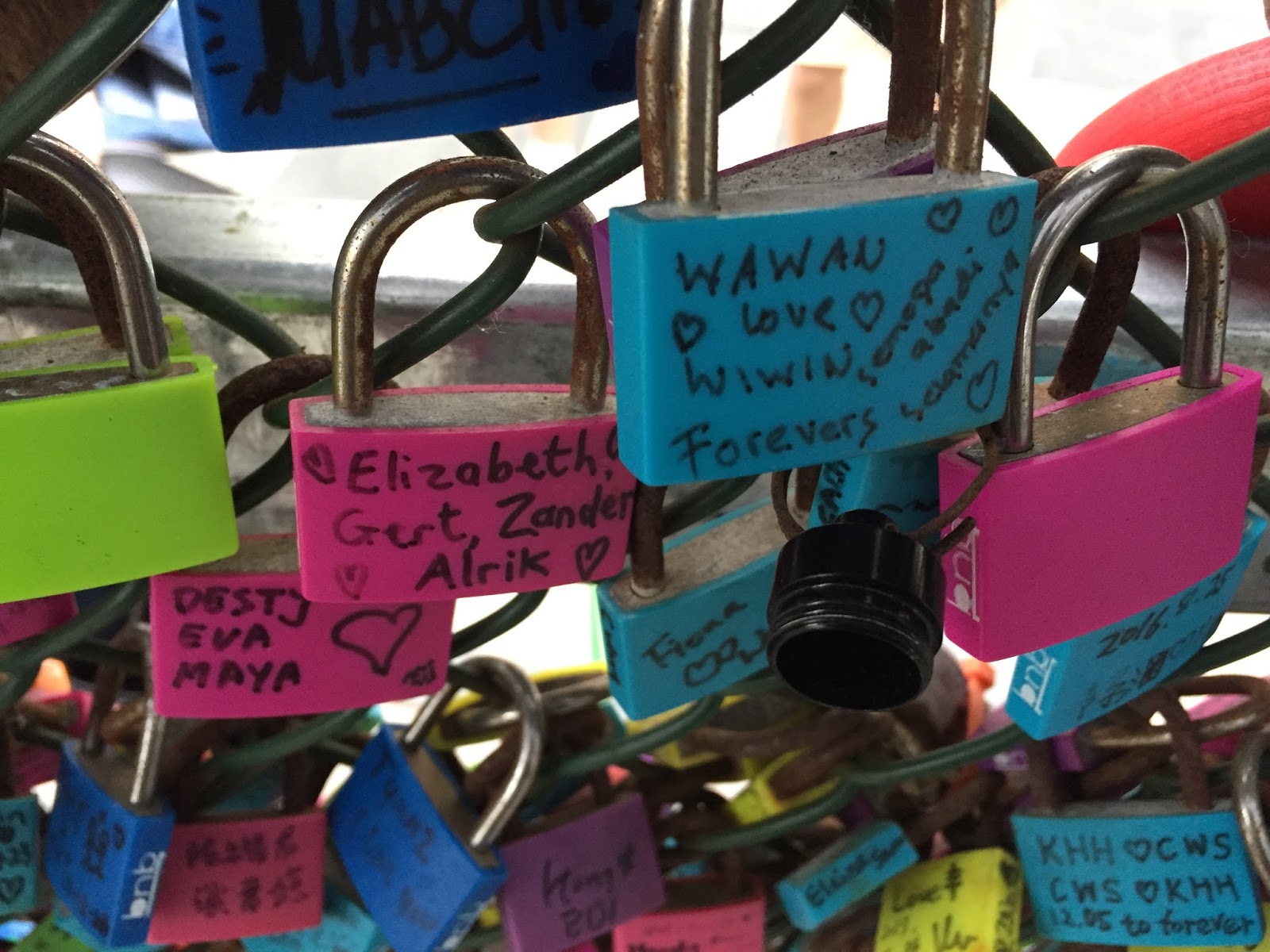
On the way, there were many lover's locks that looked like recent world phenomenon -- in many places around the world, someone likes to open up a space for the existence of locks.
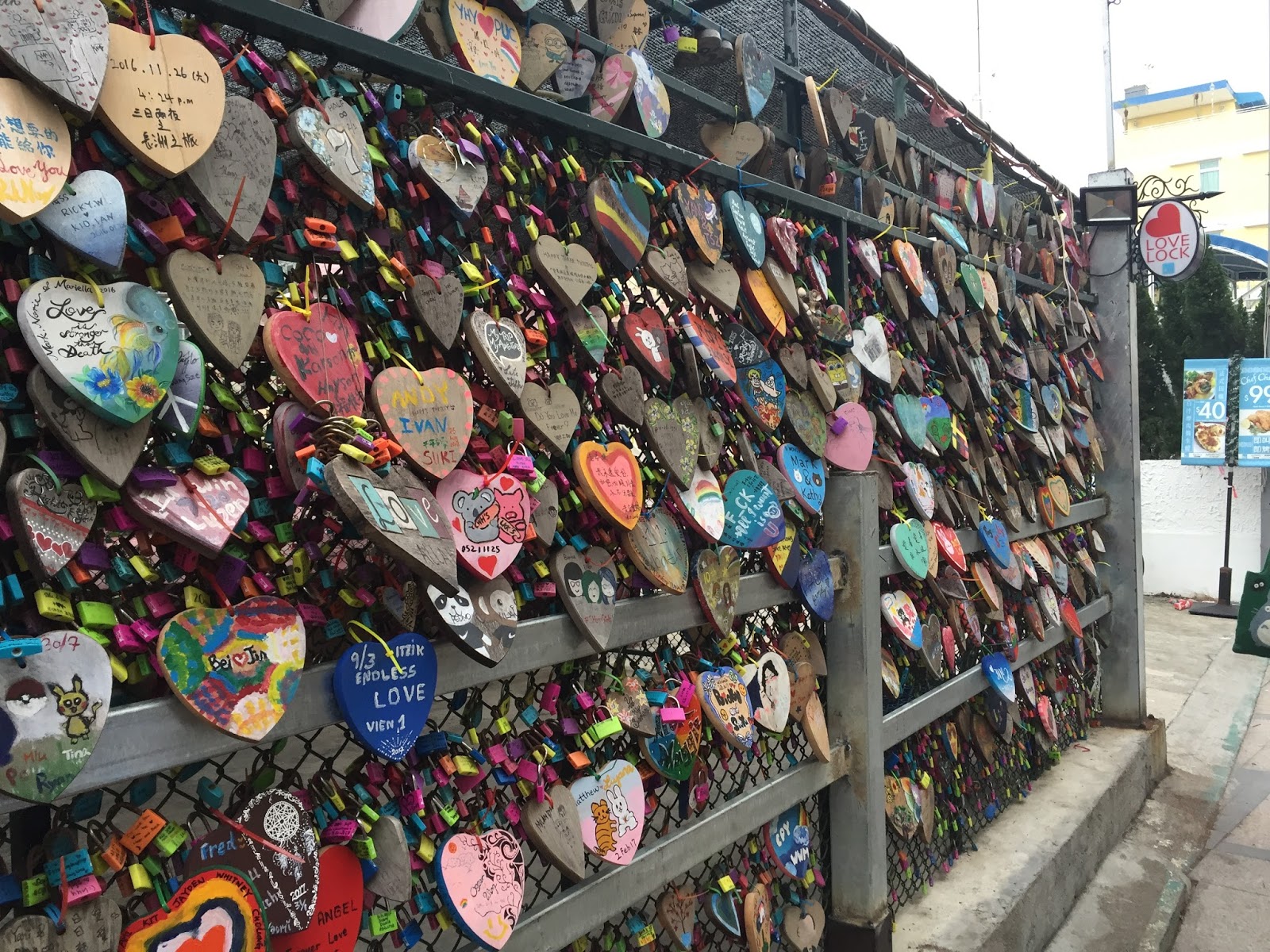

I only came here for a geocache, but the cache was obviously stolen (aka muggled).

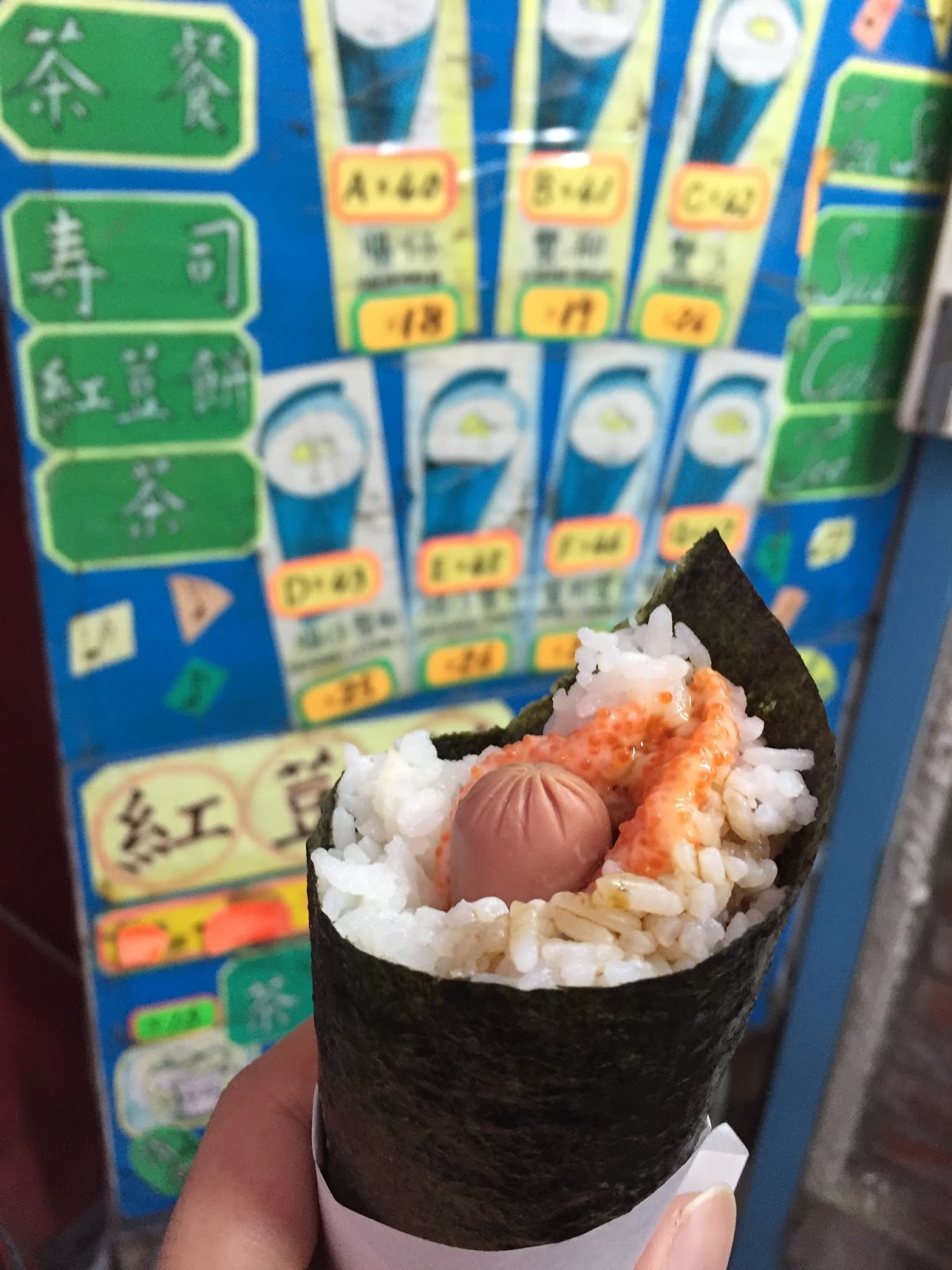
Walking slightly further, there is a famous sushi roll that costs HK$10-$40. I gave it a try, treating it as a pre-race meal.

Night-Score-O

In the event center of Oi Fai Camp, participants were getting ready to start. When I was there, it was already close to 6 pm. Some participants had already started. I would start in the latest group at 6:55 pm. Before starting, I needed to pick up my bib and the e-punch (the Chinahealth punch that works similarly to a SI punch). Then, I had to change my clothes. I found a person with a nickname 40,000 giving beginner clinic to some participants (actually, he gave directions to places most of the time).
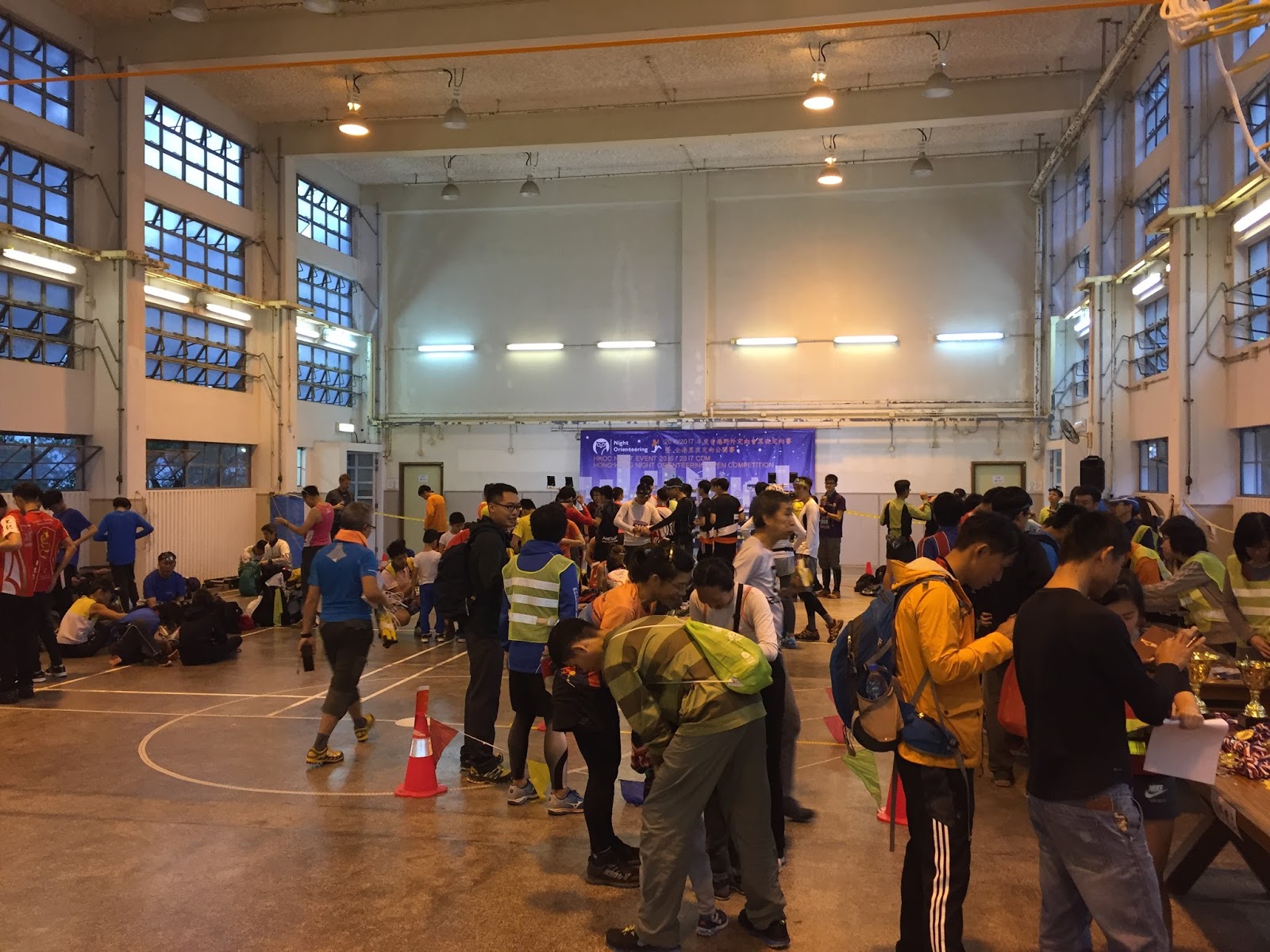

It took about 5-10 minutes to walk to the start. This was a good place to warm up before the run.

Competition format

This was a night-score-O. In a score-O, each checkpoint (control) has a fixed point value. One can visit the checkpoints at any order (s)he wants, and one can skip checkpoints. The goal is to get as many points as possible within a time limit. In this race, 90 minutes were given. If two participants have the same points, who reaches the finish first wins. If someone overtimes, there is some kind of penalty. In this race, anyone finishes over 90 minutes would be disqualified.


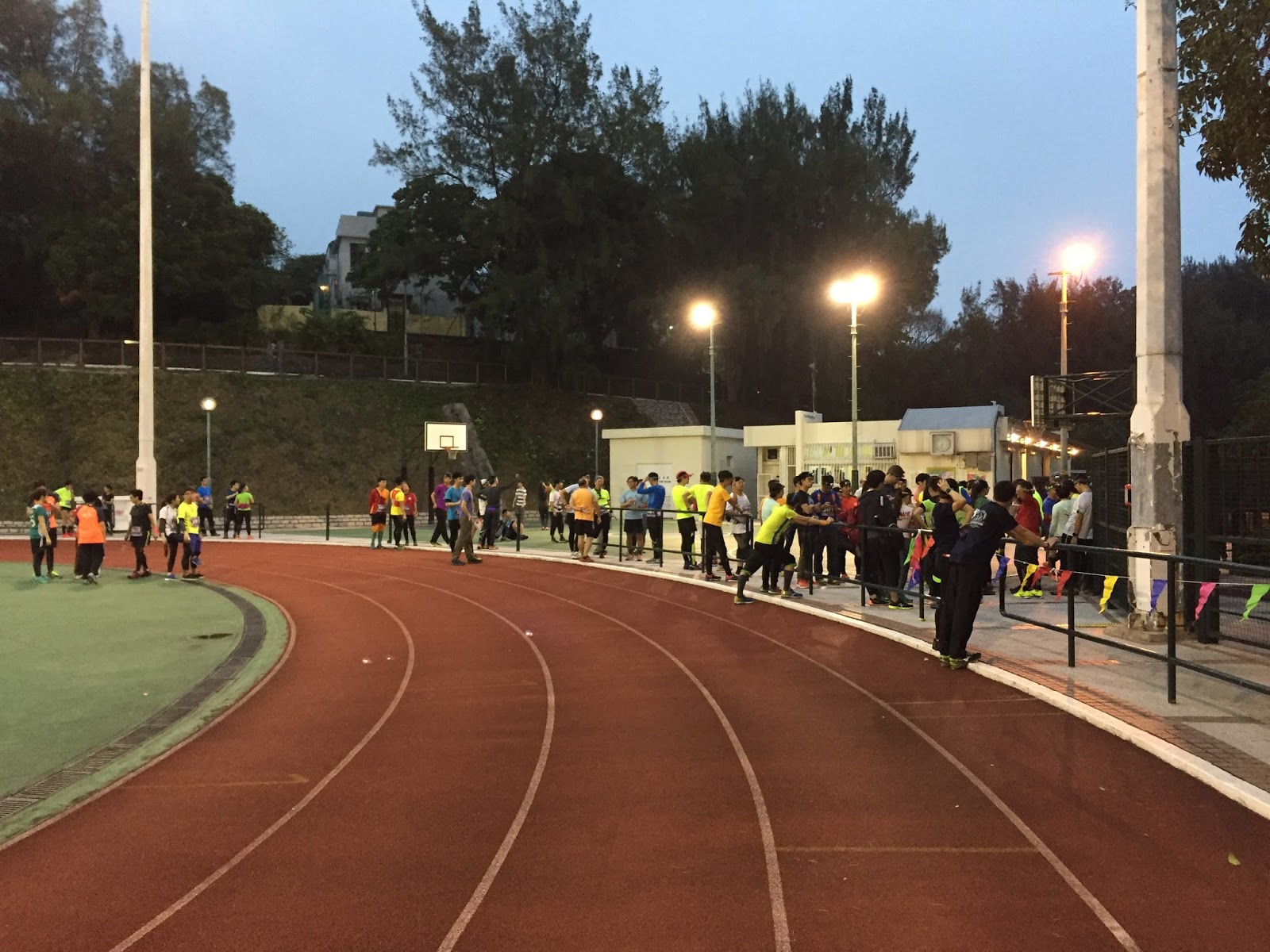
This race was a mass start in batches. Participants within the same group started at the same time. Here, people were waiting to start.


One minute before they start, each participant was given the map, and they could plan how they visited each checkpoint. After a long beep, they could start.


 Before start, each person needs to bring a whistle, a compass, a e-punch, a headlamp, and a bib.

(provided by HKOC)

Technical analysis

The ME group (men elite) map is as follows. My route is also shown.
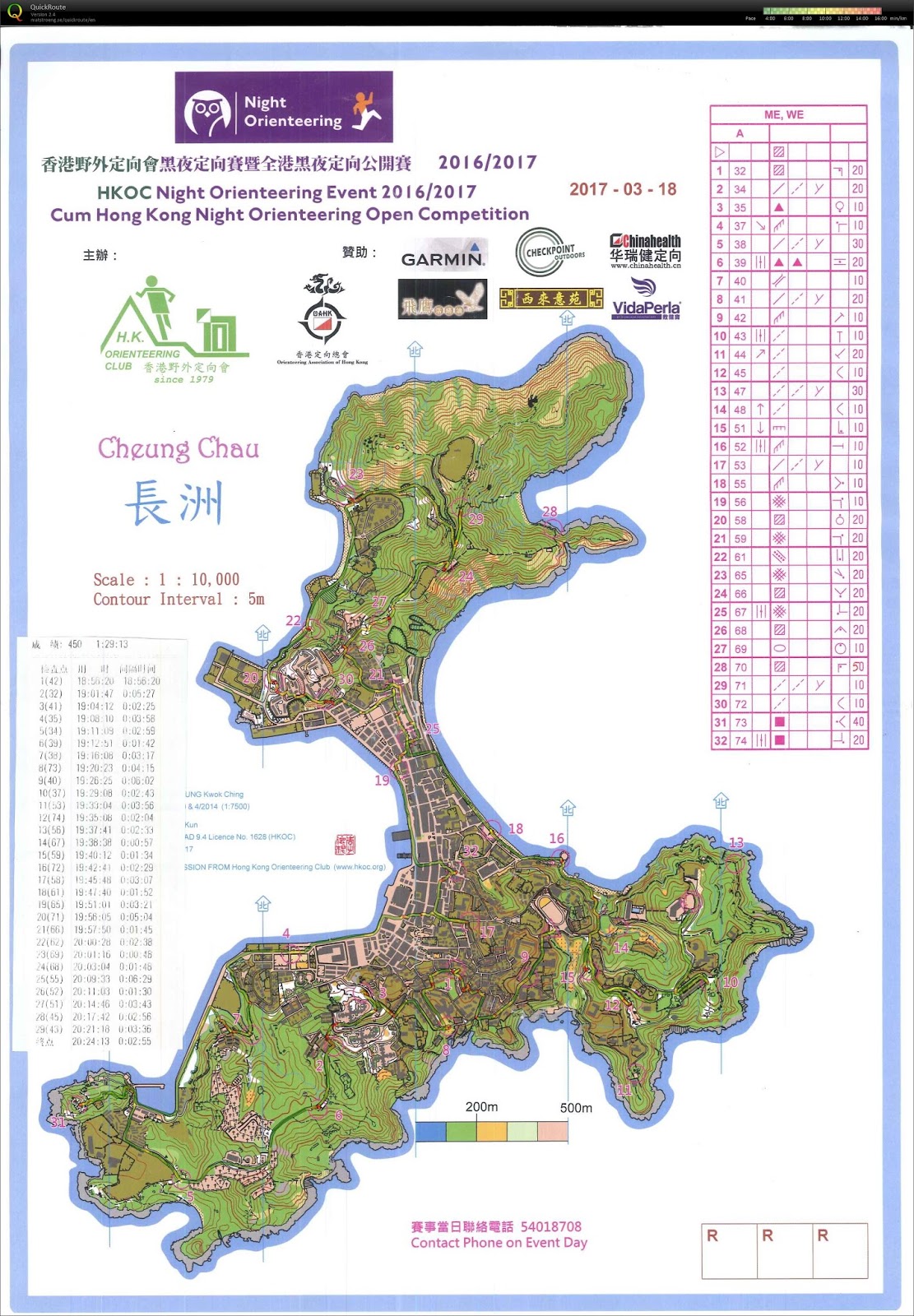

When I first looked at the map, I slowly found where the start (triangle) and the finish (double circle) are. Then, it took me a while to see the distribution of checkpoints. I only had a general approach: sweep the checkpoints on the SW side of the map first. Then, I go to the north if I have time. Finally, I leave some time to find the checkpoints close to the finish.

I was very slow in the first few checkpoints, since I had to adjust with seeing with the headlamp. Moreover, I was still deciding the optimal way to sweep the checkpoints on the SW side. The checkpoints for my earlier stage were located inside confusing alleyways. Thus, I almost stopped at every path junction.

Once I got to checkpoint #3 (35), the order for the rest of the SW checkpoints was pretty much set until checkpoint #4 (37). After leaving the village area, I could run pretty fast. I just needed to pass through a cemetery in the dark.

The 40 points for #31(73) were worth of my time. That one was so close to Cheung Po Tsai Cave.

After #4, slightly more than 30 minutes were passed (i.e. 1/3 of the given time). I did not plan as far ahead, seeing 2 to 3 checkpoints at a time. I was back to the village area, so I had to be careful not to get lost.

For the checkpoints in the north, the order was pretty much set, seeing that I had plenty of time to sweep them. The exception was the 50-point #28 (70). It was far. I needed to go down and climb back with almost 100 m elevation. I also had <30 minutes at that point. Why not just go near the finish and sweep the checkpoints there?

Later, I found that I should not find #21 (59) and #25 (67) on the way to the north. I should find them on the way back to the south.

When I reached the SE part of the map, there were only 10 minutes left. I forgot to pick up #14 (48), the one that was close to Oi Fai Camp. Then, I used to remaining to pick up the checkpoints with smaller values. I did not see that the two checkpoints (#11 (44) and #13 (47)) that I did not have time to pick had higher point values.

When passing the finish line at Ming Fai Camp, I had slightly <1 min to spare.

Overall, I felt quite good because I did not feel lost at anytime during the course. This feeling got better because I found many of these checkpoints in the dark. I gotta say that the reflective strips on the checkpoints were really reflective to my headlamp. Once I knew where the checkpoints were approximately located, I could see these reflection without any problems.

I skipped 4 points that were worth 110 points. I got a total of 450/560. I wondered if any elites could sweep the whole course (i.e. 560/560).

Award

I went back to the event center to print the results, pick up the key for lodging in Ming Fai Camp, and pick up a cup noodle (without a fork), a cake, and a carton of juice for tonight's dinner and tomorrow's breakfast (certainly not enough for me). Then, I looked at the preliminary results. Huh? Nobody got over 400 points? Even when the result was final, there were only 2 people got over 400 points, and I was one of them.
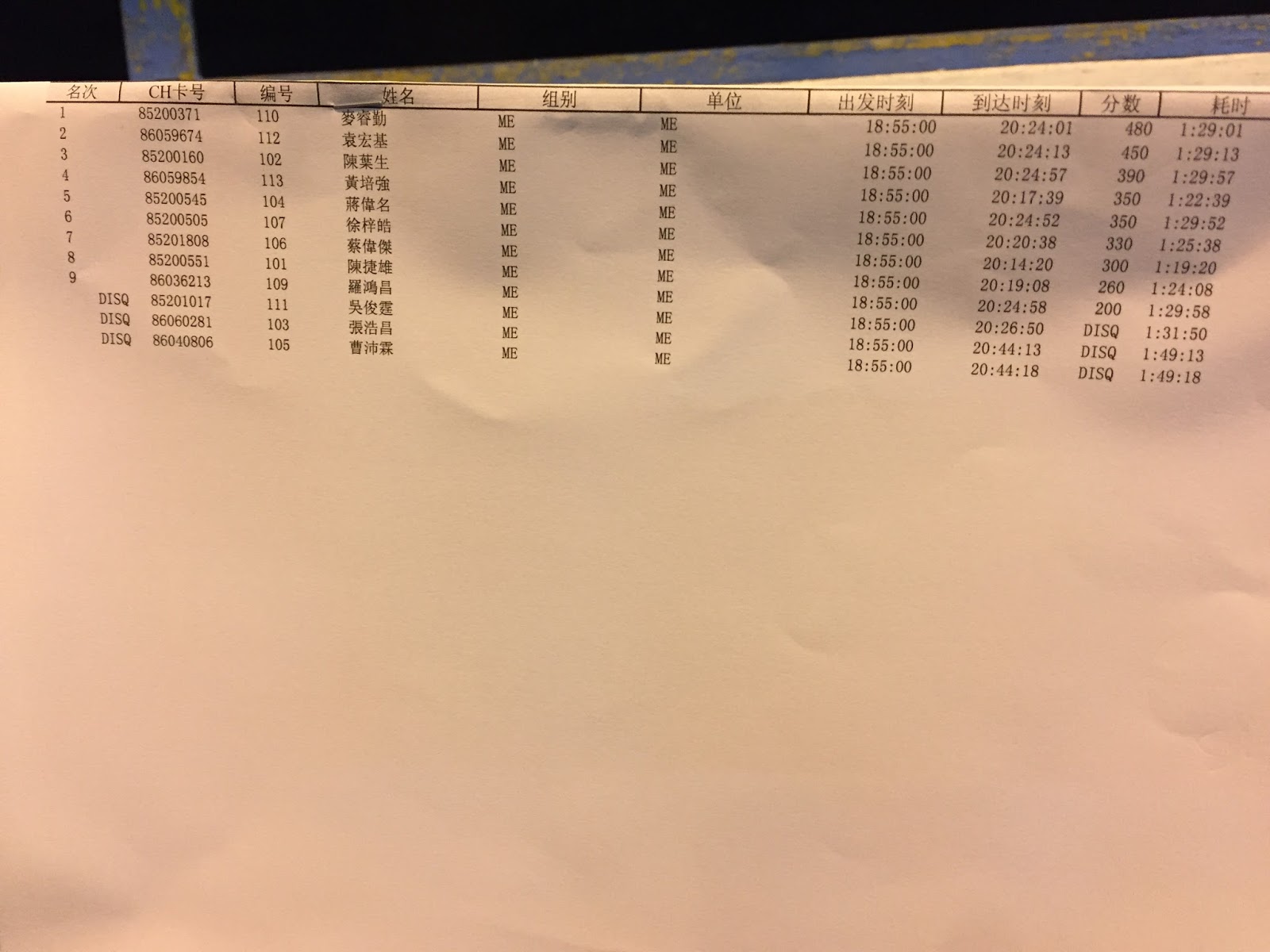

Where were the elites? I felt that the true elites could sweep the whole course except getting #28 (70). There were actually more people in the MO (man open, in pairs) and the MC (man challenge, single) groups to compete with than the ME group. I also knew some people in the MO group ran much faster than me.

I did know that some elites went to the north first and picked up #28 (70) for the 50 points. In their situation, it was less obvious that this point was not worth of the time.

Anyway, this was the first time that I got into the first 3 places in an orienteering that needs running (i.e. not trail-O). Let's see what I would get.


As a second place, I did not only get a medal, but I also got a cup and ... VG Cellumed - Swiss Skincare Product. Who would like to use it? I guess females are more likely to be interested in such products.


Intermission

I finished the cup noodles (using the straw from the drink as fork) and the drink before the award ceremony, but I was still hungry. I went back to the village and found only several dessert shops open. After getting dessert, I went to a store to buy a drink for tomorrow's breakfast.

I returned to Ming Fai Camp that I had not been for >10 years. The place seemed to look very different now. I remembered that the rooms were segregated by cutting one half of rooms for the guys and another half for the gals. Now, the rooms had no such distinctions.

Before sleeping, I thought about if I could optimize my route more to get more points. However, I could not think of any unless I could run faster.

(to be continued in Part 2...)

Saturday, March 11, 2017

Orienteering Report: MSF Orienteering 2017 - Lamma Island

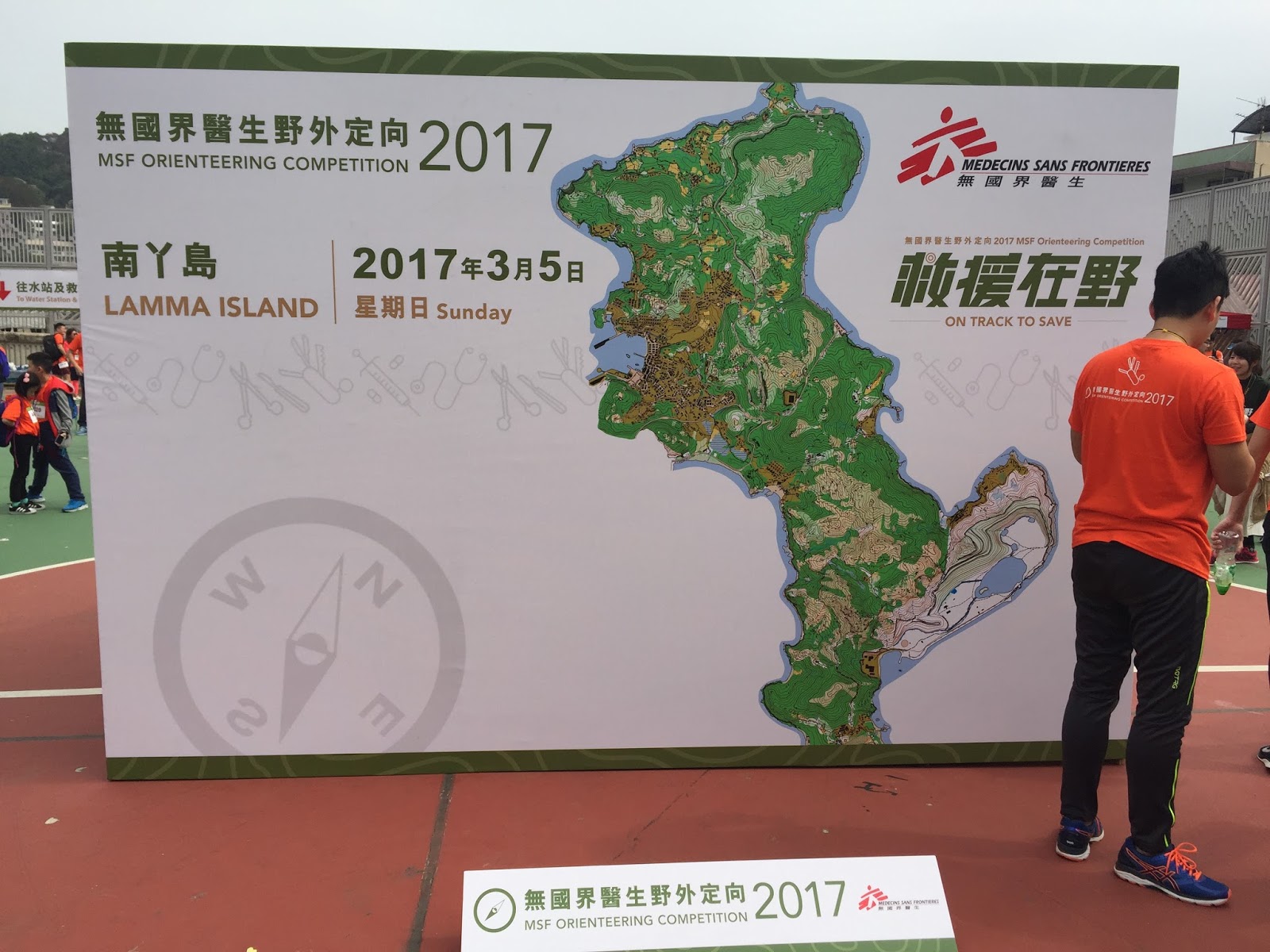
MSF (Medicins Sans Frontieres, French for Doctors Without Borders) organizes orienteering events annually in Hong Kong, which probably attracts the most people to participate in such event. There were around 4,000 to 5,000 people to participate. Also as a fundraising event for this meaningful organization, each team needs to get sponsored to a minimum amount of money before the participation.
More information can be found at this link:
https://ssl.msf.hk/oc/home/en?#

From the orienteering perspective, this is a score-O event. In the MSF Orienteering, each team was given 2.5 hours to search for as many checkpoints (controls) as possible. Each checkpoint has a point value that is based usually on the difficulty to reach. The number and distribution of checkpoints are designed so that getting all checkpoints within 2.5 hours would be very difficult.

I was not a participant but a volunteer. I found on FB that the orienteering group in HK needed volunteers to set the checkpoints. As a person who has organized some orienteering events, I signed up immediately. Thus, I became part of this technical team to make sure the checkpoints were placed correctly. I did not even care that I had to be at the pier by 6:20 am.

To the event center

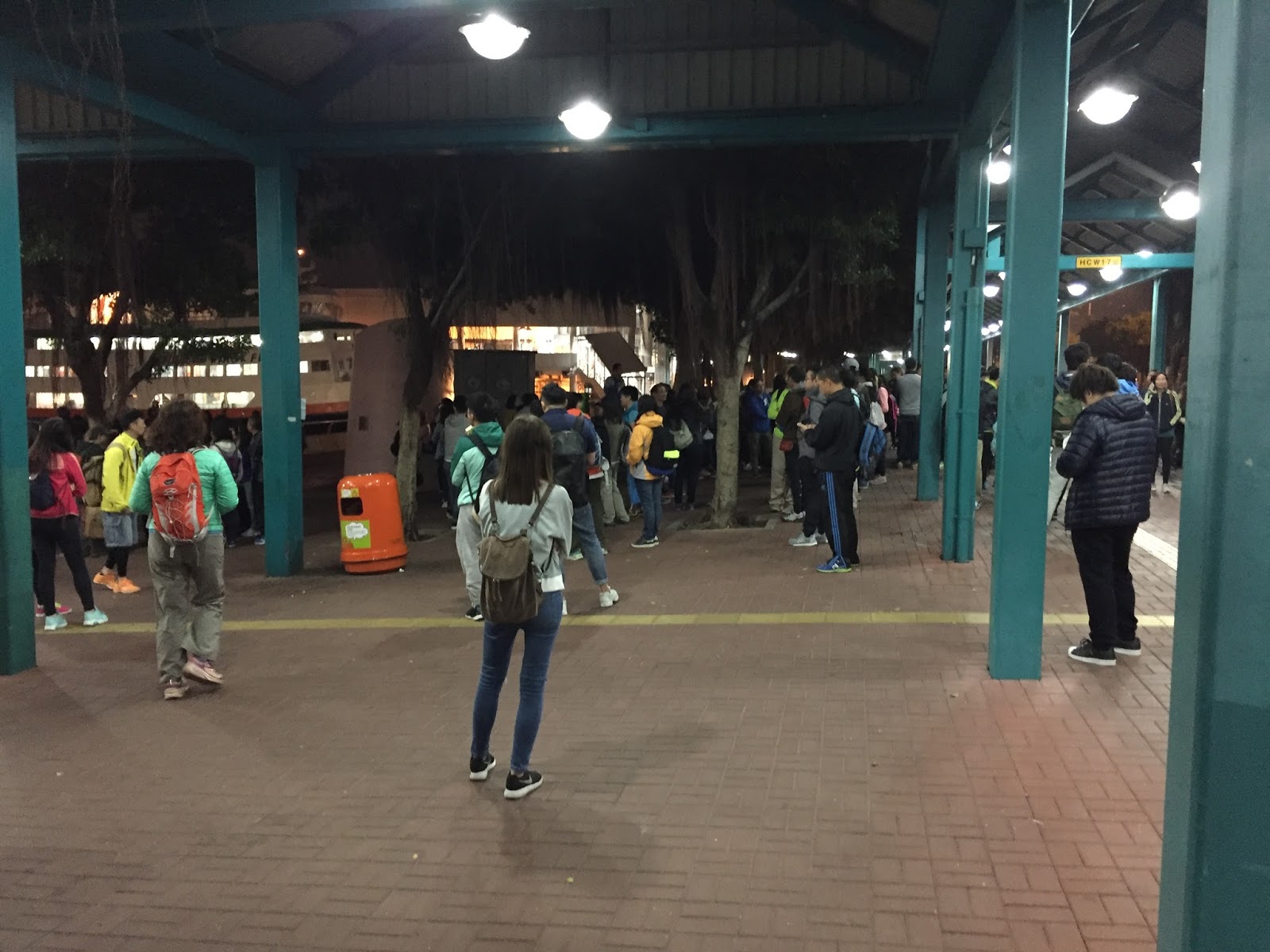
On Mar 5 at 6:20am, the sky was still dark, but there were already about 100 people waiting for the special schedule of ferry. All of these were volunteers. Some of these stayed at the event center. Others were in the competition area that do various tasks, such as guiding people to the start, guarding the water station, or providing first aid. All of the volunteers did not need to pay for the ferry.


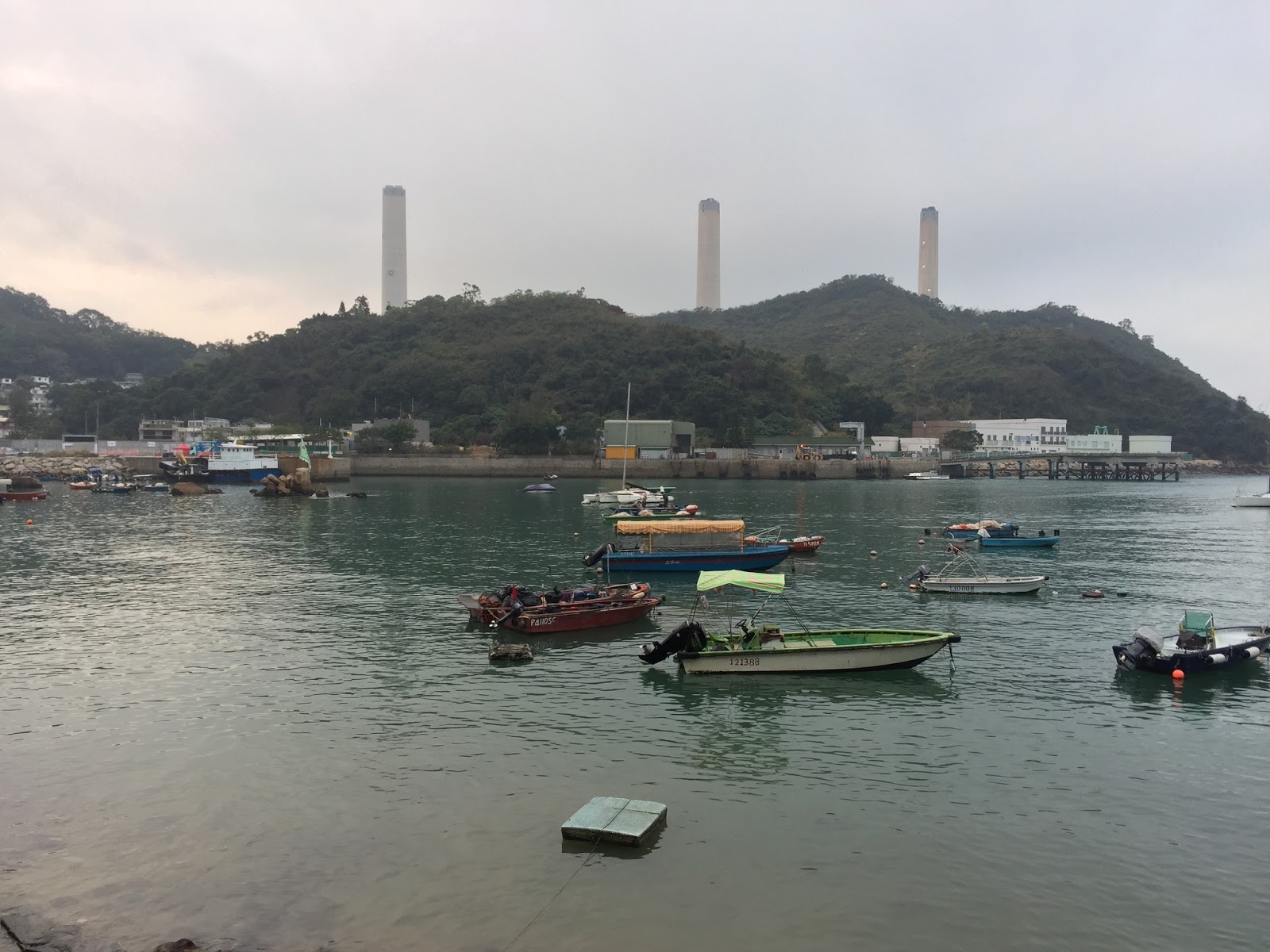
It took about 30 minutes to get to Lamma Island. Time ran very fast because I met some people that I had not seen for a long time. These people were also very friendly. When getting to the island, I saw the iconic three stacks for the power plant that supplies electricity for HK Island.


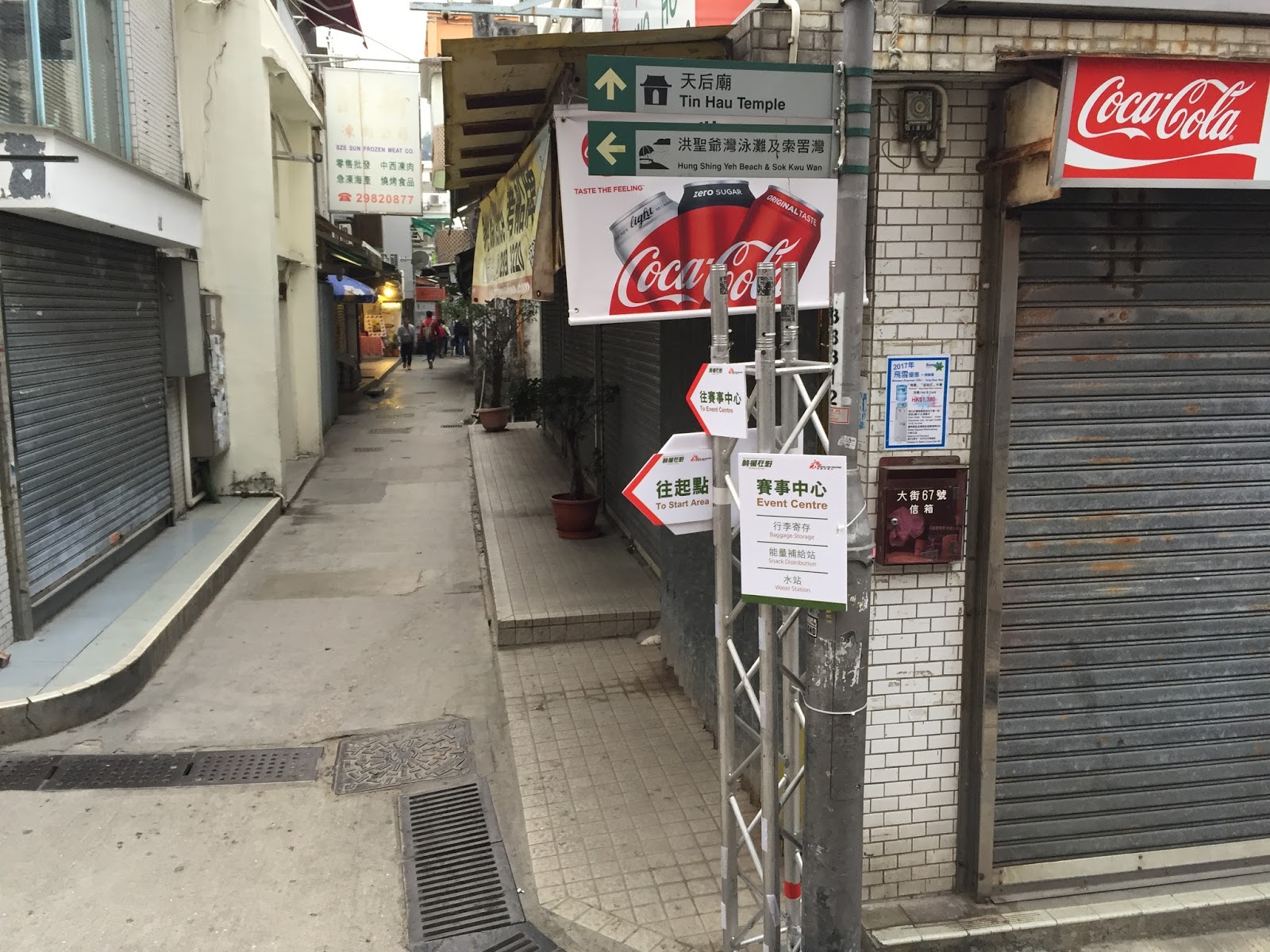
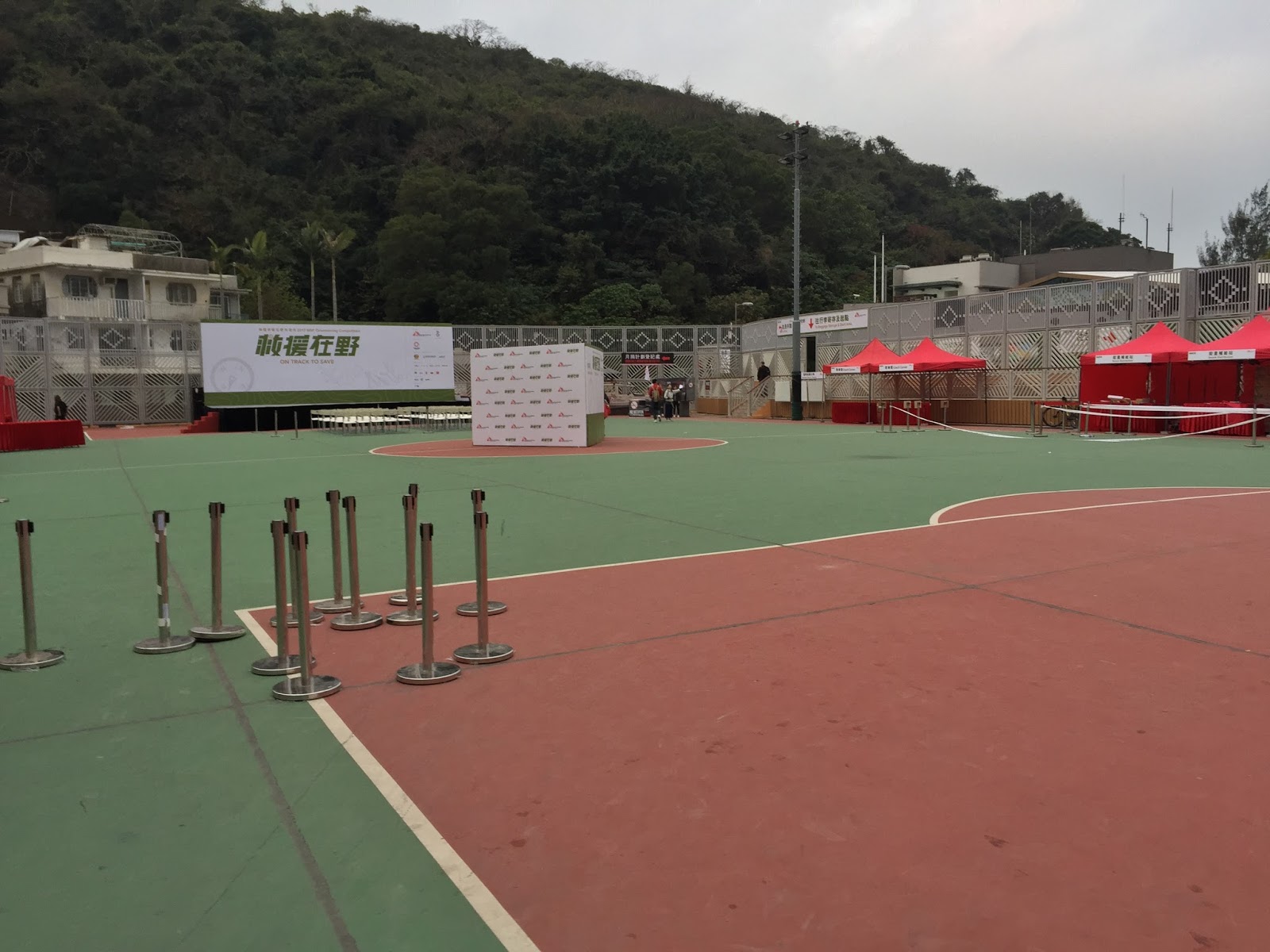
Signs were pretty clear to get to the event center:


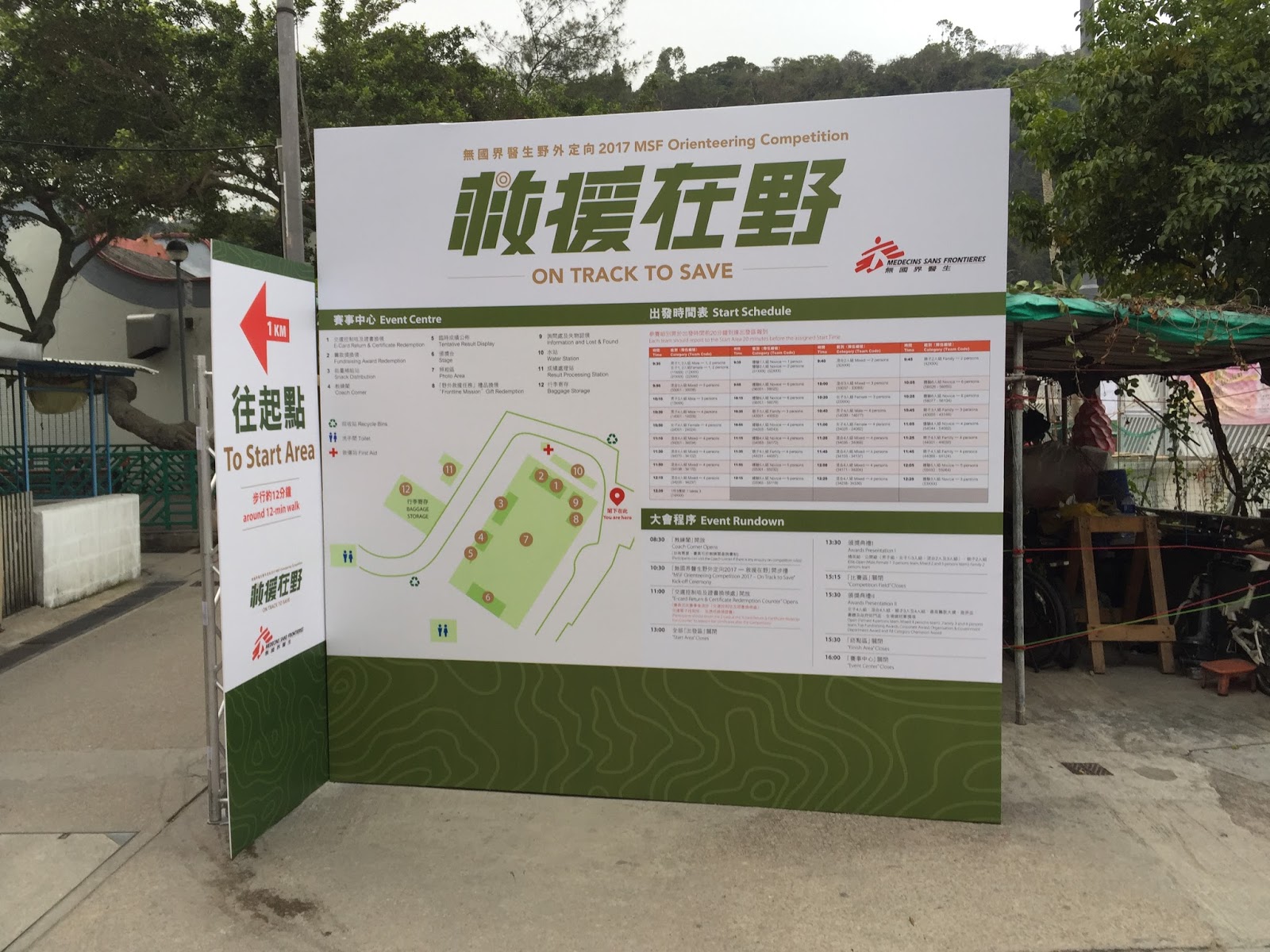
This was where the event center is. It was ~7 am, an hour before the actual event start time. Thus, the place was pretty empty.


Setting checkpoints

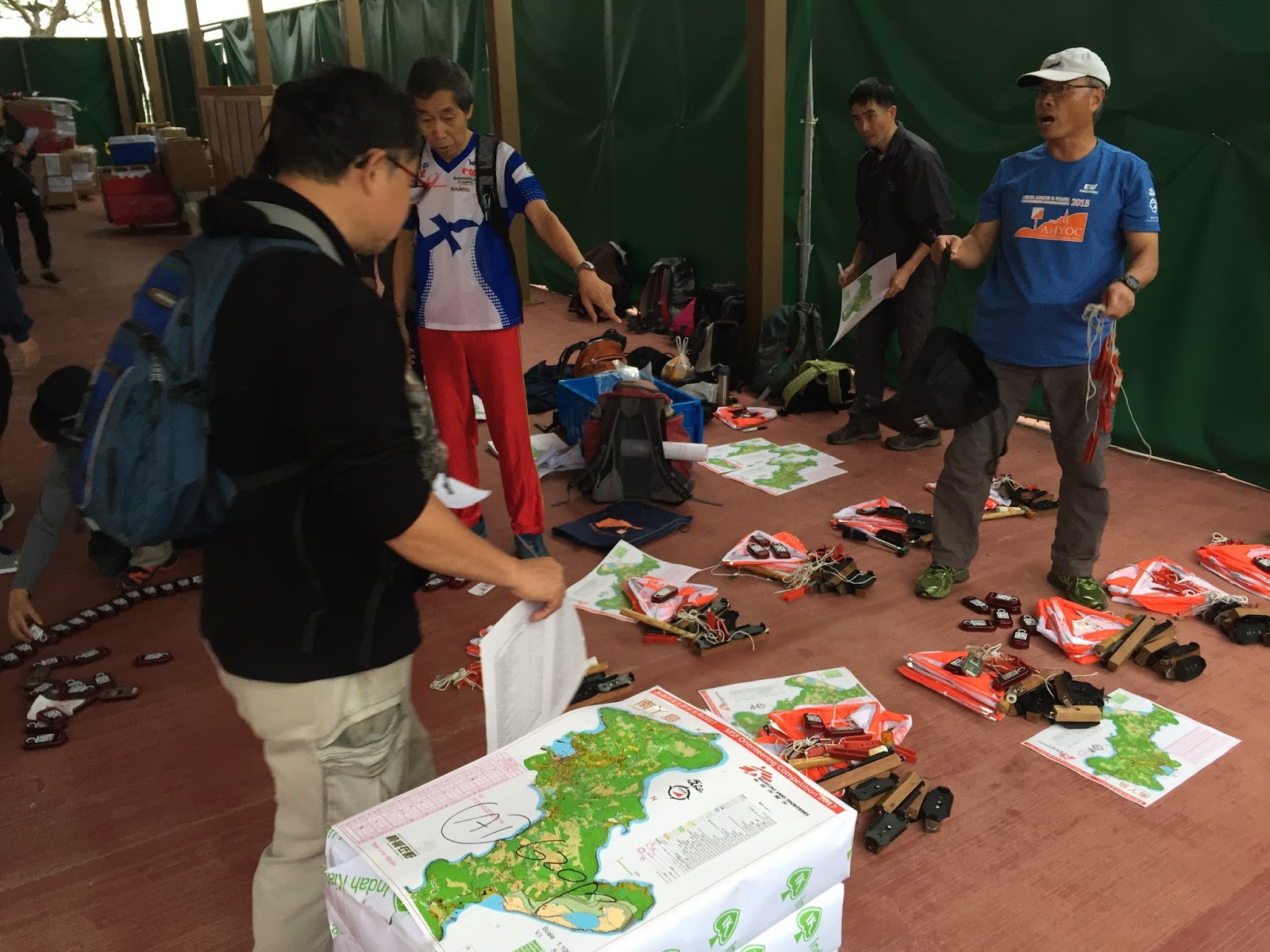
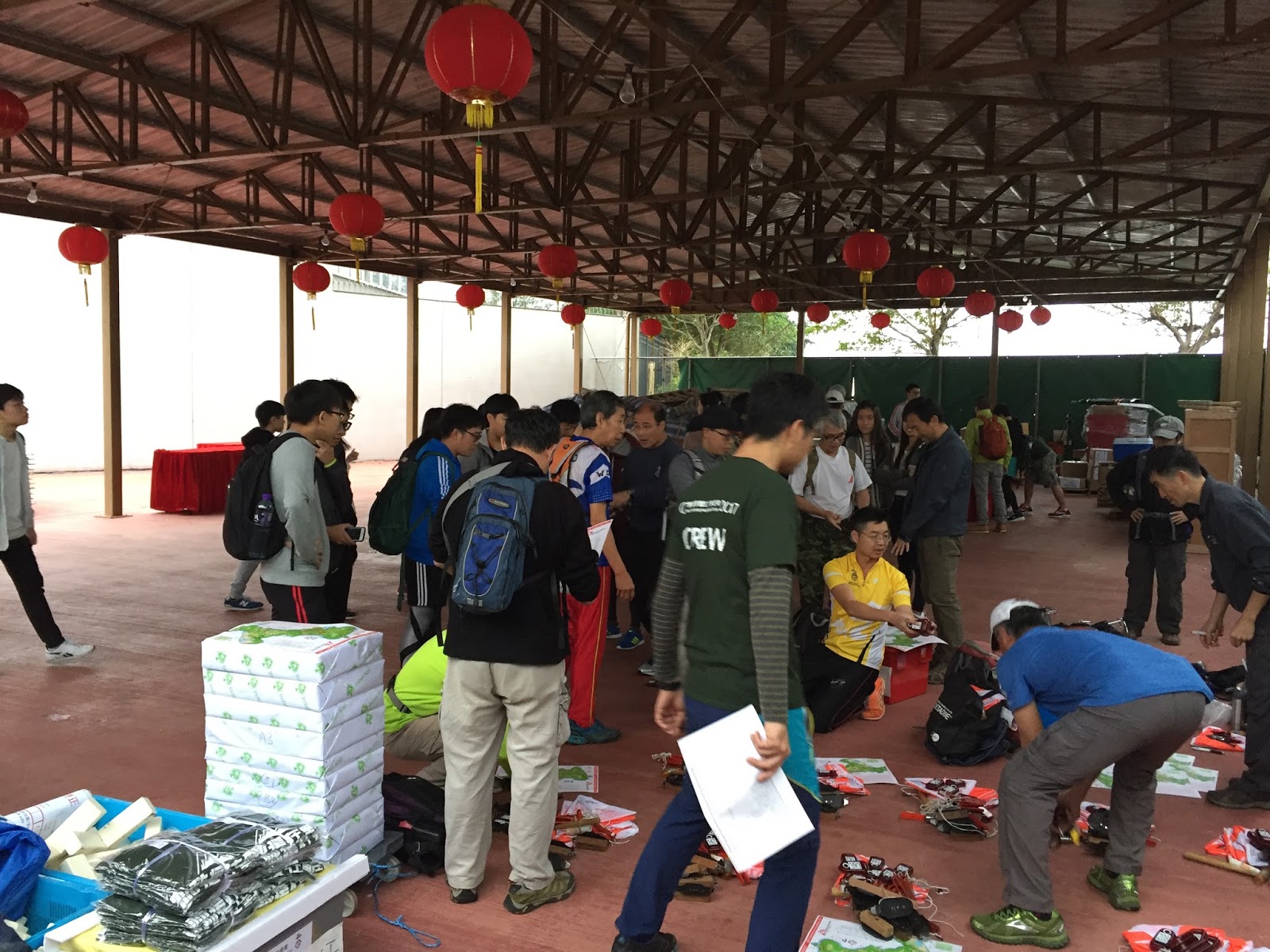
Once we got to the event center, items for the checkpoints were checked and grouped. The entire competition area was divided into 11 regions. Each region contains 6 to 7 checkpoints that were placed by a volunteer.


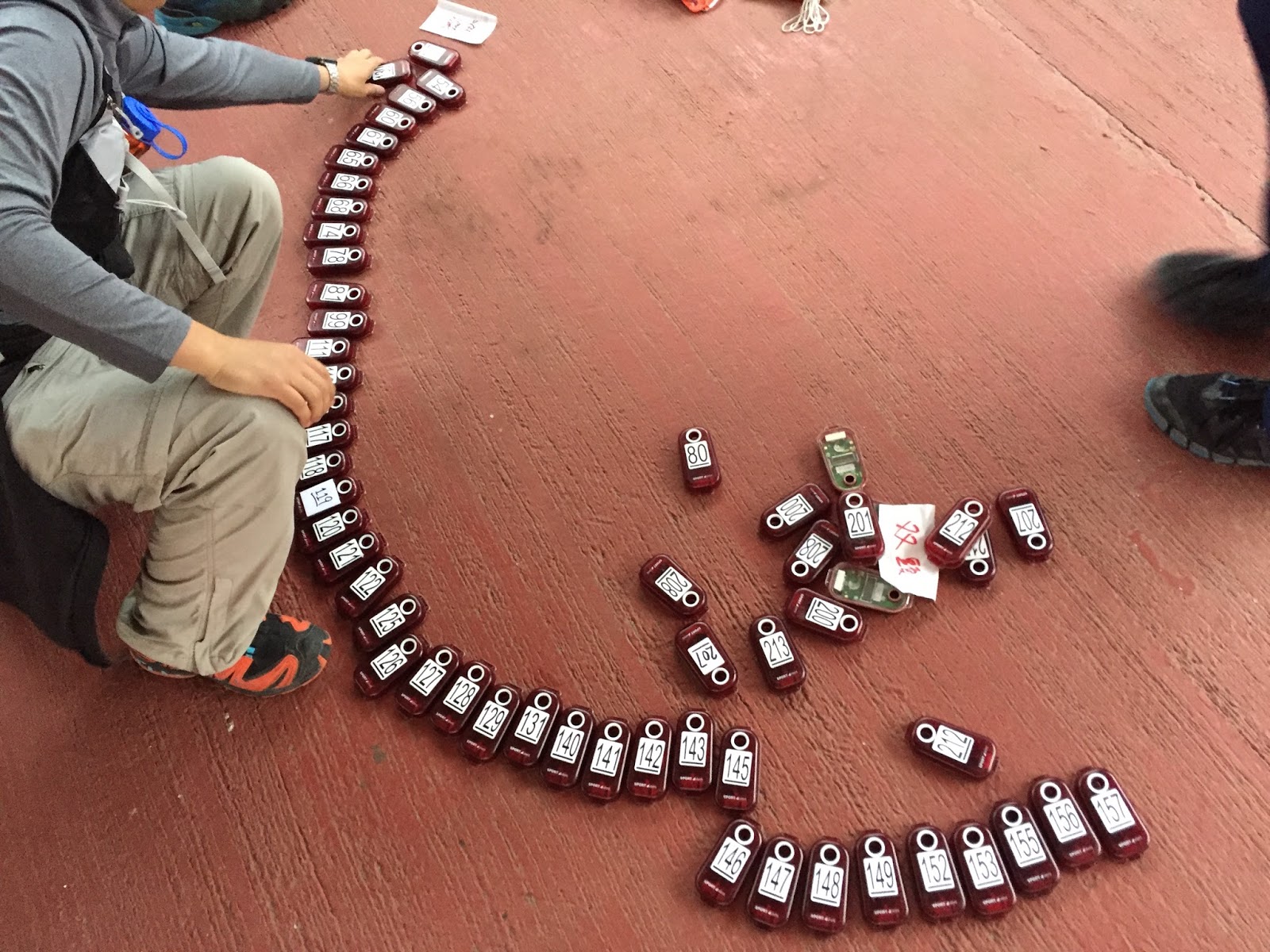
There were 68 checkpoints in the entire competition area. At each checkpoint, there was a SI e-punch with different checkpoint numbers. Before sending them out, they needed to be checked if they functioned properly.


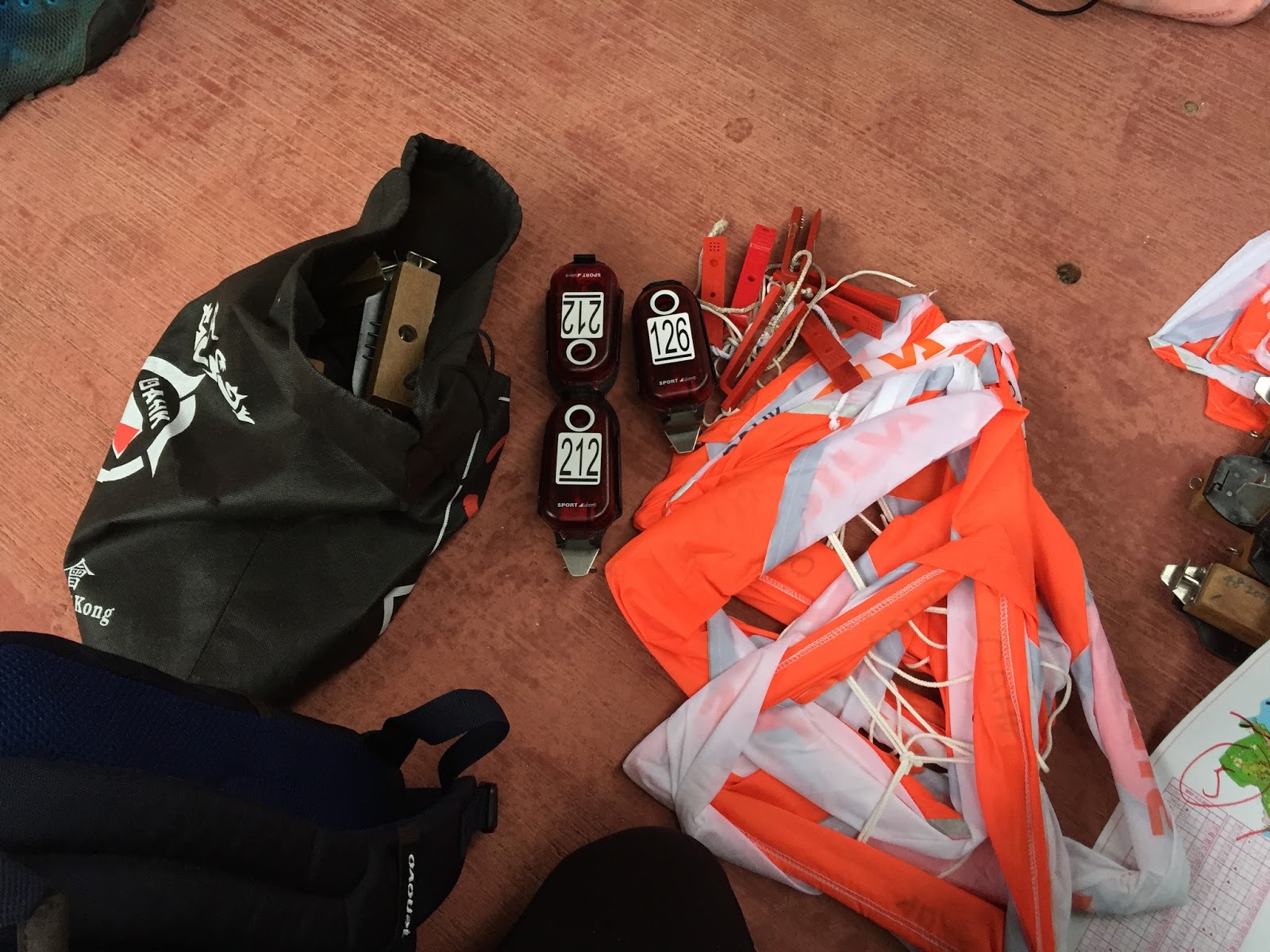
Here were the items that I got for my region. There were orange-and-white orienteering marker bags, SI e-punches, backup mechanical punches (in case if the SI e-punches malfunctioned), and wooden fixtures that help connecting the e-punch to a stick.


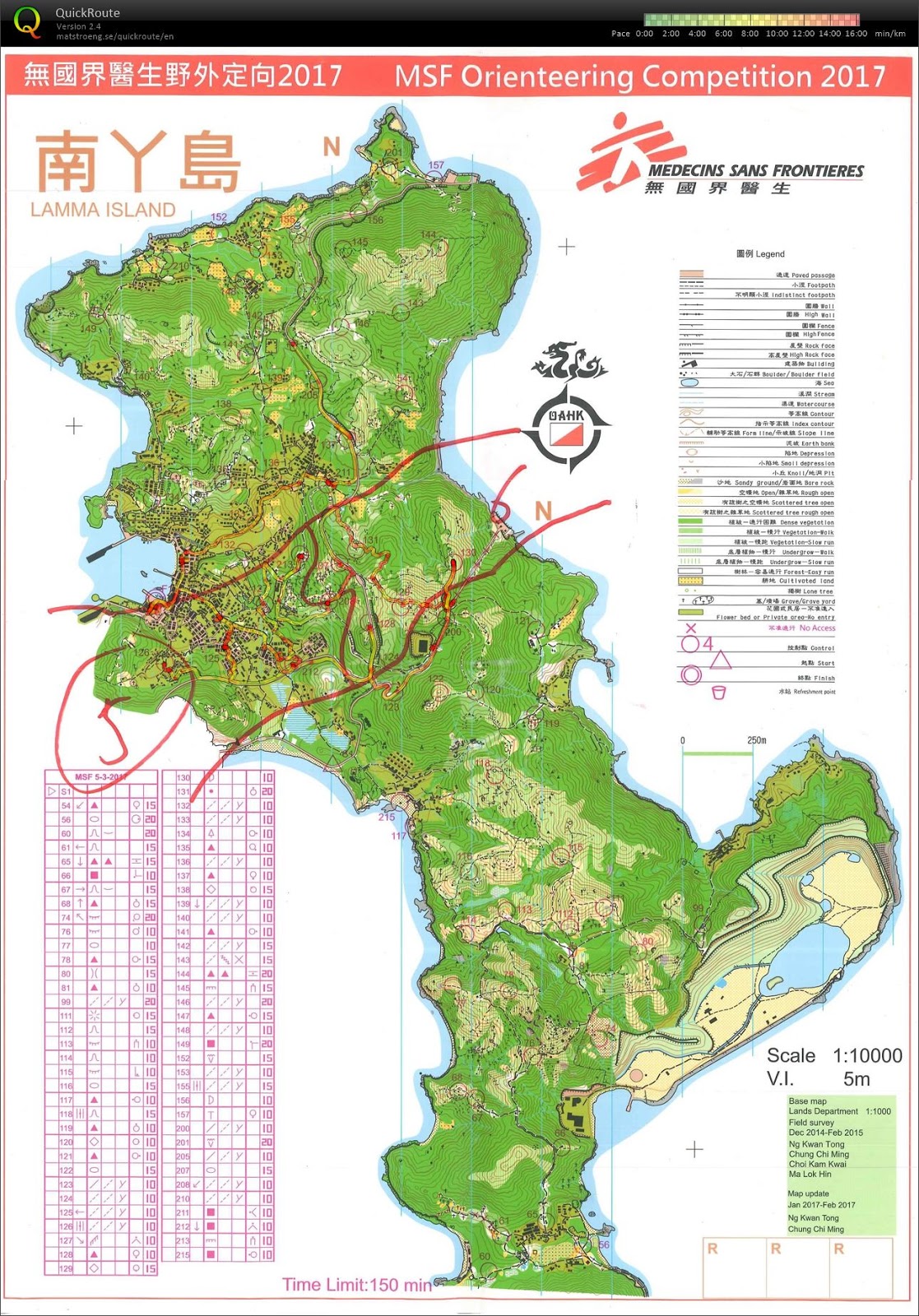
Here is the map, with my GPS watch data on it. Sometimes I use the GPS data to see how accurate the map was drawn. I was responsible for the checkpoints in Region 5. These checkpoints were closest to the event center. Many of these points, in the maze-like village area, could be easy to be placed wrong if I did not read the map carefully. After placing all the checkpoints in Region 5, I needed to go to Region 6 to check if the person responsible for the Region 6 placed the checkpoints correctly.


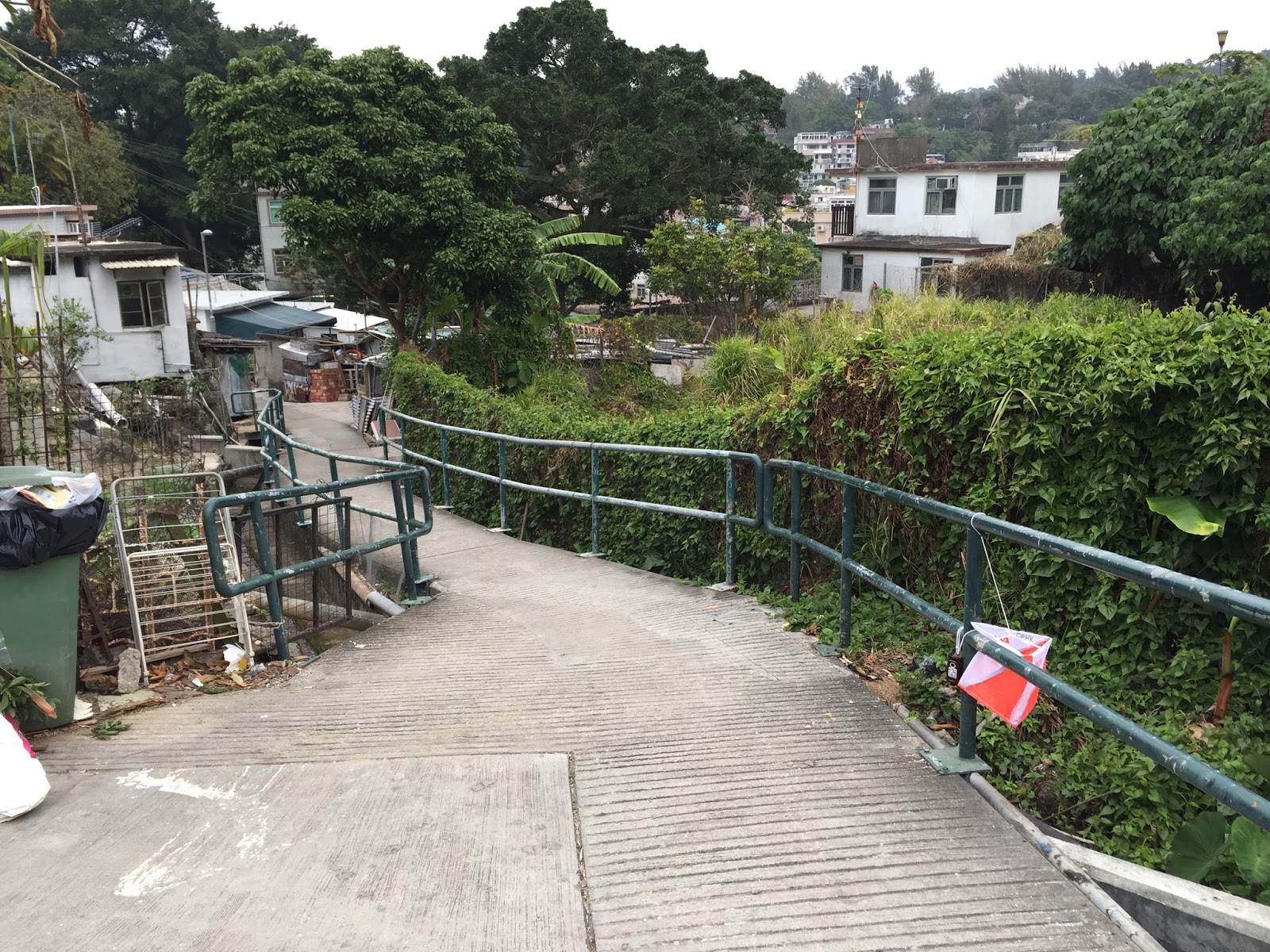
The volunteers who placed checkpoints were then dispatched immediately. The first wave of participants would start at 9:30 am, and I had slightly more than 2 hours to set up and check the checkpoints. First, I set checkpoint #126: path junction:


 Along the way, I took a picture of the village from above.


Then, I put checkpoint #125: path junction. Going from #126 to #125 could have many ways to go wrong.


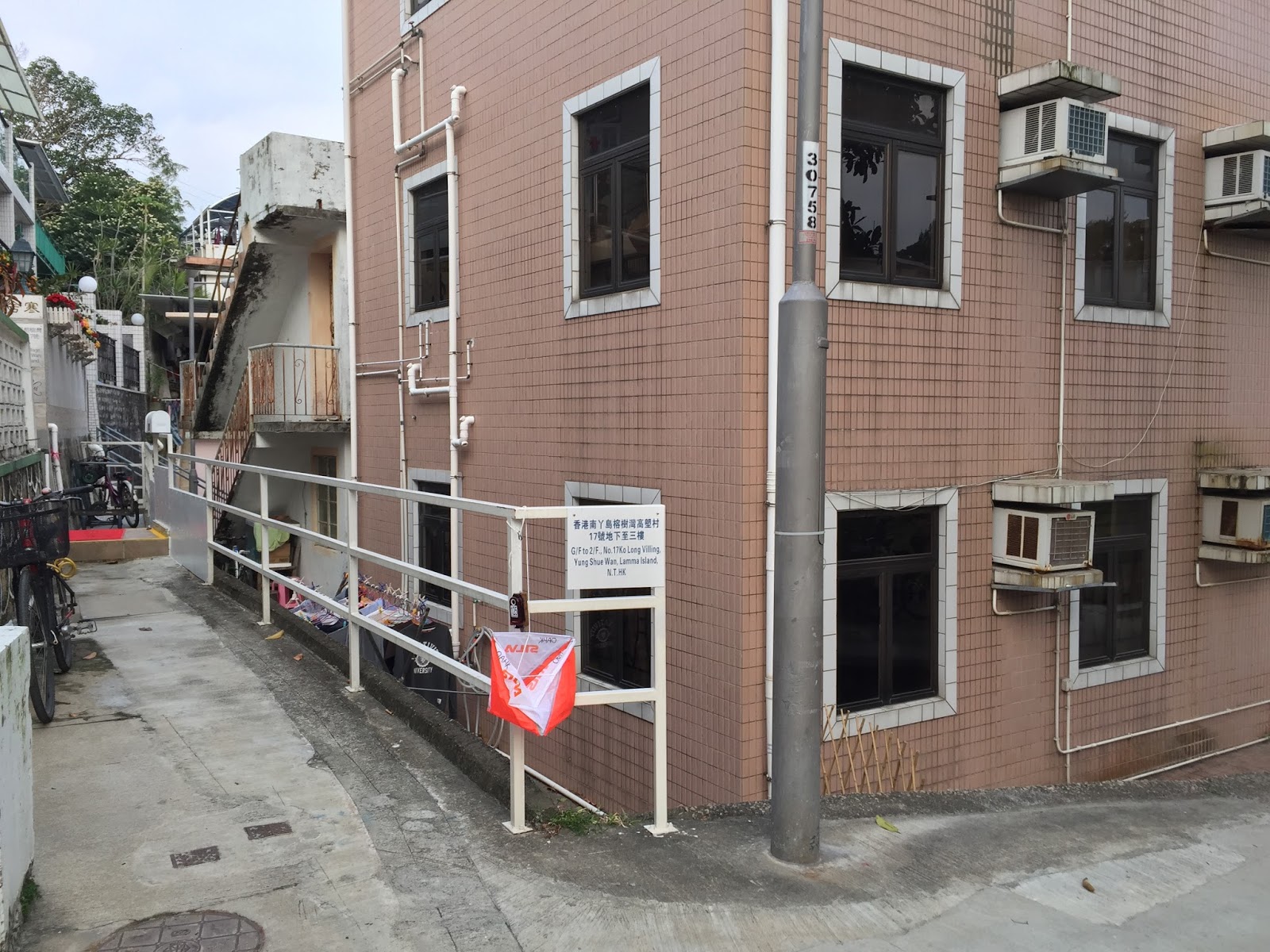
This is checkpoint #212: north outside corner of a building. At this point, I wondered if I should get some metal stick to fix the checkpoints on the ground, rather than tying them up. The wooden fixtures were meant to use with sticks.


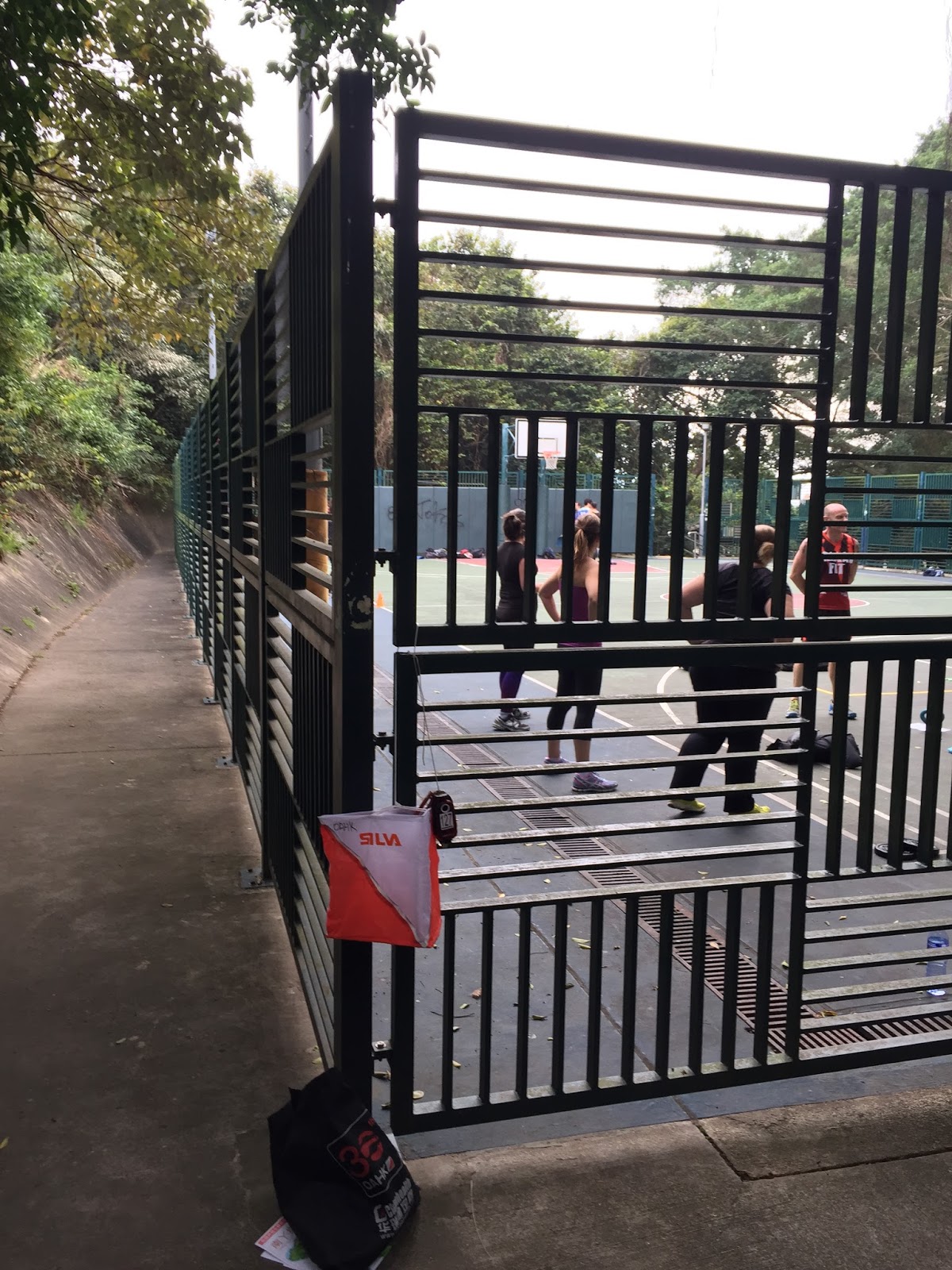
Checkpoint #127: north outside corner of a fence. Some people were preparing to do physical training.


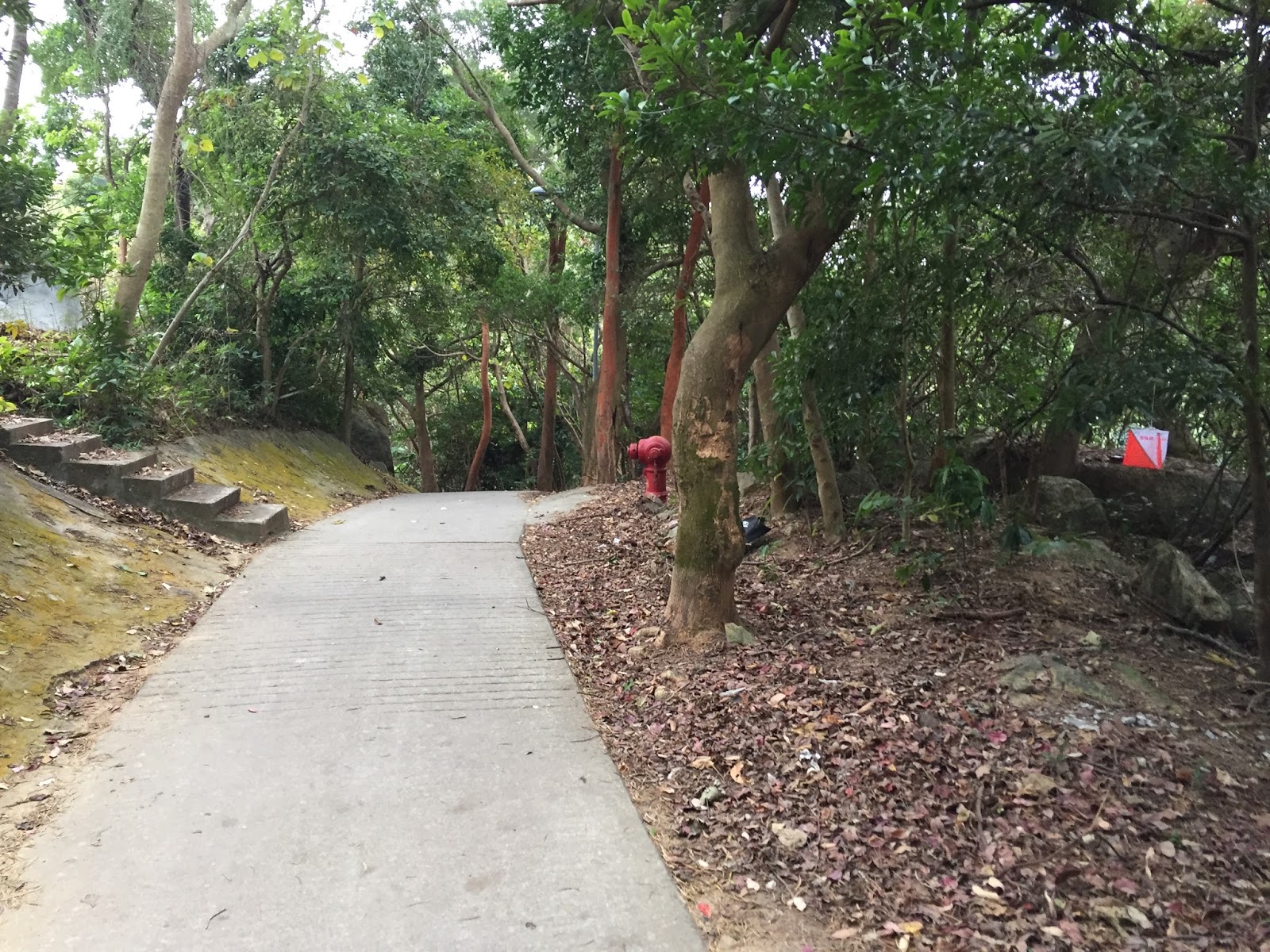
I began to leave the village. Here is checkpoint #213: top of a cliff. I used the stone surface to place the e-punch horizontally, rather than letting it hang vertically.


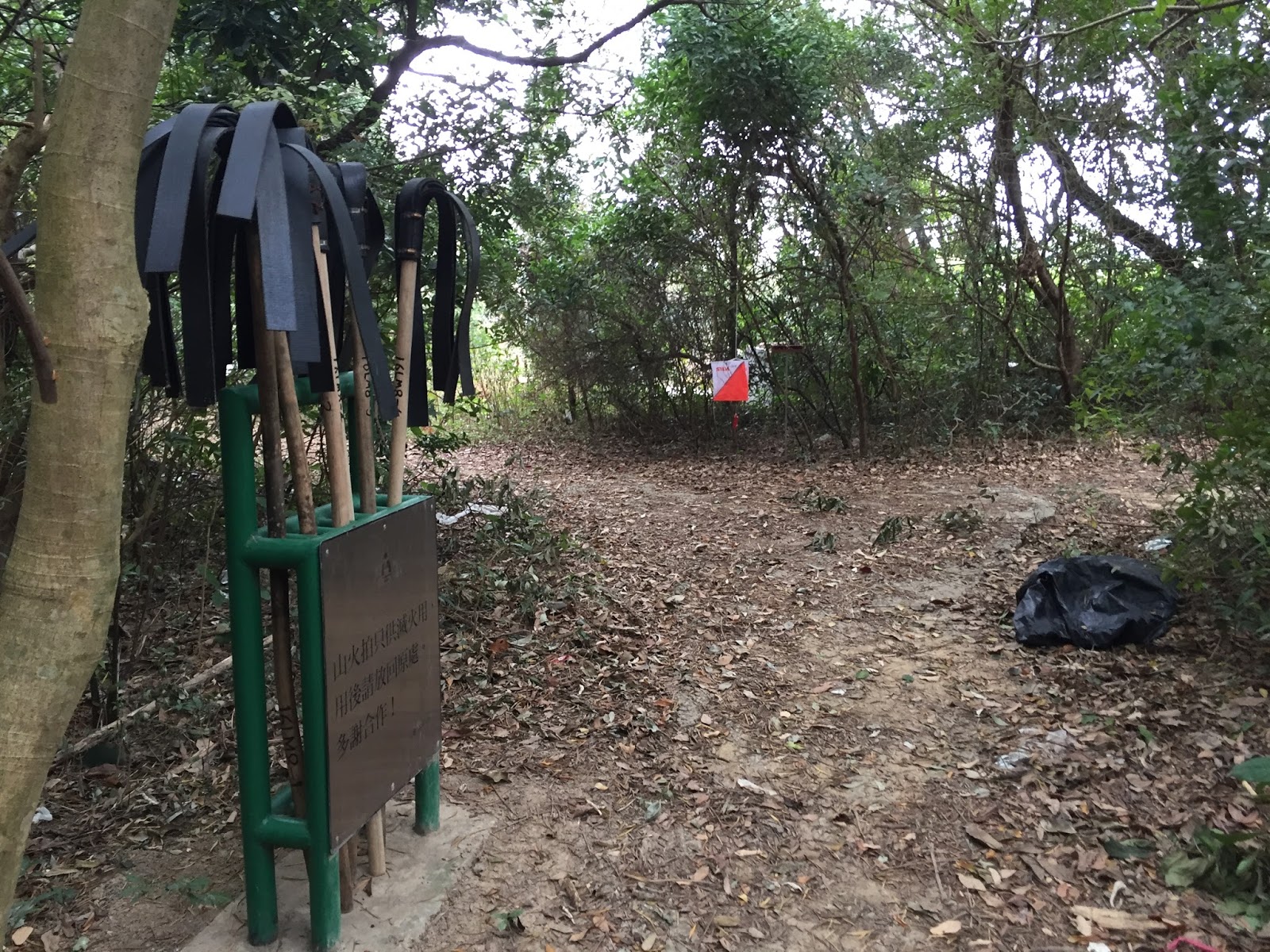
My last check point to place - checkpoint #208: path junction. I found a stick already inserted on the ground, so I made use of it.


Checking checkpoints

Setting the checkpoints took me almost an hour. After informing the course setting volunteers that my region is ready in Whatsapp (first time to find it so useful!), I went to check the checkpoints in Region 6. These checkpoints were more in the wilderness. For example, checkpoint #129 (open land, south edge) was almost at the top of a hill, where the Lamma Power Station could be seen.


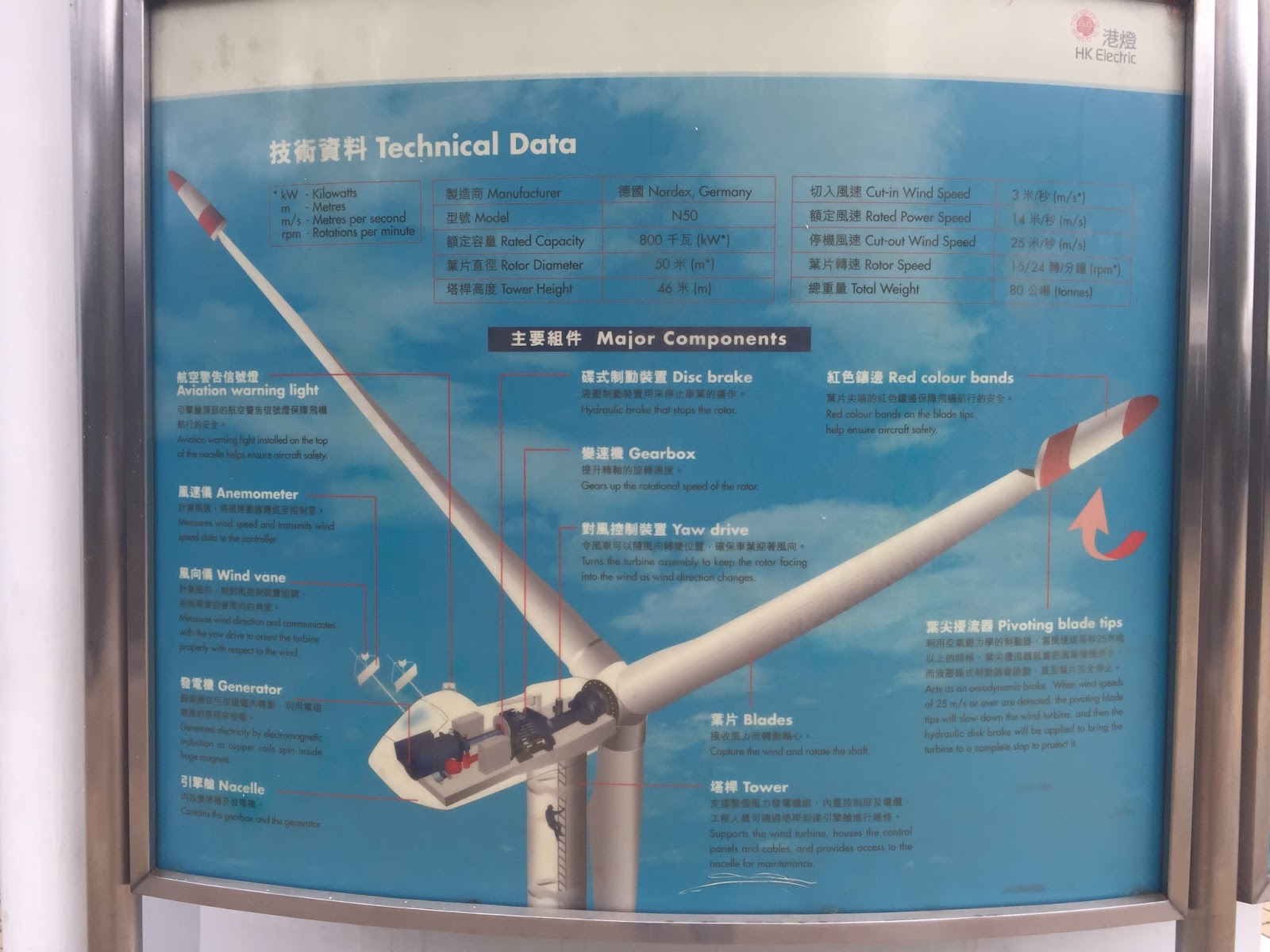
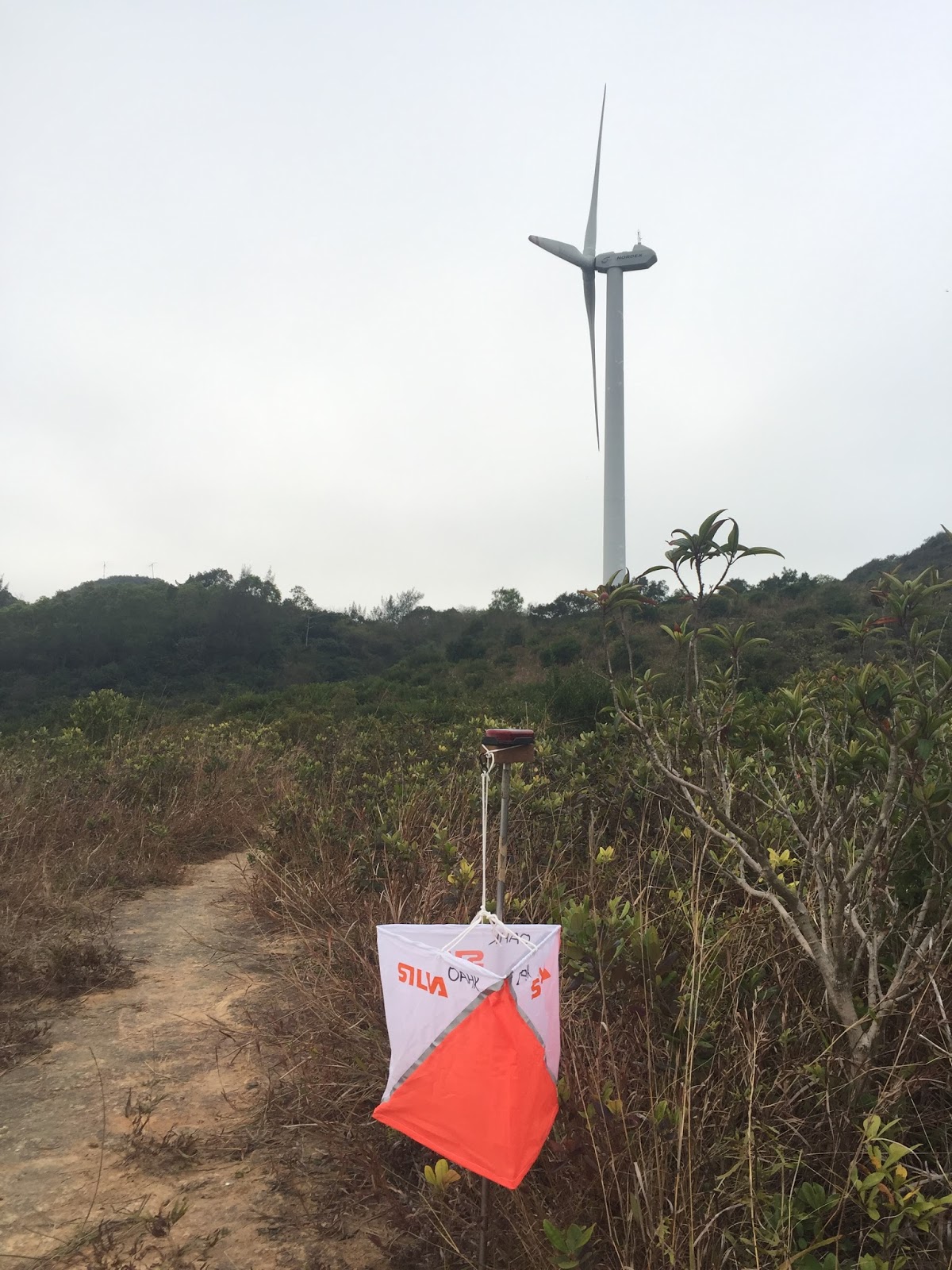
Within 100 m, one could find this full view of a wind turbine.


At the bottom, there were exhibits showing information about this wind turbine. It boasted HK's attempt to generate renewable energy. I laughed at it. In the US, you could see thousands of this to form a wind farm, but in this island, this is the only one. The amount of power generated by this one turbine is too small. Thus, I feel that this wind turbine is more like a tourist attraction.


I also did some geocaching when checking the checkpoints in Region 6. In orienteering, checkpoints are found by reading a map. In geocaching, hidden containers are found by using a GPS. There are more than 1000 geocaches in HK, and millions around the world. Near the wind turbine, I used the GPS in my phone to find this cache container.


This is checkpoint #130: terrace. Another view of the wind turbine.

 
When I finished checking the checkpoints in Region 6, I could hear the horn far away. It was 9:30 am.

Event center

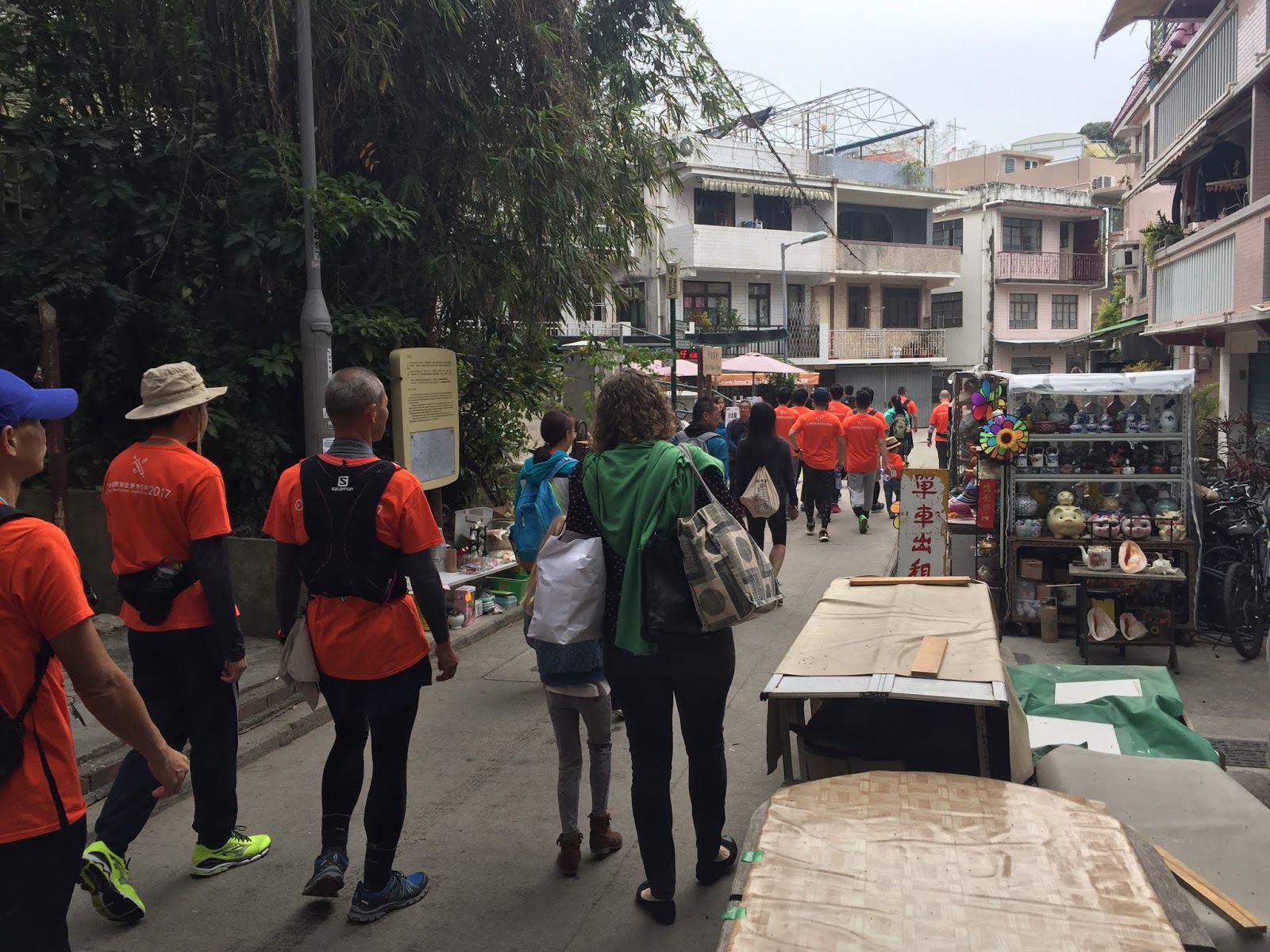
I was instructed to return to the event center to get some refreshments after checking the checkpoints. Along the way, participants were walking to the start.


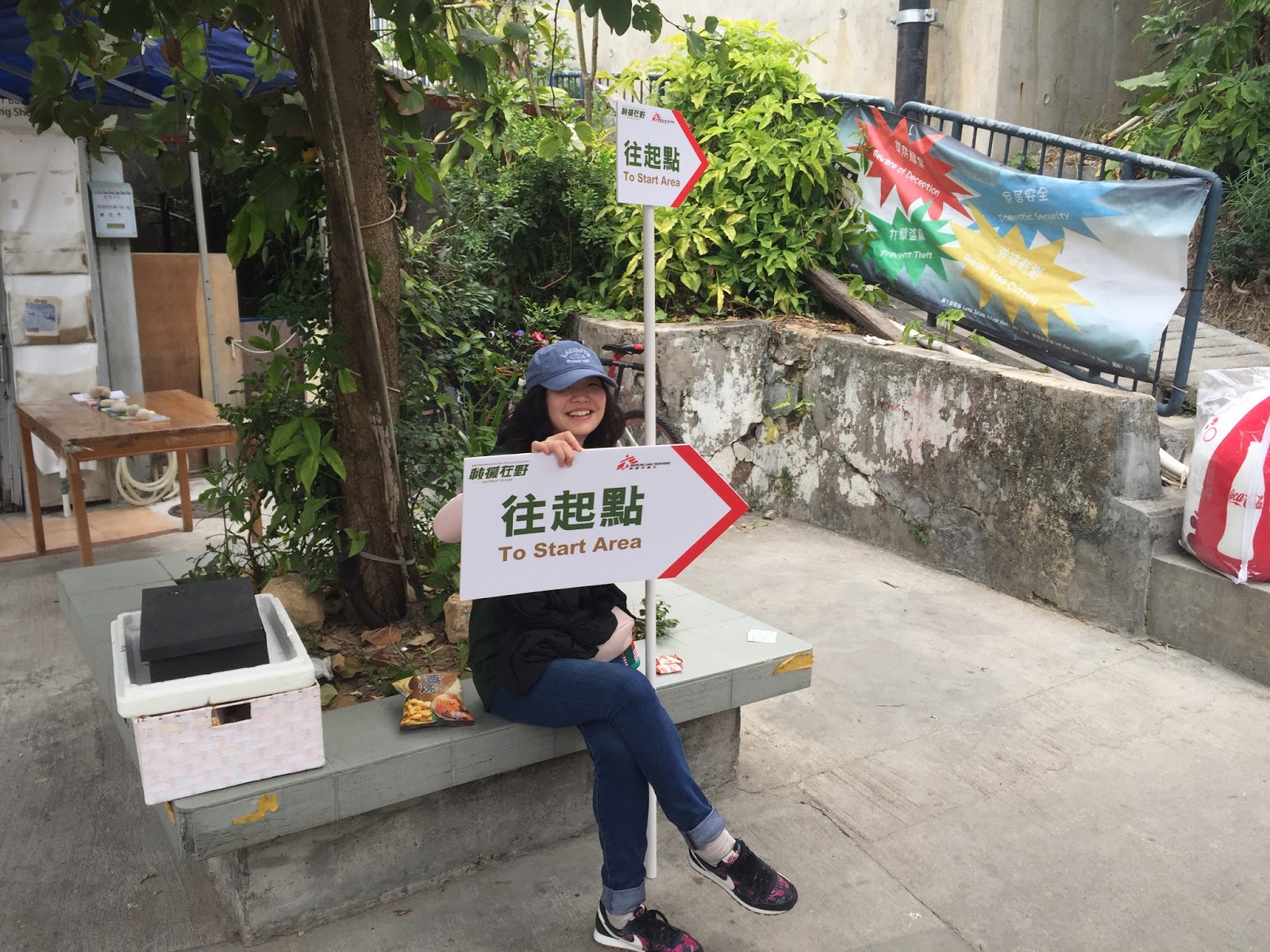
Here was a volunteer holding a sign for direction.


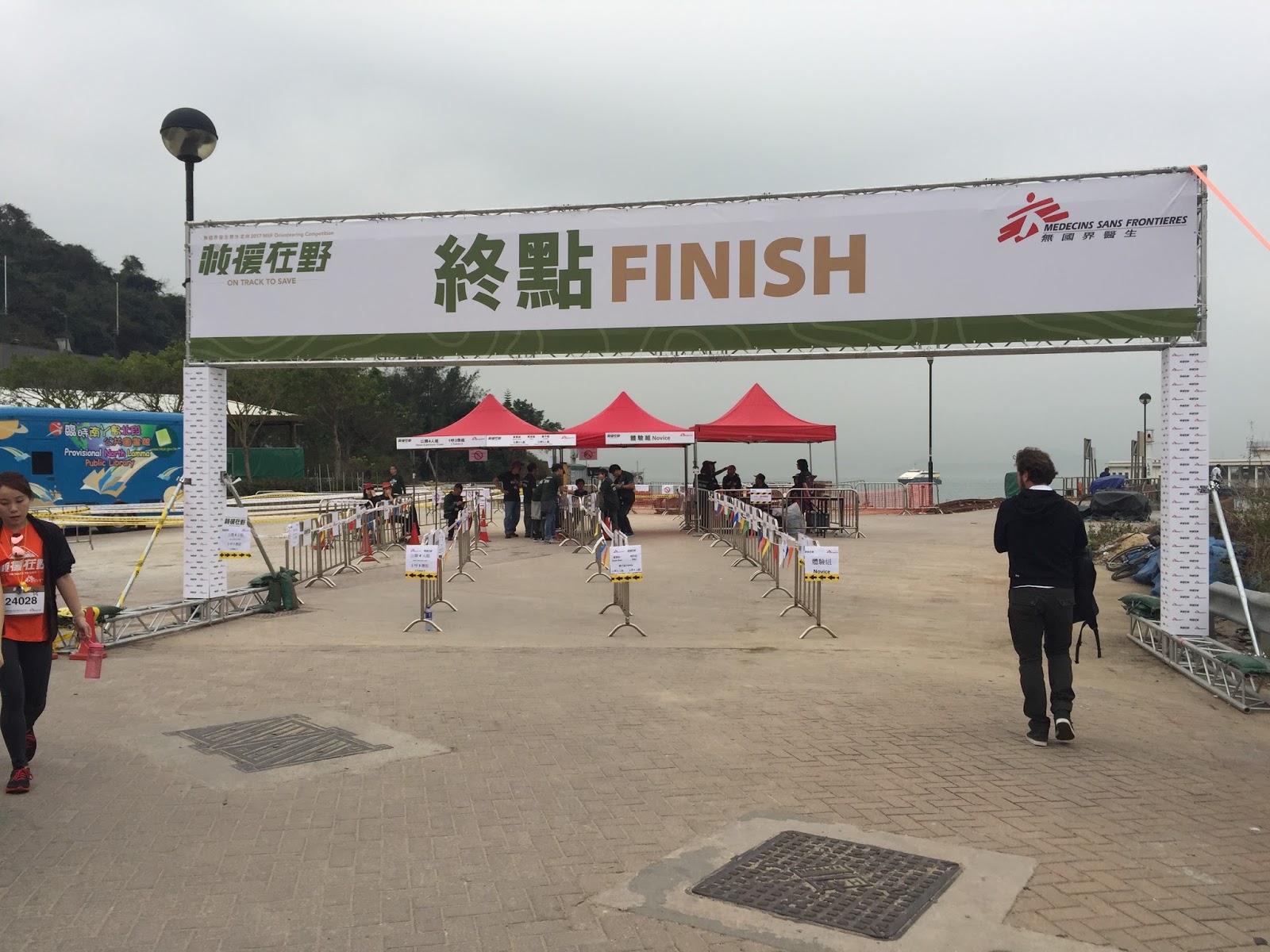
At the event center, I found this huge finish line.


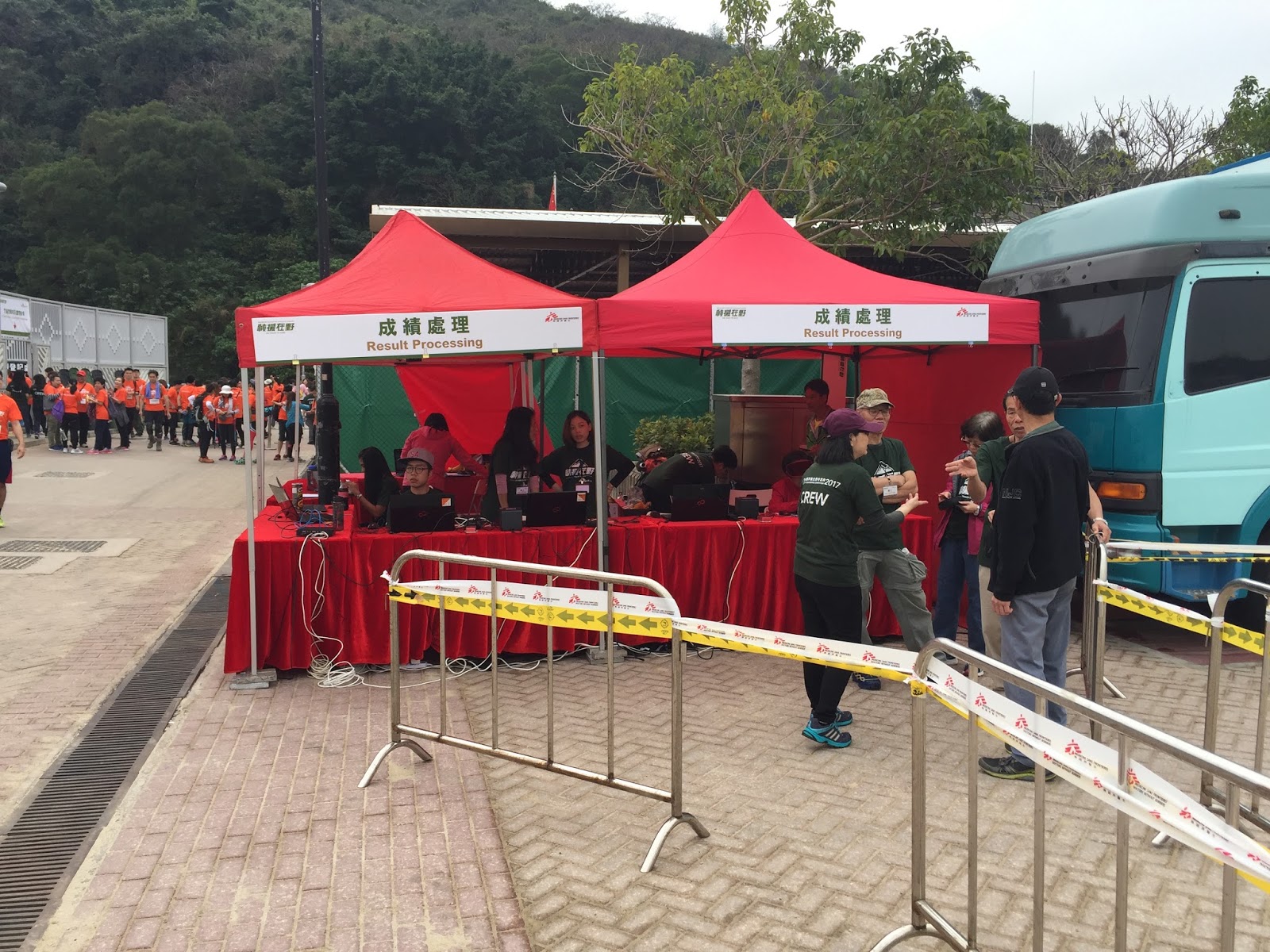
Beside the finish, there was result download.


So many people were in the event center now. They probably were waiting to start. There were many things they could do.


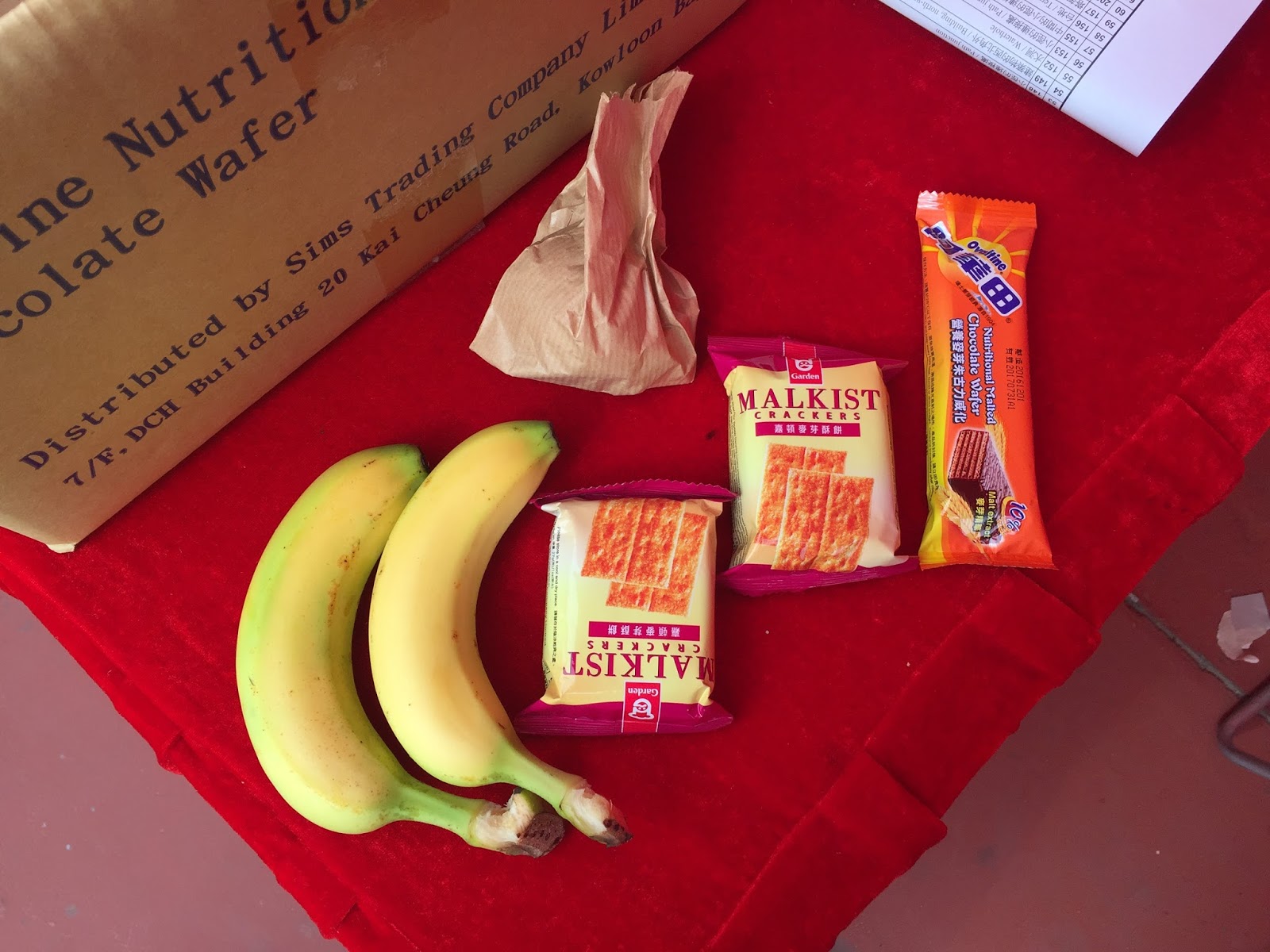
For example, you could get food. Each participant could have bananas, biscuits, and hard boiled eggs.


There were locations for group pictures.


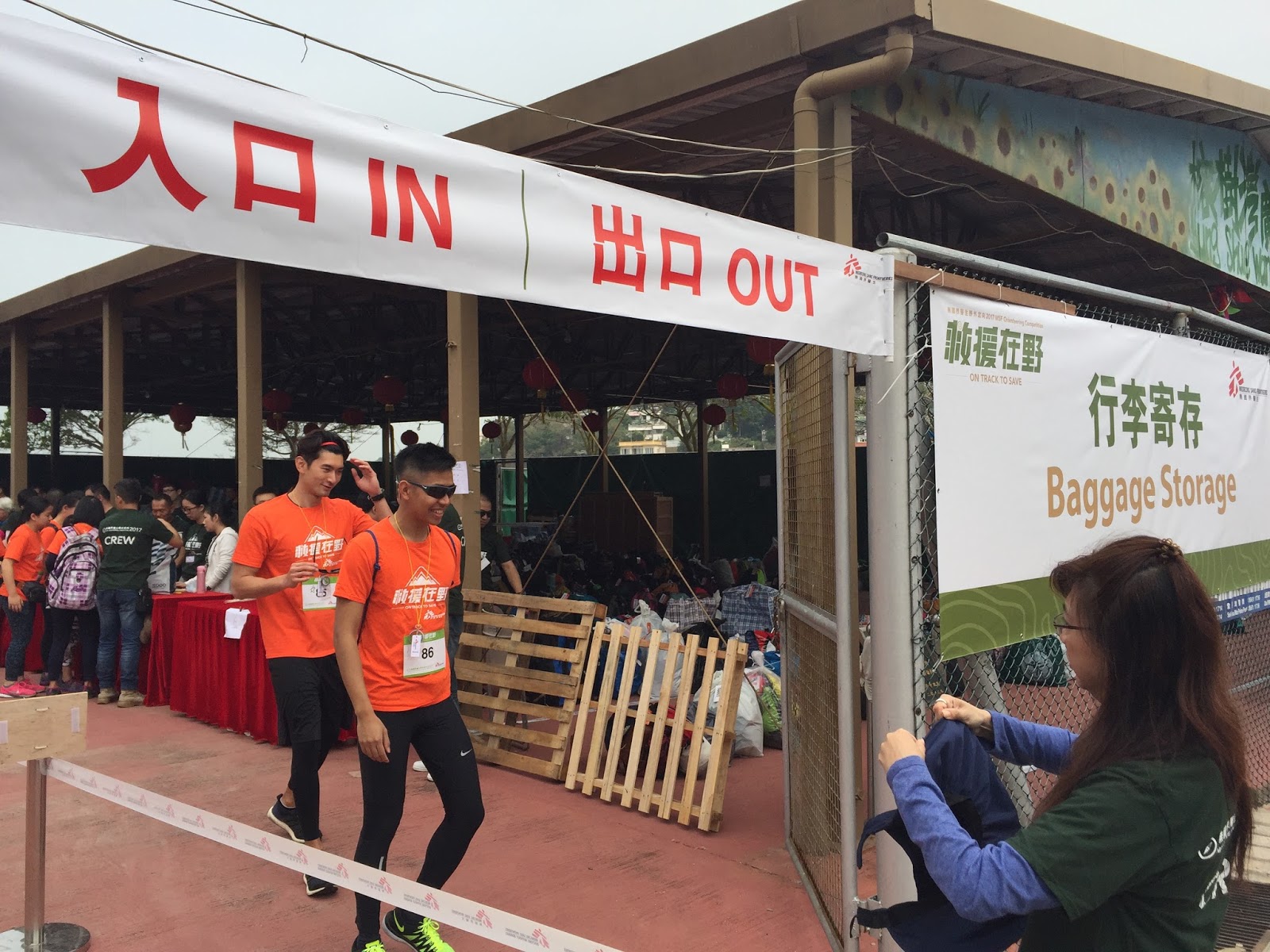
Baggage storage. With thousands of people participating, the service was like running a marathon.


Water station

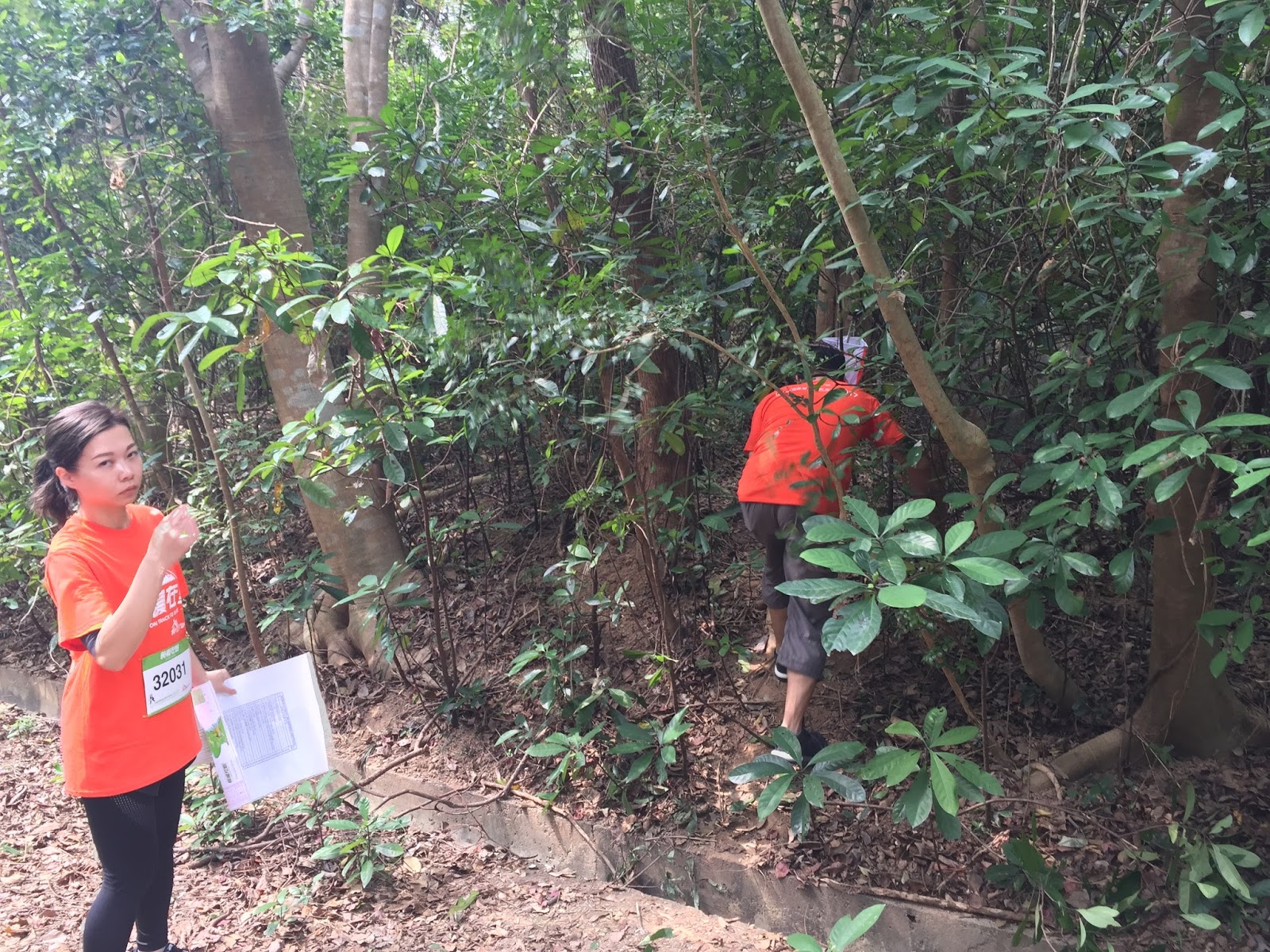
I was then told to go to the north water station to help. Participants were already forming lines to punch the checkpoints. This is a picture at checkpoint #211: west corner of a building.


Another picture of punching a checkpoint at checkpoint #137: south side of a boulder.


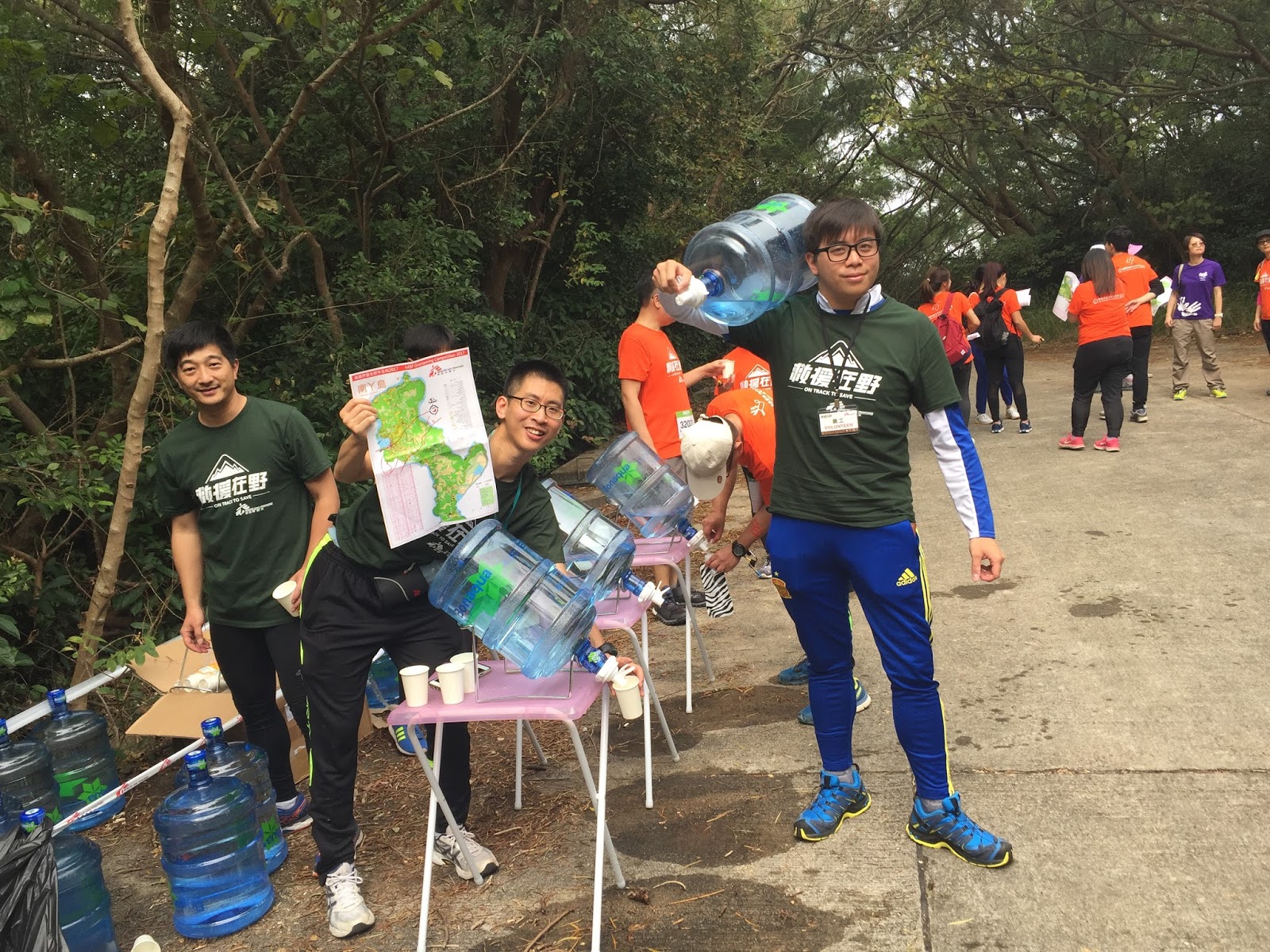
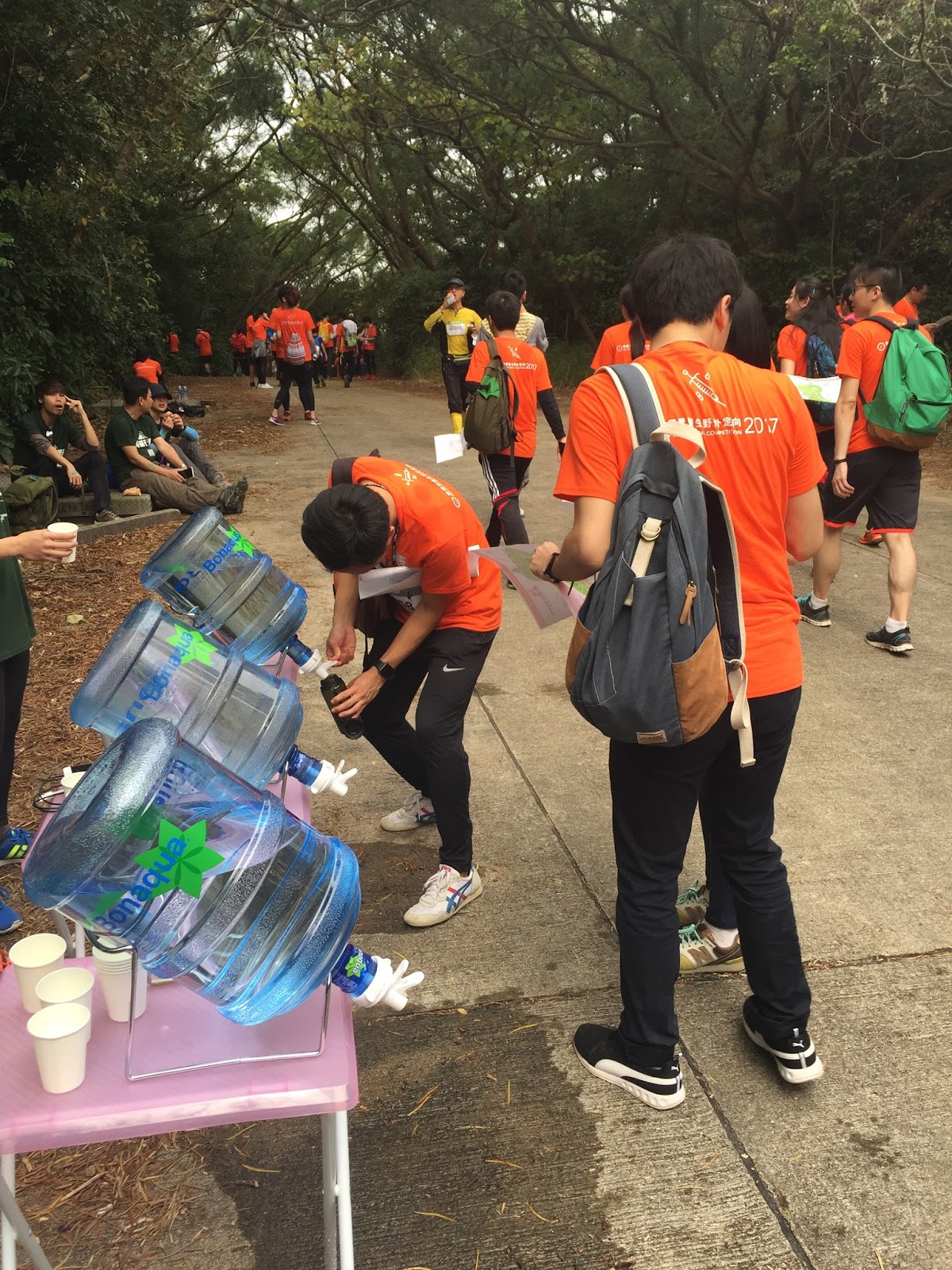
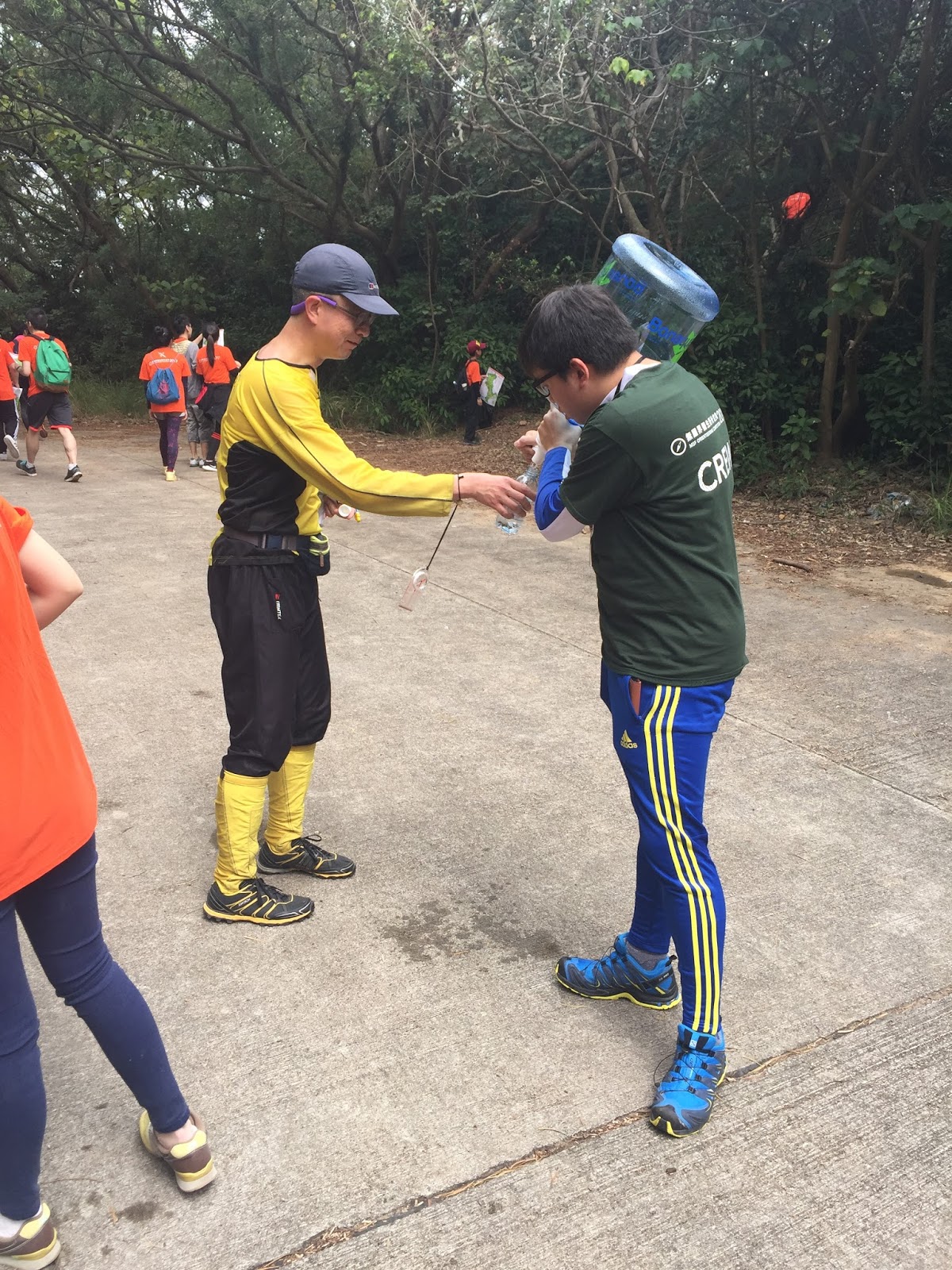
I finally arrived at the water station. As an orienteering event, the size of the water station was huge. There were three taps for people to refill, plus a mobile tap held by a person.


Participants came to the water station in waves, since the starts were in many waves.


 People could feel free to fill the water by themselves,...


...or we helped them.


These water users ranged from elite runners, when quick preparation for their water is needed, to kids, when their parents guided them to pour the water in their bottles.

I stayed there for the rest of the event until 2 pm, when the last wave of participants passed. At noon, there was free lunch delivery for volunteers. 

End of the event

Before leaving, I found that the volunteers also had a free return ferry ticket. Thus, I returned to the event center first. On the way back, I saw a pair got married in this event, since both of them were wearing running shoes. The guy looked so familiar. I almost wanted to say hi, but I had a doubt if I identified the wrong person. Later in the evening, I found out from FB that I was not wrong. That guy is really "4,0000".

Besides free ferry ticket, each volunteer received a certificate for volunteering this event, something that I did not expect, since I signed up for helping only a week ago. I was also asked from the food area, giving me 7-8 hard boiled eggs.

Due to thousands of people rushing into this island, there were several hundred meters of queue for the ferry. The organizers did increase the frequency of the ferry, so getting into the ferry was quicker than I thought.


Epilogue

I finally experienced one of the largest orienteering event in HK. I also found that volunteering for an orienteering event had as much fun as participating one. I wish I can help again.

I was tired when I got back home. I probably also cursed myself why I agreed to attend two separate dance events right after this orienteering event. I felt drained and did not want to dance at all, although I could still watch people dancing.

In the next few weeks, I will be in several orienteering events as a participant. I hope they will be fun.

Monday, February 20, 2017

Nalla & Jessica Workshop in Hong Kong (Vintage Swing)


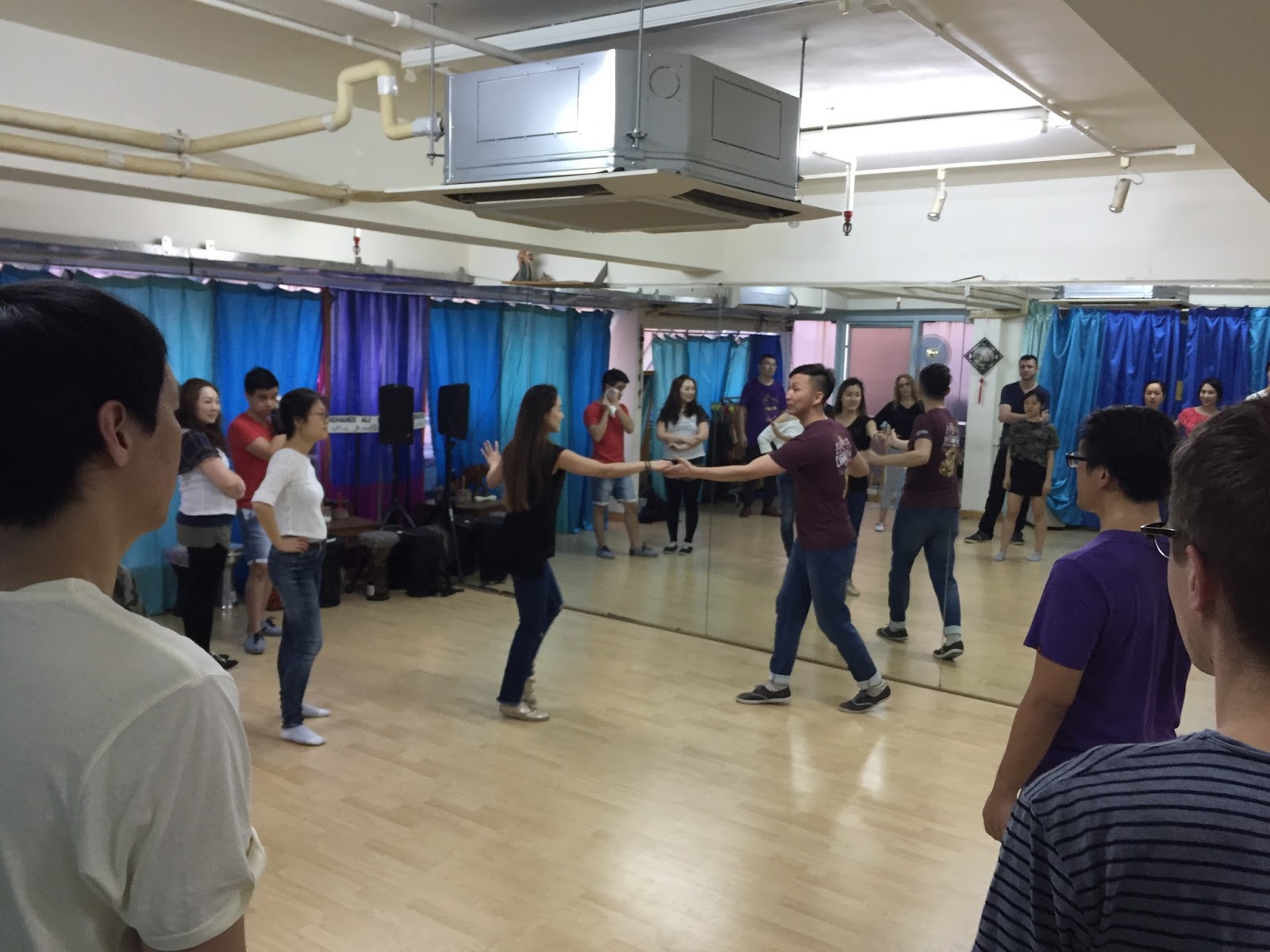
After about a month staying in Hong Kong, I went to a swing workshop in this weekend, taught by Nalla and Jessica from South Korea. It costs HKD 1000 (~USD 125) for 6 sessions totaling 8 hours of classes. I began to accept the fact that such cost is reasonable in Hong Kong, seeing the cost of place rental and inviting international-renowned instructors. Before the workshop, they came to the Friday social. Nalla showcased his DJ set that I found amazing.


My comment after the workshop: I was happy to pay such money. All sessions have common themes that I agree on. They are:

1) Swing dancing is not about memorizing a routine.
2) Feel free to experiment on the basic moves, including changing the footwork, rhythm, and contrast. (Assumption: you know the fundamental techniques)

Thus, the class has many lindy swingout variations. I was revisiting scissors kick that I found a hard time to do last year in another workshop. Now I feel better. Then, there were legs circling around, and legs crisscrossing behind. The class also explored many variations of Texas Tommy. There were swingouts that go around 360 degrees. I found some moves manageable, while others may not be easy for me at the time of the workshop, but I believe I can do it with more practice.

Part of the workshop points out the stylistic difference between Savoy style (fyi: Savoy was once a ballroom in New York, where lindy makes it famous) and South California style. The former looks more stretchy, while the latter relies more on counterbalance. This makes me think about West Coast Swing, which looks less dynamic, and may relate to the more "polite" look of the South California style. After all, West Coast Swing is the direct descendant of lindy.

I can see the increasing difficulty between sessions, but even for the seasoned workshop attendees, they can learn something in the easier sessions. For moves that I found easy, I found the material to be a good review. For moves that I found challenging, I felt that I learned something new.


Other than the workshop material, I sometimes kept an eye on the instructors' son. He is probably 6-8 years old, but he could stay in the four-hour workshop each day, watching his own videos. He seemed to be entertained enough by himself. Sometimes, I wondered if I should say hi to him to make him feel less lonely, but it looked like that is not needed.

Someone already talked to me about finding a time next week to review the workshop material. I found this to be a good thing that a Hong Kong swing scene tries to organize. Six months ago when I came back to Hong Kong for an interview, I saw a workshop review session that I was thinking of joining (although it was later cancelled). I hope there will be more people joining such workshop review, so that some secrets of these moves can be (re)discovered.

I hope that I will see them again in the future. Perhaps this will be one reason that I will visit Seoul.

Nalla and Jessica gladly allow us to share the following video that includes two session of class material! In some sense, I was happy that they were generous about opening up such class material. In another sense, I wondered what caused them to be generous, seeing that they are dance professionals and they rely on the planning of these material for a living.

* Note: the instructors have explicitly mentioned that the following videos can be shared.


Saturday, January 14, 2017

Four Swing Trips Stories on Beginner Development

Here are four short stories on my last four swing dance trips in the US, all related to baby dancer development.

St Louis (Friendliness Is Not For Granted)

Usually, the Illini Swing Society (ISS) has a formal dance at the end of the semester. This year, however, A Chicago swing band called the Fat Babies came to St Louis. Our club had a trip there instead. Thus, we had more than 10 people going. Finally, new swing dancers traveled for their first time! Our club got a table and stayed together.

For me, there were so many familiar faces. Some were instructors. Others were alumni of the Illini Swing Society. Still more were met in other swing trips. I tried to introduce them to dance with the beginners. Most of the time, however, the beginners asked the experienced dancers anyways. That is a good sign for our club dancers.

After the trip, I asked the beginners about their first experience. The responses were mostly positive. There were a few comments about the friendliness of the other dance scenes, but I hope that they did not feel the unfriendliness to be the majority.

One of the reasons that I hope our ISS can be friendlier is that I hope there is a safety net for them if they fall down. While I believe most of the dancers are friendly, there are always some exceptions. For the first time swing dance travelers, they may take multiple rejections of dance personally. However, our own ISS members will at least welcome each other. Moreover, my protection to the beginners is limited, in the sense that I cannot police friendliness. At some point, these baby dancers still need to grow up, and realize that friendliness of a dance scene does not happen for free. Once they realize this and decide to stay, they may have more motivation to contribute to the swing scene.

ISU area (Cultural Shock)

The week after, the band Miss Jubilee came to the ISU scene. I remembered how treacherous the road was to get there. ISS had ~8 people going, which was still many. The new travel chair did a good job!

This story needs to trace back from the beginner of the semester, when I spent more time on another swing dance club in UIUC called the Newman Dance Society. I wonder if other universities have such potentially competing swing experiences.

When I came to their event, I knew that I needed to be more open-minded. They do not necessarily do vintage swing. Every week, the club has a one-hour lesson, followed by a 30-minute dance. The one-hour lesson mostly covers east coast swing topic, and later a lesson of Night Club Two Step, Waltz, and Polka, respectively. Their teaching seems exclusively on the fanciness of moves. They will show you how cool a pretzel and a flying Dutchman are. From an experienced dancer's eyes, however, one can see the instructors are yanking arms. The instructors also just show the move, without much descriptions. The students just monkey see monkey do. Seeing that swing dance is not about a memorization of moves, and instead about lead-and-follow mechanics, I wondered how the students can apply these fancy moves on a social floor. In the 30-minute social dance, the music is usually not swing at all, and the songs are fast. I guess the club has a mindset that one can swing dance to any music, which I have heard of sometimes.

Yet, this club seems successful in retaining people. I guess it is because the club is beginner friendly, in the sense that newcomers can join in at any week, and joining these classes and dances is free. They even once danced at a traffic intersection at every green light, and gain publicity through a TV reporter. One does not have enough time to swing on an intersection, and the music is barely audible, but the event could attract a crowd anyways.

I was in the Newman Dance Society because I want to mention to them that there is also the ISS that they can come to do swing dancing. When I talked to them individually, some of them had no interest to go there because they did not feel connected in the ISS. Still, there were a few people coming to the ISS scene often. One of them was even fully converted into the ISS, since she felt that she learned more about swing dancing in ISS (you got it).

The main part of the story is on one of the other converts.

I think this another person is very interested in swing, but she did not come to any classes in ISS. Instead, she attended both the lesson and dance in Newman, and the dance in ISS. I tried to dance with her at least once every week, just to show her one does not need to dance fancy moves to make swing fun. When I talked to her about dance trips, she would say no because of the cost.

Except, she came to this ISS dance! (Actually, this dance is free. Wow! ISU can compensate Miss Jubilee fully. Excellent!)

Later in the dance, however, I found that she sat away from the dance floor alone, for many many songs. I asked her if she would like to dance. She said she was tired and just wanted to watch. I would like to come back later, but I also wanted to give people that I have met a dance, since I would leave the US permanently very soon.

I did not know the true reason for her long sitting out, since I think she loves swing a lot. I may offer a speculation from what I have observed at the beginning of the dance event.

At some point, I overheard from her asking the partner if he knows to do a pretzel. I wondered if she thinks that she saw so many good dancers in this trip, and thinks that great dancers know how to do fancy moves. However, pretzel is a taboo move in a serious vintage swing scene, since the move is difficult to fit with the basic vintage swing techniques. I wondered if she found difficult to find someone else to dance later.

When she sat down for several songs in a row, it connected to me because it happened to me also. Four years ago, when the ISS reached the golden age, and the swing scene was purified to be a vintage swing, I felt the lack of will to dance in  a workshop because I felt that I was not doing the swing they wanted. They thought I might be one of the people in Newman, even though I did not know that club by that time. I was just trained in ballroom swing and felt that without a frame, I cannot lead the partner properly. I was blamed that my movement was like salsa, even though I did not know what the true salsa technique was. I need a break of swing. I do not know what I can do to improve.

I wonder if she feels a cultural shock of a swing scene.

In the US, even swing dancing communities can be sub-classified because their techniques are different. I keep saying "vintage swing" and not just "swing" for this reason. I guess she does not know the expectations in a vintage swing scene, even though she thinks it is appropriate for her to dance her idea of swing.

It was sad that I did not spend more time with her for the rest of the evening. However, I talked to Zack about this the week after. He thought I may be overthinking. Perhaps I am. I told him that if she comes back to swing next semester, encourage her to learn and do not force feed her the correct form of swing. Let her decide if she wants to dig into (vintage) swing dancing further. In my opinion, cultural shock either makes a person leave, or make a person grow up the think about dancing in a new level.

I still think that the swing world in the US is complicated.

Indy (Beg/Adv Exchange)

Another week after, when all the final exams were done, Zack, David, Andres from Spain, Professor Paul, and I went for another live band dance at Fountain Square in Indianapolis. Now I found Andres, joining the swing class for his first semester, has traveled to many swing dances already. That is great!

I would like to attend this dance to bid more farewell. I was happy to see Mandy the instructor again, and I hope she will continue to have a great dance life in St Louis. I also met Ryan from the Purdue scene, who organized the whole Whistle Stop workshop. During that evening, I tried the routine of dancing with 2 beginners before dancing 1 dancer that is more advanced than me. My mind was in the mode of outreaching, even though I do not like to speak much.

That evening, I hope that I could introduce Andres to dance with Mandy, just like how I was introduced to dance with a professional in my very first West Coast Swing workshop. I did it, even though I felt a bit awkward. I tried the method by Tom G. to break two follows in conversation to dance by having two leads to ask each of them to dance. However, Andres got one, and I did not. Never mind. Mission was still accomplished.

After the dance, we stuck on an Interstate in Indy till 5 am because of the freezing rain in Indy, causing >200 accidents around the Indy Interstates. We talked, we played a card game called "Love Letter", and we tried to nap.

Chicago (College Scene Expectation)

Two days before I left the US permanently, I went to Chicago for a Friday Big City Swing dance and a Saturday U of Chicago swing dance. I was happy to meet Joseph once more. Surprisingly, I also met Bradley, who was a great ISS instructor in the past. He reminded me to keep dancing. I hope I will, if my job allows me to.

On Saturday, I went to the U of Chicago swing dance scene that I have not been for 4 years. May and Abbie, whom I met in Whistle Stop, invited me there. I know how good their dancing was, seeing that both were placed in the Jack-and-Jill competitions. Perhaps I should check out their scene and inform the ISS officers, so that we can exchange events. I also met Olivia and Max there, although they left early before I can even introduce them to the officers in the U of Chicago (Olivia is the travel chair of the ISS). Another surprise was that I met someone that I met in Dayton Swing Smackdown last year on February. What a good trip to bid more farewells.

I met Noel that night, who stayed at my place once for our dance, and inspired Clarissa for learning balboa. I talked to him that if ISS could give a balboa workshop, I would ask him (I actually have a balboa follow instructor candidate, but I will not mention here). We talked more about the ISS scene. I told him that I was happy to see so many ISS beginners to travel to dance. He asked me, "do you know how many people in the U of Chicago travel to dance?"

"At least I know that May and Abbie travel," I said.

"That's it," he said.

This makes me wonder at what dance level we should expect for a university swing scene. Perhaps making new dancers to travel is inherently difficult because of cost and time. I also cannot expect everyone in the university dance scene to be at the advanced level, which is unrealistic. I have another caliber: in the ISU scene, I have only seen Josie traveling to many swing workshops. For external dance events, there are a few more. ISS probably does not need to be too elite to maintain the quality of the dance. I do not want ISS devolving into Newman Dance quality. If so, why do we need two of the same clubs?

The dance went on. The music was nice to dance to, and there were cookies. After the dance, I drove all the way back to Champaign, making a short stop on 95th St for a bit of gas, which I feel a bit scared because that is still considered as Chicago south side.

Hopefully, I will see May again when she visits Hong Kong.

Thursday, January 12, 2017

Stuck in a China airport

In summary, I paid what I got for the flight service to go back to Hong Kong from Chicago. However, I will avoid connecting flight in China in the future.

I bought a $400 one-way ticket a month ago to fly via Shanghai, using China Eastern Airlines. A few days before the flight, I found that the review for the airline was mostly negative. I also had concerns on whether the baggage will go directly to Hong Kong. The answers from the airline website did not make me feel completely satisfied also.

Then, I had an eventful flight experience because the negative comments were totally true.

At the O'Hare counter, I was told that the flight would be delayed for 4 hours. That immediately means that I will be stuck in Shanghai for a night, since the first long flight was expected to reach Shanghai at 6:50 pm, and the connecting flight was 2.5 hours later. With the delay, the airport would no longer have any flights until next morning.

The flight finally left at ~6:30 pm in O'Hare. The flight itself was okay. Food was mediocre. Adjusting the correct volume of sound for the movie was challenging. WiFi information was all in Chinese, causing me to think what would non-Chinese passengers would do. Fortunately, there was a power outlet that I could use, and people next to me were friendly enough for me to interact with. The 14-hour flight was not actually that grueling.

I did have a bad feeling when I got to the Shanghai Pudong International Airport, and the bad thing did happen. I was put to the flight next morning, and I needed to claim my checked baggage and arrange for a free hotel. I could not get through the custom, though. If you have a US passport or many passports in European countries (Schengen area), you will have no problem to get through the custom, since you are allowed to stay within Shanghai municipality without visa within 144 hours. For Hong Kong (or Macau) people, we do not use passport to get into China; we use Home Visit Permit. I, with no plan to go to China when I stay in the US, did not have this permit with me (mine was in Hong Kong).

Thus, I was told to give my Hong Kong passport to the official. They said I had to wait and they would come back to me later. I gave it to them, and later I felt that it might be a mistake. The official was busy with dealing with rescheduling connecting flights and processing passengers' passports. After an hour, when there were no more people passing through the custom, more and more officials were gone. In one occasion, I was told that I could pay 50 RMB to get a temporary Home Visit Permit. Another official, however, said that this was not true.

I and another UK guy found that we were the only people stuck before custom, and could not get through the transfer to get to the departure hall (the UK guy could not get through because he had a temporary travel document). At this point, we both have the same questions to the officials: 1) how could we get the checked baggage if we could not get out of the custom, and 2) where were our passports?

We were given biscuits and bottle of water. There was WiFi around, but we could not get it because one has to either have a Chinese phone number, or go to a booth to print a internet password ticket, but the booths are in the departure hall area.

Fortunately, we were later allowed to get the baggage from the baggage claim under the official supervision, returned to the area before the custom, and got the passports back. However, we needed to sleep within the limbo area. The officials opened up the staff room with couches. Having jet lag and feeling cold, I could not sleep, so I finished editing a paper. Not long after at 4:30 am, we were told that the transfer counter was open.

I got through the transfer with the two pieces of 50-lb baggage and a carry-on. I was told that I needed to move them until I got to the gate, where the baggage could be checked in again. Then, I saw that I needed to put the baggage in the X-ray again. "Oh! No!", thought I. Many of you know that items forbidden in carry-on baggage are not necessarily forbidden in checked baggage. Now, when all checked baggage becomes carry-on, I was stopped for having a pocket knife in my supposedly checked baggage. The good news was: after I explained what had happened, they allowed me to put the pocket knife back into the checked baggage.

On my way to the gate and at the gate, other travelers looked at me because of the number of baggage pieces that I had. At one instance, I was told how strong I was to carry all pieces of baggage by one person. I feel such comments were unnecessary. At this moment, I could finally reach the booth that gave out WiFi password. However, it was not working. We needed to scan our passport to get the Wifi password, but the computer screen was frozen. After testing a few times, I tried to find the only other location that gives WiFi password: the information counter, but it was too early. Nobody was there. I was later told to come back to the booth in an hour.

Thus, I waited at the gate for the 8:30 am flight. After an hour, I finally found the computer screen at the booth was fixed, and I could finally get internet at 6 am! The internet was important because I could tell my family when my Hong Kong arrival time would be, so they would feel safe.

The final stretch of inconvenience was that the flight gate was not the kind where the plane directly connect to the concourse. The gate was the one where we needed to take a bus to the plane. Thus, I caused more inconvenience by taking all three pieces of baggage on and off the bus. The Shanghai connection nightmare finally ended when I got to the plane and left the checked baggage to the outdoor crew.

The flight back to Hong Kong was uneventful, and I got the checked baggage without problem. I was finally home at ~12:30 pm on Wednesday.

Next time, besides checking the price of the air ticket, I should also check if the flight will get through China. I do not want this to happen in my dissertation defense trip.