Monday, February 20, 2017

Nalla & Jessica Workshop in Hong Kong (Vintage Swing)


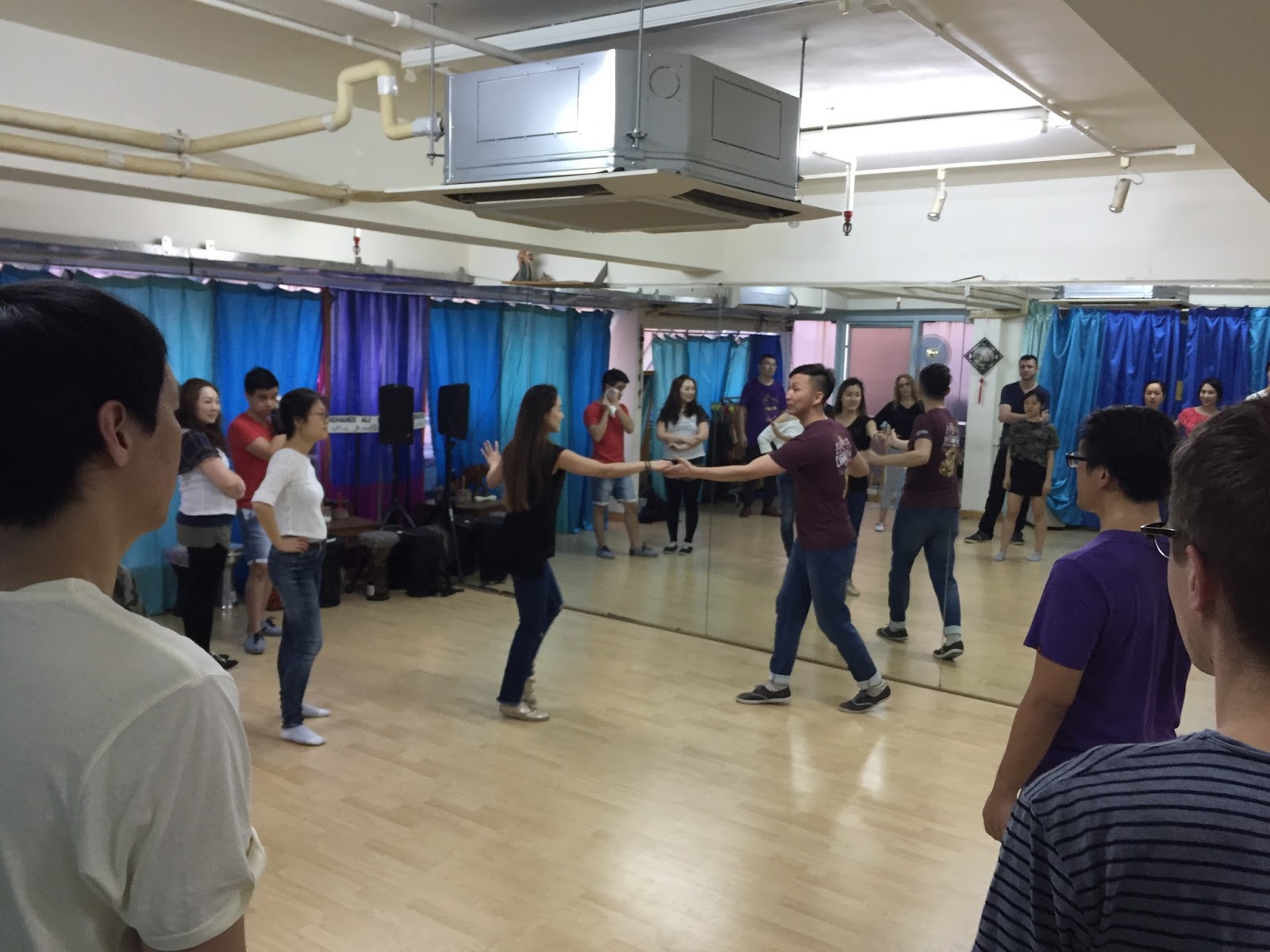
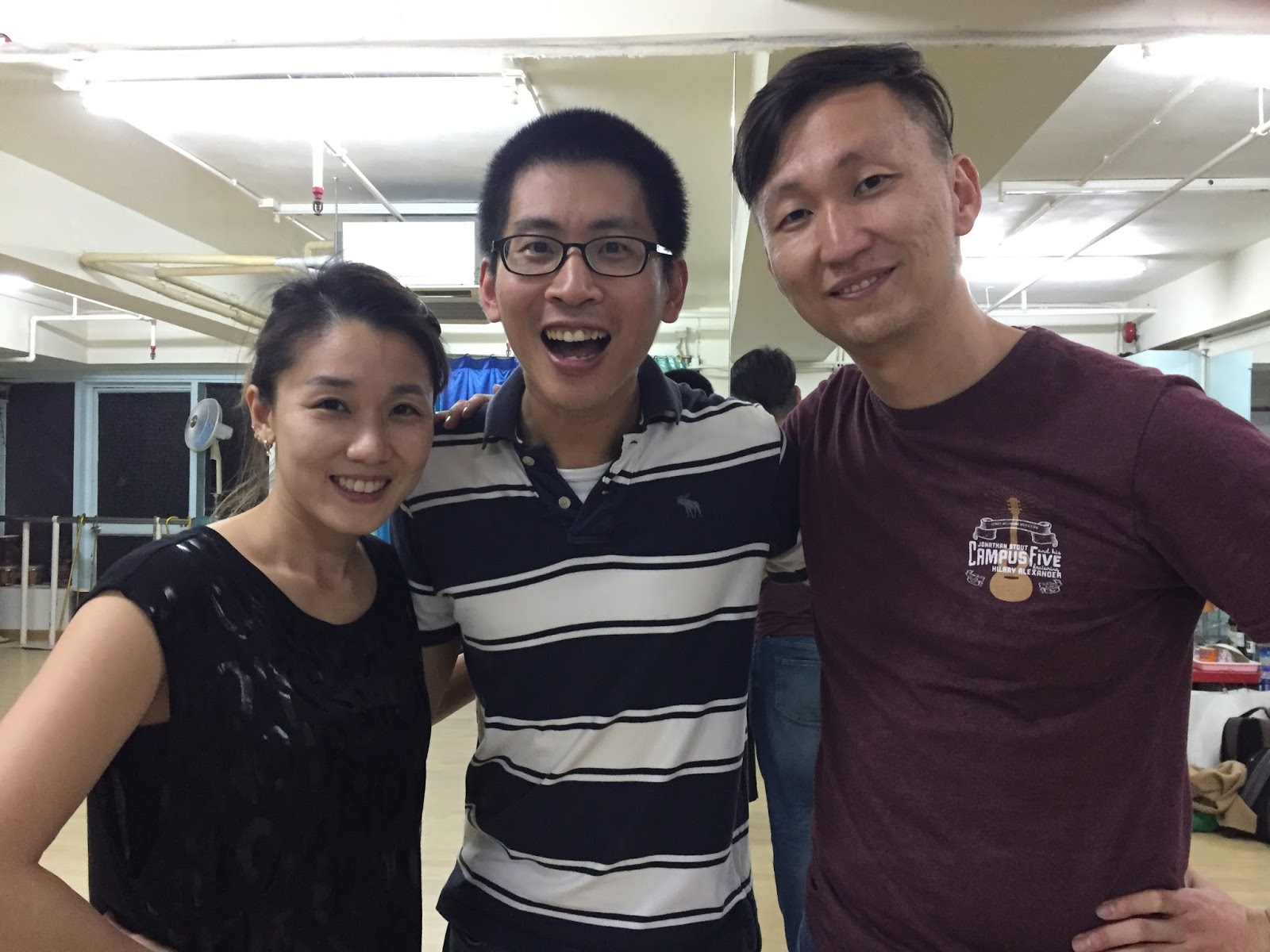
After about a month staying in Hong Kong, I went to a swing workshop in this weekend, taught by Nalla and Jessica from South Korea. It costs HKD 1000 (~USD 125) for 6 sessions totaling 8 hours of classes. I began to accept the fact that such cost is reasonable in Hong Kong, seeing the cost of place rental and inviting international-renowned instructors. Before the workshop, they came to the Friday social. Nalla showcased his DJ set that I found amazing.


My comment after the workshop: I was happy to pay such money. All sessions have common themes that I agree on. They are:

1) Swing dancing is not about memorizing a routine.
2) Feel free to experiment on the basic moves, including changing the footwork, rhythm, and contrast. (Assumption: you know the fundamental techniques)

Thus, the class has many lindy swingout variations. I was revisiting scissors kick that I found a hard time to do last year in another workshop. Now I feel better. Then, there were legs circling around, and legs crisscrossing behind. The class also explored many variations of Texas Tommy. There were swingouts that go around 360 degrees. I found some moves manageable, while others may not be easy for me at the time of the workshop, but I believe I can do it with more practice.

Part of the workshop points out the stylistic difference between Savoy style (fyi: Savoy was once a ballroom in New York, where lindy makes it famous) and South California style. The former looks more stretchy, while the latter relies more on counterbalance. This makes me think about West Coast Swing, which looks less dynamic, and may relate to the more "polite" look of the South California style. After all, West Coast Swing is the direct descendant of lindy.

I can see the increasing difficulty between sessions, but even for the seasoned workshop attendees, they can learn something in the easier sessions. For moves that I found easy, I found the material to be a good review. For moves that I found challenging, I felt that I learned something new.


Other than the workshop material, I sometimes kept an eye on the instructors' son. He is probably 6-8 years old, but he could stay in the four-hour workshop each day, watching his own videos. He seemed to be entertained enough by himself. Sometimes, I wondered if I should say hi to him to make him feel less lonely, but it looked like that is not needed.

Someone already talked to me about finding a time next week to review the workshop material. I found this to be a good thing that a Hong Kong swing scene tries to organize. Six months ago when I came back to Hong Kong for an interview, I saw a workshop review session that I was thinking of joining (although it was later cancelled). I hope there will be more people joining such workshop review, so that some secrets of these moves can be (re)discovered.

I hope that I will see them again in the future. Perhaps this will be one reason that I will visit Seoul.

Nalla and Jessica gladly allow us to share the following video that includes two session of class material! In some sense, I was happy that they were generous about opening up such class material. In another sense, I wondered what caused them to be generous, seeing that they are dance professionals and they rely on the planning of these material for a living.

* Note: the instructors have explicitly mentioned that the following videos can be shared.


Saturday, January 14, 2017

Four Swing Trips Stories on Beginner Development

Here are four short stories on my last four swing dance trips in the US, all related to baby dancer development.

St Louis (Friendliness Is Not For Granted)

Usually, the Illini Swing Society (ISS) has a formal dance at the end of the semester. This year, however, A Chicago swing band called the Fat Babies came to St Louis. Our club had a trip there instead. Thus, we had more than 10 people going. Finally, new swing dancers traveled for their first time! Our club got a table and stayed together.

For me, there were so many familiar faces. Some were instructors. Others were alumni of the Illini Swing Society. Still more were met in other swing trips. I tried to introduce them to dance with the beginners. Most of the time, however, the beginners asked the experienced dancers anyways. That is a good sign for our club dancers.

After the trip, I asked the beginners about their first experience. The responses were mostly positive. There were a few comments about the friendliness of the other dance scenes, but I hope that they did not feel the unfriendliness to be the majority.

One of the reasons that I hope our ISS can be friendlier is that I hope there is a safety net for them if they fall down. While I believe most of the dancers are friendly, there are always some exceptions. For the first time swing dance travelers, they may take multiple rejections of dance personally. However, our own ISS members will at least welcome each other. Moreover, my protection to the beginners is limited, in the sense that I cannot police friendliness. At some point, these baby dancers still need to grow up, and realize that friendliness of a dance scene does not happen for free. Once they realize this and decide to stay, they may have more motivation to contribute to the swing scene.

ISU area (Cultural Shock)

The week after, the band Miss Jubilee came to the ISU scene. I remembered how treacherous the road was to get there. ISS had ~8 people going, which was still many. The new travel chair did a good job!

This story needs to trace back from the beginner of the semester, when I spent more time on another swing dance club in UIUC called the Newman Dance Society. I wonder if other universities have such potentially competing swing experiences.

When I came to their event, I knew that I needed to be more open-minded. They do not necessarily do vintage swing. Every week, the club has a one-hour lesson, followed by a 30-minute dance. The one-hour lesson mostly covers east coast swing topic, and later a lesson of Night Club Two Step, Waltz, and Polka, respectively. Their teaching seems exclusively on the fanciness of moves. They will show you how cool a pretzel and a flying Dutchman are. From an experienced dancer's eyes, however, one can see the instructors are yanking arms. The instructors also just show the move, without much descriptions. The students just monkey see monkey do. Seeing that swing dance is not about a memorization of moves, and instead about lead-and-follow mechanics, I wondered how the students can apply these fancy moves on a social floor. In the 30-minute social dance, the music is usually not swing at all, and the songs are fast. I guess the club has a mindset that one can swing dance to any music, which I have heard of sometimes.

Yet, this club seems successful in retaining people. I guess it is because the club is beginner friendly, in the sense that newcomers can join in at any week, and joining these classes and dances is free. They even once danced at a traffic intersection at every green light, and gain publicity through a TV reporter. One does not have enough time to swing on an intersection, and the music is barely audible, but the event could attract a crowd anyways.

I was in the Newman Dance Society because I want to mention to them that there is also the ISS that they can come to do swing dancing. When I talked to them individually, some of them had no interest to go there because they did not feel connected in the ISS. Still, there were a few people coming to the ISS scene often. One of them was even fully converted into the ISS, since she felt that she learned more about swing dancing in ISS (you got it).

The main part of the story is on one of the other converts.

I think this another person is very interested in swing, but she did not come to any classes in ISS. Instead, she attended both the lesson and dance in Newman, and the dance in ISS. I tried to dance with her at least once every week, just to show her one does not need to dance fancy moves to make swing fun. When I talked to her about dance trips, she would say no because of the cost.

Except, she came to this ISS dance! (Actually, this dance is free. Wow! ISU can compensate Miss Jubilee fully. Excellent!)

Later in the dance, however, I found that she sat away from the dance floor alone, for many many songs. I asked her if she would like to dance. She said she was tired and just wanted to watch. I would like to come back later, but I also wanted to give people that I have met a dance, since I would leave the US permanently very soon.

I did not know the true reason for her long sitting out, since I think she loves swing a lot. I may offer a speculation from what I have observed at the beginning of the dance event.

At some point, I overheard from her asking the partner if he knows to do a pretzel. I wondered if she thinks that she saw so many good dancers in this trip, and thinks that great dancers know how to do fancy moves. However, pretzel is a taboo move in a serious vintage swing scene, since the move is difficult to fit with the basic vintage swing techniques. I wondered if she found difficult to find someone else to dance later.

When she sat down for several songs in a row, it connected to me because it happened to me also. Four years ago, when the ISS reached the golden age, and the swing scene was purified to be a vintage swing, I felt the lack of will to dance in  a workshop because I felt that I was not doing the swing they wanted. They thought I might be one of the people in Newman, even though I did not know that club by that time. I was just trained in ballroom swing and felt that without a frame, I cannot lead the partner properly. I was blamed that my movement was like salsa, even though I did not know what the true salsa technique was. I need a break of swing. I do not know what I can do to improve.

I wonder if she feels a cultural shock of a swing scene.

In the US, even swing dancing communities can be sub-classified because their techniques are different. I keep saying "vintage swing" and not just "swing" for this reason. I guess she does not know the expectations in a vintage swing scene, even though she thinks it is appropriate for her to dance her idea of swing.

It was sad that I did not spend more time with her for the rest of the evening. However, I talked to Zack about this the week after. He thought I may be overthinking. Perhaps I am. I told him that if she comes back to swing next semester, encourage her to learn and do not force feed her the correct form of swing. Let her decide if she wants to dig into (vintage) swing dancing further. In my opinion, cultural shock either makes a person leave, or make a person grow up the think about dancing in a new level.

I still think that the swing world in the US is complicated.

Indy (Beg/Adv Exchange)

Another week after, when all the final exams were done, Zack, David, Andres from Spain, Professor Paul, and I went for another live band dance at Fountain Square in Indianapolis. Now I found Andres, joining the swing class for his first semester, has traveled to many swing dances already. That is great!

I would like to attend this dance to bid more farewell. I was happy to see Mandy the instructor again, and I hope she will continue to have a great dance life in St Louis. I also met Ryan from the Purdue scene, who organized the whole Whistle Stop workshop. During that evening, I tried the routine of dancing with 2 beginners before dancing 1 dancer that is more advanced than me. My mind was in the mode of outreaching, even though I do not like to speak much.

That evening, I hope that I could introduce Andres to dance with Mandy, just like how I was introduced to dance with a professional in my very first West Coast Swing workshop. I did it, even though I felt a bit awkward. I tried the method by Tom G. to break two follows in conversation to dance by having two leads to ask each of them to dance. However, Andres got one, and I did not. Never mind. Mission was still accomplished.

After the dance, we stuck on an Interstate in Indy till 5 am because of the freezing rain in Indy, causing >200 accidents around the Indy Interstates. We talked, we played a card game called "Love Letter", and we tried to nap.

Chicago (College Scene Expectation)

Two days before I left the US permanently, I went to Chicago for a Friday Big City Swing dance and a Saturday U of Chicago swing dance. I was happy to meet Joseph once more. Surprisingly, I also met Bradley, who was a great ISS instructor in the past. He reminded me to keep dancing. I hope I will, if my job allows me to.

On Saturday, I went to the U of Chicago swing dance scene that I have not been for 4 years. May and Abbie, whom I met in Whistle Stop, invited me there. I know how good their dancing was, seeing that both were placed in the Jack-and-Jill competitions. Perhaps I should check out their scene and inform the ISS officers, so that we can exchange events. I also met Olivia and Max there, although they left early before I can even introduce them to the officers in the U of Chicago (Olivia is the travel chair of the ISS). Another surprise was that I met someone that I met in Dayton Swing Smackdown last year on February. What a good trip to bid more farewells.

I met Noel that night, who stayed at my place once for our dance, and inspired Clarissa for learning balboa. I talked to him that if ISS could give a balboa workshop, I would ask him (I actually have a balboa follow instructor candidate, but I will not mention here). We talked more about the ISS scene. I told him that I was happy to see so many ISS beginners to travel to dance. He asked me, "do you know how many people in the U of Chicago travel to dance?"

"At least I know that May and Abbie travel," I said.

"That's it," he said.

This makes me wonder at what dance level we should expect for a university swing scene. Perhaps making new dancers to travel is inherently difficult because of cost and time. I also cannot expect everyone in the university dance scene to be at the advanced level, which is unrealistic. I have another caliber: in the ISU scene, I have only seen Josie traveling to many swing workshops. For external dance events, there are a few more. ISS probably does not need to be too elite to maintain the quality of the dance. I do not want ISS devolving into Newman Dance quality. If so, why do we need two of the same clubs?

The dance went on. The music was nice to dance to, and there were cookies. After the dance, I drove all the way back to Champaign, making a short stop on 95th St for a bit of gas, which I feel a bit scared because that is still considered as Chicago south side.

Hopefully, I will see May again when she visits Hong Kong.

Thursday, January 12, 2017

Stuck in a China airport

In summary, I paid what I got for the flight service to go back to Hong Kong from Chicago. However, I will avoid connecting flight in China in the future.

I bought a $400 one-way ticket a month ago to fly via Shanghai, using China Eastern Airlines. A few days before the flight, I found that the review for the airline was mostly negative. I also had concerns on whether the baggage will go directly to Hong Kong. The answers from the airline website did not make me feel completely satisfied also.

Then, I had an eventful flight experience because the negative comments were totally true.

At the O'Hare counter, I was told that the flight would be delayed for 4 hours. That immediately means that I will be stuck in Shanghai for a night, since the first long flight was expected to reach Shanghai at 6:50 pm, and the connecting flight was 2.5 hours later. With the delay, the airport would no longer have any flights until next morning.

The flight finally left at ~6:30 pm in O'Hare. The flight itself was okay. Food was mediocre. Adjusting the correct volume of sound for the movie was challenging. WiFi information was all in Chinese, causing me to think what would non-Chinese passengers would do. Fortunately, there was a power outlet that I could use, and people next to me were friendly enough for me to interact with. The 14-hour flight was not actually that grueling.

I did have a bad feeling when I got to the Shanghai Pudong International Airport, and the bad thing did happen. I was put to the flight next morning, and I needed to claim my checked baggage and arrange for a free hotel. I could not get through the custom, though. If you have a US passport or many passports in European countries (Schengen area), you will have no problem to get through the custom, since you are allowed to stay within Shanghai municipality without visa within 144 hours. For Hong Kong (or Macau) people, we do not use passport to get into China; we use Home Visit Permit. I, with no plan to go to China when I stay in the US, did not have this permit with me (mine was in Hong Kong).

Thus, I was told to give my Hong Kong passport to the official. They said I had to wait and they would come back to me later. I gave it to them, and later I felt that it might be a mistake. The official was busy with dealing with rescheduling connecting flights and processing passengers' passports. After an hour, when there were no more people passing through the custom, more and more officials were gone. In one occasion, I was told that I could pay 50 RMB to get a temporary Home Visit Permit. Another official, however, said that this was not true.

I and another UK guy found that we were the only people stuck before custom, and could not get through the transfer to get to the departure hall (the UK guy could not get through because he had a temporary travel document). At this point, we both have the same questions to the officials: 1) how could we get the checked baggage if we could not get out of the custom, and 2) where were our passports?

We were given biscuits and bottle of water. There was WiFi around, but we could not get it because one has to either have a Chinese phone number, or go to a booth to print a internet password ticket, but the booths are in the departure hall area.

Fortunately, we were later allowed to get the baggage from the baggage claim under the official supervision, returned to the area before the custom, and got the passports back. However, we needed to sleep within the limbo area. The officials opened up the staff room with couches. Having jet lag and feeling cold, I could not sleep, so I finished editing a paper. Not long after at 4:30 am, we were told that the transfer counter was open.

I got through the transfer with the two pieces of 50-lb baggage and a carry-on. I was told that I needed to move them until I got to the gate, where the baggage could be checked in again. Then, I saw that I needed to put the baggage in the X-ray again. "Oh! No!", thought I. Many of you know that items forbidden in carry-on baggage are not necessarily forbidden in checked baggage. Now, when all checked baggage becomes carry-on, I was stopped for having a pocket knife in my supposedly checked baggage. The good news was: after I explained what had happened, they allowed me to put the pocket knife back into the checked baggage.

On my way to the gate and at the gate, other travelers looked at me because of the number of baggage pieces that I had. At one instance, I was told how strong I was to carry all pieces of baggage by one person. I feel such comments were unnecessary. At this moment, I could finally reach the booth that gave out WiFi password. However, it was not working. We needed to scan our passport to get the Wifi password, but the computer screen was frozen. After testing a few times, I tried to find the only other location that gives WiFi password: the information counter, but it was too early. Nobody was there. I was later told to come back to the booth in an hour.

Thus, I waited at the gate for the 8:30 am flight. After an hour, I finally found the computer screen at the booth was fixed, and I could finally get internet at 6 am! The internet was important because I could tell my family when my Hong Kong arrival time would be, so they would feel safe.

The final stretch of inconvenience was that the flight gate was not the kind where the plane directly connect to the concourse. The gate was the one where we needed to take a bus to the plane. Thus, I caused more inconvenience by taking all three pieces of baggage on and off the bus. The Shanghai connection nightmare finally ended when I got to the plane and left the checked baggage to the outdoor crew.

The flight back to Hong Kong was uneventful, and I got the checked baggage without problem. I was finally home at ~12:30 pm on Wednesday.

Next time, besides checking the price of the air ticket, I should also check if the flight will get through China. I do not want this to happen in my dissertation defense trip.

Friday, December 23, 2016

Out-of-town dancing report: getting involved in BULX (vintage swing)

Bradley University Lindy Exchange (BULX) happened in Nov 19, 2016 weekend. The university is located in Peoria, IL, which is ~ 1.5 hour drive from Champaign. When I signed up to go, I hoped that someone else from my swing club could come with me. The event was not expensive ($30), and one could volunteer to reduce the cost. Perhaps due to Thanksgiving break, I still drove on my own to this LX. I felt a bit sad, since I hoped our new members could value how dance trips helped their learning of swing culture.

To make up of going to the LX alone, I had a backup plan of getting more involved in an event. I volunteered to guard the entrance. I asked to be a DJ. I also competed for fun. This report will focus on my personal views on volunteering and competing.

Volunteering

Since my first dance volunteering in KissMe Ann Arbor, and then Whistle Stop, and then BULX, I find volunteering for a dance event valuable in many ways. Aside from getting reimbursed, helping out allowed me to see parts of the operations of dance events. When sitting at the reception table, it is not only about collecting someone's money or checking someone's wristbands, but also interacting with various dancers that I know or not. In addition, I cannot dance for the full night without feeling drained. Volunteering is a great opportunity to take a dance break. Volunteering is especially nice when you can still sit while listening to the music and watching people dance. Besides guarding the reception table, I had worked on preparing snack food and resetting a room after the event. I enjoyed these non-dance moments with people. Thus, volunteering is a double win for me -- saving some money while feeling of making good use of time in a dance event.

Besides volunteering, it was my first time to volunteer to be a DJ in a LX. Not every LX provides such opportunity, and seeing that I would like to experience playing music outside of my dance scene, I signed up for it. This was one of the reasons that I went to BULX for its entirety. At first, I had some irrational concern whether my set would fit the culture of the dance scene, but when I listened to the set before me, I was confident that my set would be fine. The music in this LX mostly respected the culture of vintage swing, and my set was designed to respect that. People were dancing on my set, so I was happy with it.

(As a side note: I should talk about my observations on training new swing DJs. I feel that the confusion of a variety of "swing" cultures in the US results in an incorrect perception that one can swing to any music. This was something that I had been wrong before. I corrected myself, and I hoped I could minimize this incorrect perception to the new generation of swing DJs. There are several bottom lines that I hold firmly for a swing scene, and the requirement of playing music that swing is one of them. This is a topic that I may write about in the future.)

Competing

I have a mix feeling on competing, even for now. Naturally, if one does not feel bored of dancing and quit, one will want to improve. Competing is a milestone that one can dance well. Although whether somebody gets the first place or second place do not necessarily mean that the first place dancer(s) is/are better than the second place, just knowing that you have entered the final round or placed before can still feel like a great accomplishment.

However, a few years of staying between social and competitive ballroom dancing make me realize that the fun of social dancing may not translate into competitive dancing. It takes months of practice, perhaps with frustration, to make myself more competitive. I feel that the time spent on being competitive is not worth it, since I have something called a Ph.D. to work on. I hope that dancing is just a recreational activity that makes me feel less stressful in life.

When I stopped doing ballroom and turned into swing, I thought swing is a very fun dance and easy to learn, but did not realize the difference between ballroom and vintage swing. The dance scene also began to be more competitive. I would like to catch up, but I was frustrated with the techniques that are different from ballroom. I already talked about this in "Why did I swing away", and the result was I stopped swing dancing for two years.

When I came back to swing, I was still cautious in competing. I did not know if my bad habit in swing dancing went away. If I know I still have major technical issues to fix in my dance, why bother competing? Moreover, I came back to swing in the hope that the swing scene can be more beginner friendly. If I compete, I may show myself as a better dancer, and make beginner more scared to me, making myself less approachable. Of course, this statement is a slippery slope that makes it false, but that was what I thought in the past. I wanted myself to be seen as friendly, and removing myself from being perceived as an elite was one of them. Thus, in the last year's BULX, even though Evan encouraged me to compete, I decided not to. I would consider competing if I could place not at the lowest level in a workshop audition. Competing costs money, and I would like to make sure that I have a chance to do well first.

So, I did pass an audition in Swing IN 2016. By that time, I also felt that being a better dancer or not do not decide whether a dancer is approachable or not, perhaps because I thought more positively when I came back to swing. Thus, I will try to compete, but make sure that competing will not result me from disliking my dancing. Moreover, I would only do Jack and Jill and not Strictly or Solo. The reason is Jack and Jill competition make you dance with several random partners, which tests lead-and-follow skills. I currently feel that Strictly and Solo are more prone to routines.

I tried novice Jack and Jill at Whistle Stop. It was fun, but I also felt some psychological stress. Although I did not get into the final, one of the follows that I danced to did get into the final. Later, she was also placed. I was happy about that.

Then, I did Jack and Jill at BULX again. These competitions made me recall the times before I left swing, when the swing classes covered how competitions were done in swing scene. In the heat round of Jack and Jill, a dancer will dance with 3-4 random dancers with different swing music. In the final round, a dancer is randomly matched with another dancer. There is an All-skate stage, when every competitors are dancing. Then, there is a Spotlight stage, where each pair dances a certain length of music alone, followed by another pair with the same segment length of the same song. The Spotlight stage will eventually change back to All-skate stage for the same song to conclude the dance.

After the heat stage, it was my time to guard the reception table. I sat there checking marks on people's hands, and did not want to think about the competition at all. I did not want my underlying competitive spirit to ruin my original purpose of dancing - to have fun.

However, when the MC announced the finalist, I was the first person to be called out. What should I do? It was my first time to be in a final.

After a random rotation, I met my partner of the final. "Hi. My name is Wangki". "Lance," he said. I met him in the Whistle Stop workshop before. He was also a follow at that time. (FYI, swing community is very active in making the dance gender-neutral. Either male or female can be a lead or follow. Even when I stopped doing swing and changed to salsa for that two years, I tried to bring the idea that "male can follow" in the salsa community. Some of my salsa friends were willing to try it.)

All-skate is fine, but I was a bit stressed out at the Spotlight stage. Lance and I were the first pair to get in. I need to device a way to dance into the center, dance for 16 bars of music, and device another way to dance out of the center. How to do it? I did not really plan, since I adapted myself to social dancing rather than competing. I also asked Lance to confirm the procedure of the competition, just making sure we were doing things right.

I think we had a lot of fun. I tried to show off as much as I could, while maintaining my fundamental connection right, especially relaxing my arms. Evan, one of my swing club's instructors, was one of the judges. I hoped there would not be any conflict of interest, so I did not talk to him throughout the competition. However, I asked him more questions about the competition when we met in Champaign after the competition. I was curious on how judges decided who performed better in the competition. What are the metrics?

In the end, Lance and I were placed second! After a lot of hand shaking, perhaps hugging, and a long bow, we discussed what prize we would get. Usually, the prizes are free entry to a certain workshop or lindy exchange. The first place picks first, and then second and third. It was so tempting to attend any of them, but I knew my time in the US was short. I could only pick the St Louis's blues workshop because it happened in February. Later, I found that I got a job in Hong Kong, and I had to go back in January to start working. Too bad that I could not take any one of the prizes!

I hope that I could do Jack and Jill again!

Monday, December 5, 2016

Out-of-town Dancing Report: Whistle Stop 2016 (Vintage Swing)

November 2016 was another surge of dance trips for me.  The first is Whistle Stop. The second is BULX. Whistle Stop is an annual workshop organized by Purdue Night Train, the swing club of Purdue University. Weeks before this workshop, I hope there could be more people from the Illini Swing Society (ISS, the swing club of U of I) to come to this workshop. It was inexpensive when comparing to other workshops ($49), and the cast was strong (Michael and Evita, as well as Peter Strom, are well-known professional swing instructors, from my knowledge before this workshop; Michael Gamble is a famous swing band). Moreover, poor students could apply for financial assistance or volunteer to reduce the cost of the workshop.

In the end, only the people in the know went. I guess aside from money, time also determines whether one will go to a workshop. When I organized one-day weekend dance trip, there was one or even two cars going to these events. However, full-weekend trips were harder to sell. I think this is because most club members, who are undergrads, want to finish assignments on Sunday. Still, I wish a few newer ISS members can attend these workshop at least once. The greatness of a workshop should be passed on in the ISS.

The Reunion, As Usual

After traveling for swing dances several times, I have seen some familiar faces for several times. I know who drove from the east, and who drove from the west. Some of them are the Purdue locals. I may have interacted and/or danced them in the previous dance trip(s). There are also a few people that would stick to my mind.

First, there are the instructors that I met in the previous dances. Many of them are welcomed to dance with the students. I usually asked them to dance once so that I can see how great dancers dance. My courage to ask previous instructors to dance traced back to my very first traveling workshop experience, which was a WCS workshop in Chicago. My WCS instructors introduced me to the professional instructors, and encouraged me to dance with one of them. At first, I felt uneasy because I was just a newbie, and the professional would be bored. After the dance, however, I think the asking an instructor to dance was just like asking any other people to dance. Instructors are fine with being asked to dance, even if you are a baby dancer! Since then, I would try to ask at least one instructor for a dance in partner dance workshop of any kind.

Then, there are some other dancers that I hope I could dance more with. I would always try to dance with people that I met before (unless they reject dances repeatedly). That is whether they are a baby dancer or a professional. I also tried to ask several people that I have never met before to dance with. I considered this a good training for myself to test if I can tell a person is a beginner or advanced dancer based just on an initial connection, and if I can make the dance fun in either case. The moves that I give to beginner and advanced are different.

However, there is someone that I feel like I really want to be friend with. I am a bit concerned, for I began to think about this person too much.

When I first met her, I was just asking a new person to dance with. After the dance, it was just a regular "thank you for the dance" interaction. I did not even know her name. Some weeks later, I was learned from my fellow dancer that she raised the issue of creepiness on some dance floors (or, what happened  about the dance. I learned her name and where I met her before during this conversation. (As a side note, I wondered how come I heard the creepiness of guys so often in the US? I seldom heard this when I was in Hong Kong. Are Hong Kong people: 1) more conservative in terms of sex, or 2) are less likely to report sexual abuse, so we heard about sexual abuse in Hong Kong much less often?) I added her as a FB friend because I would like to read some of her comments. My feeling for this is: while I mostly agree on making the dance floor safe, it may raise another issue that I would not like to see. So, I become a lurker for dance related topics...

However, the more I read, the more I agree with her wholeheartedly. Her FB is a blog itself. In the summer, I met her again in another lindy exchange. I sheepishly asked her to dance because: 1) she must be a good dancer, but I do not know if she is too good to accept me for the dance; 2) I lurk for information on FB. On the other hand, I felt that she was alone most of the time, and I hoped that she could be more involved on the dance floor.

So I danced with her. My partner connection report about her was amazing. It reminded me long time ago that some people in ballroom complimented that the instructor was "so easy to be led", and "flow so elegantly". Except, this is lindy, and it has a pulse that I usually do not resemble it as a "smooth" dance. The conclusion was that "her follow ability is beyond my level to be able to harness her potential". I am also happy to ask her to dance again, if time permits, since she is actually a nice person.

Moreover, I felt she seemed to look through me at times. I hoped that she was just watching other people dancing, but her line of sight seemed to be kept at me for a long time across the floor. I had to look away. I had a bad feeling about falling into this sinkhole of thought.

(Blogger's note: I think the original of next two previous paragraphs need some editing. These two paragraphs say something that I feel in the past about any dance scene in general, not just swing. However, the way it was written does seem that I write about the specific person. This person, however, is a counter-example of what I have written. In fact, she makes me feel the hope of the growth of the swing dance scene. Thus, I rearrange the text, and add new and important paragraph below that I should have said. Texts that have modified or added are underlined.)

Why do I think about this person too much? Perhaps it is because I care a lot about the health of a dance scene. She is certainly an advanced dancer, and she has great opinions. More importantly, I see hopes that she can be a great person to make a dance scene grow. 

In my previous experiences, I am a bit concerned that some advanced follows sometimes scare away the baby leads, since such leads do not know how much force (tiny) and what part of body (at least not just legs) should be used to lead, and the follows automatically perceive this as dangerous leads. Creepy and/or forceful leads do exist, but the forceful baby leads may not know what they are doing. Such can be nuisances to advanced follows, and may deter them to dance with baby dancers.  However, if the great dancers only care about peers at similar dance level and forget about the baby dancers, the baby dancers will leave, and the dance scene will not grow. For most of the people, dance is a recreational activity. If they do not find the fun of it, they will leave. Great dancers do not necessarily lead to great scene.

However, I think I will no doubt introduce her to my baby dancer friends to dance with her. She seems friendly. When I recall my first dance workshop experience, when my instructor introduced me to dance with a professional, I feel like I should do the same, i.e. to introduce the baby dancers to dance with the experienced dancers. Based on my few experiences on her friendliness, she is no doubt safe to the baby dancers. If she is shy to ask, I will try to do the job as a middle person, since I doubt that baby dancers dare to ask, too.

I got two chances to dance with her in this workshop, and I still felt happy to dance with her. My time in the US is short, and probably I will less likely see her again. However, if I have a chance to meet her again, and some ISS newbies go with me, I will certainly tell them to try to dance with her. But first, when will our baby dancers travel?

The Tricky Audition

On Saturday morning before the workshop classes, there was an audition to place dancers at different classes. There were 3 levels. This time, everyone danced for many songs, and partnered were switched many times. From my self-reflection, I could aim for the middle level. However, I kept dancing for long, but I still did not get a band.

I knew that some dancers were good, and she got a wrist band early (the color of a wrist band tells what level a person is in). Then, I kept dancing for 5-6 partners, needed to take off my clothes, came back to dance, went to drink water, and came back. However, I did not get a band.

It was strange that at some point, I could tell that some follows need refinement in swingouts. However, they were the ones who got the wrist bands. What is wrong with my swingouts?

After a long 30-minute dance, the audition was finally over. I once again became the remains. The remains are usually in the lowest level.

However, this assumption did not make sense. I knew several people who were placed in the novice Jack & Jill competitions stayed in the same class as me. When dancing with most of the people in this class, their follow skills were solid. The new hypothesis, therefore, is that those who got the first set of wrist bands are the more advanced dancer. Those who got the second set of wrist bands are the ones who need refinement of the dance. The remains are in the middle.

To test this hypothesis, I used the break time to watch the dances in the other two rooms. My observations support the hypothesis.

I bet the audition was done this way to discourage people from arguing that they are placed at the wrong level, since they thought they should be at, presumably, the lowest level. However, they were not. However, as some of my friends pointed out, asking everyone (>100) for audition tired people out.

Rebuilding a Scene

One of the highlights of this workshop was a class about building a dance scene. The class was taught by a club building expert. Zack and I were very excited for this, since we would like to listen to some more new ideas. When I came back to swing 1.5 years ago, most of the great dancers were gone, leaving a club with only ~ 20 people left. Now, the ISS is recovering, with ~ 50 people staying.

It turned out that most of the stuff that we heard were what we are doing now.

Once again, great dancers do not necessarily lead to great dance scene. Baby dancers join and stay because they find friends to stay with and find fun in learning new moves. This year, we have a great PR chair and a great pair of beginner instructors. I believe they kept many people staying after the dance classes. Having fun first, being technical second.

Most of the presentation was about how to recruit new members and retain them. However, I had at least two questions that I would like to get answers from. One of them was asked on that day. The other one was not.

The one that I asked was related to experienced dancers forming their own group, making the baby dancers feel isolated and leave. That happened at the time before I came back to the Illini Swing Society. Experienced dancers were so focused to their techniques that forgot about the beginner dancers that would like to get fun out of the dance. It seemed that some other club scene also experienced such problem, but Purdue appeared not. What had they done? Many of their dancers were still pretty good! That is also the time that I wondered the importance of a permanent figure in a dance scene. Unlike college students who mostly have 4-year lifespan, permanent figures have experience in managing the direction of a club.

The other question that I felt not asking at a good time relates specifically to the nature of swing. Do any swing club experienced competitions with the other forms of swing? The swing that we are doing relates to the swing jazz music, which has an uneven triple step feeling. However, how can you deal with another club who teaches ballroom, with a part called swing, that dances to the current music with an even triple step feel? How about people who do WCS or country swing that also dance to current music? How about those who find pretzel fun and feel that swing can be danced to any music? The U of I has another club that does east coast swing only. They dance to any music (no swing syncopation), especially fast songs. They teach moves that the vintage swing people will laugh at. Nevertheless, they attract a good number of people because the music is closer to their culture. Besides, I do not think their ideas of swing are not necessarily wrong, since they are not doing vintage swing. How should we explain our swing culture to those who are in another swing culture, without being too defensive on our view?

I feel that the last 2 questions are unresolved, and the speaker may not know the struggles between the advanced and the beginners, and among the other groups that call themselves "swing", but not vintage swing.

Office Hour and Classes

Another highlight of the workshop was the instructor office hour. People waited in line to get a chip that corresponds to an instructor of their choice. Each person with the chip could meet with the instructor for 5 minutes, and asked questions that he/she wanted. In other words, it was 5-minute private lessons.

Some instructors were popular. If I got the chip late, I might have to wait for an hour before my turn. Fortunately, I went there early, and got a chance to meet with one of the popular instructor (Evita Arce), and another one (Peter Strom).

My question was the same to both: what part of swingout I should improve on? Then, I got two different answers that I found very useful.

I know that Evita was quality assured. I met Peter for the first time, and I liked him talking about replacing basic steps with various solo jazz steps. I did not actually got into his solo jazz class, but I felt that if I met him again in another workshop, I would like his teaching.

Michael and Evita, as teaching partner, are still great and fun to watch, as usual. I found that another pair, Jenny and Dan, are also excellent instructors. In their class, they talked about variations of basic lindy movements, and my favorite part, replacing triple steps with ball drop or kick step. The latter is one kind of replacing basics with jazz steps. I wish I could see them teach again.

For Bobby and Katie's class, they talked about a dancing topic that could be contemplated for a bit. How could I keep the beginner happy if they do not proper lead/ follow something? Can I try to dance well if my partner is not helping? This is important in the social dance floor because advanced dancers also want to have fun, but it is easy to perceive having less fun with a beginner dancer. It is possible to have ways for an advanced dancer to challenge him/herself while dancing with a beginner. If the advanced dancer find such way, he/she would be more willing to dance with beginners. Having more advanced dancers to dance with the beginners will help the dance scene to grow.

Tuesday, September 20, 2016

Out-of-town Dancing Report: The LE 5-year Anniversary Salsa Fest

The story once again begins when I was in Hong Kong in June, when I received Facebook invite on this event. Seeing that the early bird price is not too expensive, and I have not been to any Salsa workshop before, I arranged the trip quickly, including finding an Airbnb place to stay.

The only non-lindy dance workshop that I have been to was years ago in Chicago for West Coast Swing. Now, looking back to the name of that workshop: Swing City Chicago, it makes me wonder why the swing world is so confusing. If not examining closely, one would not know whether the swing refers to West Coast Swing, East Coast Swing, Vintage Swing (e.g., lindy), or perhaps Ballroom Swing. Outsiders will probably do not know that each of the above swings has very different techniques (e.g., connection, pulses). To extrapolate, the University of Illinois has a club called Illini Swing Society. Should we make the name of the club clearer?

The Evening Dances

Back to Salsa, on Friday evening of the workshop, I went to the social dancing in downtown Indy called Riolo. I was here just two weeks ago for the Saturday late night dance of SwingIN (referring to Vintage Swing). I did not know anybody doing salsa in Indy except Susan, who used to be in the salsa scene in Champaign. Thus, I tried to dance with everyone, feeling that they were at different range of levels. In one extreme case, I felt after the dance that my level of dancing cannot harness this follow's ability. I wish I could dance with this follow again, but I guessed many people would like to dance with this follow also (sidenote: in SwingIN, I also got such feeling when dancing with a couple of advanced follows).

I did the same thing on the Saturday evening dance. After having several dances, however, I got the feeling that it is easier to ask the beginner- and intermediate-level follows to dance, but harder for more advanced follows. There are usually times when I, as a lead (or follow sometimes), would like to challenge myself by dancing with people better than me. However, they are either popular (people are in line asking for them to dance) or tired (need to skip a dance to rest). I did not dance for several songs just to hope that I could dance with a follow better than me. I hope that such reality would not deter me from asking more advanced people to dance. Days ago, I read from a list of comments about elitism in dancing. I agree that many of the elitism in the dance world is perceived (see the underlined text for why). To conclude that someone is a snob requires a burden of proof. Still, I guess the perceived elitism, whether it is real or not, may already scare beginners away in asking more advanced dancers to dance.

Each evening, there were a couple of performances. They are simply amazing.


Such performances reminded me ballroom dancing performance in the past, when professionals wear costumes. I had some unorganized train of thoughts about how feminism activists would feel about this. Somehow I felt that the female rights are more respected in the world of swing. I am not planning to dig into this topic further. I do feel that I like vintage swing more than salsa, and perhaps gender stereotypes are one of the reasons. I would just give an example: it is rare to see a guy as a follow in Salsa (except for the advanced dancers, which I have only seen once in the evening dances).

The Instructors

Uriel and Vera (link)


They are my favorite instructors (besides their amazing performances). Although they taught a sequence of moves, these moves highlighted certain techniques in executing them. The sequence was not too long, so they had time to dissect these moves in details. These moves were also challenging while manageable, possibly because of the previous statement. Their class concerning the partner connection in salsa was excellent.

One concern of salsa classes is that too many moves are included, and students can do them as a routine, but cannot lead them as individual moves. I think it is because technique instruction is not adequate. Years ago when I paused my swing, I kept thinking how the techniques learned in swing can be transferred to salsa. It turns out that many techniques are universal to partner dancing: provide resistance opposite to partner's moving direction. These words once again were heard from their workshop.

(Dance technical note: In a lindy swing out, the feeling of maximum resistance happens at count 4, when the follow cannot go further back because the lead's arm resists the follow's backward movement. I do find that a lot of beginner follows fail to resist the lead's arm, so they do not feel the leads changing their direction to go forward. Similarly, in a salsa cross body lead, the feeling of maximum resistance happens at count 3, and the principle of resistance on both partners is the same: to change the movement direction from in place to forward)

Angel


His salsa sequence was more challenging, partly because this sequence is on-2, which is not what I am used to. Most places teach salsa on 1, where the left foot moves forward first. However, the salsa in New York is mainly on 2, where the left foot moves backward first. I think I can do the whole sequence with practice. He probably overestimated the ability of students in the room, and played pretty fast songs for our practice.

This guy can really spin. There were a solo dance class and a spinning technique class. These classes looked good, although I was too tired to keep spinning.

Saturday, September 10, 2016

Out-of-town Dancing Report: SwingIN 2016

The story begins when I was still in Hong Kong, when Leah from the Illini Swing Society mentioned the opening of registration for SwingIN, an annual vintage swing workshop in Indianapolis. I struggled a bit for registering this, since going to a workshop is a sizable expense for me. Nevertheless, I finally registered when I got back to the US, before the price went up more.

I also informed others in Swing Society that it is important to register early, not only because registration price would go up, but housing is also limited. (For those who are new to vintage swing workshops, such workshops usually have local volunteers allowing visitors to stay at their places. I do not see workshops of any other dance style, such as salsa and west coast swing, have such hosting system, so there would be additional costs in booking hotels) Despite such advice, my travel buddy, Tom, registered for the workshop at the last minute. I told him that I would not be responsible for where he would stay, but later I still tried my best to let him stay with me. I felt guilty about asking the housing coordinator and the host for an exception, but when he booked a hostel at the north side of the town, while I stayed at the east side of the town, it would be a hassle for me to make a detour for 15 - 30 minutes, especially after late night dance, when I would be back to the host at ~ 2-3 am. After such kind of guilty asking, I felt that I lost a friend who coordinated the housing.

As the events in this workshop developed, things went more and more positive. I felt that I could stay in a dance longer, including late night dances. I also found classes getting more interesting while manageable.

"Meow, who are you?"

On Friday night...

Friday dance showed who stayed in this workshop weekend. Tom, who was in the swing scene starting from the last year, knew only a few people. For me, however, I saw more familiar faces, who were met before I paused swing dancing. I probably had seen Andy Reid for the third or fourth time in workshops (I still like his dancing philosophy, which I will mention later). I met the housing coordinator when carpooling to an event in Iowa years ago. Then, this one:

"Hello, how are you?"
"Fine, what is your name?" (I pretended that I did not know her)
"My name is Raine. How about you?"
"My name is Wangki. Not two keys but one key."
"Oh...(sounding sarcastically), how are you doing la?"
"I am okay la. Meeeowwww..."

Then, we had more discussion about the recent life. I had not seen her for years, and I did not expect to see her, but since she was there, we should talk about more on the current Illini Swing Society la.

She came from Taiwan, and she used to be in the Illini Swing Society in 2012. She moved to Purdue by the end of the academic year, and she was into swing so hard that she was one of the advanced dancers raised at that time. By that time, I was still struggling on the fundamental techniques onswingouts,  to a point that I quitted swing for a while because of frustration (See Why did I swing away?). Nevertheless, she liked to meow on things a lot, at a point that "meow" means "meh".

I still gave her info about what happened after she had no contact with the Illini Swing Society. That took four or five songs to talk about during the Saturday evening dance. I would not give details here, but I once again emphasized on how important it is to get newcomers interested and to train new leaders in a transient college swing scene (in the U of Illinois, there was once a student-run salsa club. The club dissolved 3 years ago because nobody ran it). I also told her how swing helped me to improve my salsa, and then how my salsa improved my current swing dancing.

She once told me how stiff my arms were in swing dancing. This issue frustrated me for years because I started partner dancing from ballroom (and then salsa), where relaxed arms meant "spaghetti arms", making following the dance more difficult. What I did not know was that swing dancing had such unique connection that the relaxed arms were the default state. This time, after years of not meeting, she complimented me that the feel of my connection was different ... in a good way. Well, I thought about the arm relaxation of arms when I stayed with salsa (as it turned out, relaxing my arms in salsa is a bad thing).

After the newcomer competition (which I did not bother joining because I was in a constant realization that my dancing was not so great anyways), new instructors were introduced. We had the usual Andy, teaching with Mia. We had two instructors from Seattle (Brittany and Dargoff). We had two instructors from Barcelona, Spain (Gustav and Laia). We had two local blues instructors (Dexter and Shelby). There are also Jon and Mandy, but they only taught beginner classes, and I did not have a chance to see them teaching this time. I met Mandy in the last workshop in Dayton, and we did talk about dancing at the Sunday late night, but the music was too weird to dance with. Thus, next time!

The Audition Wristbands

On Saturday morning, I already had the plan of attack for this workshop. I used to think that I see no points in taking blues class, since blues dancing has the walks as the basic (similar to tango or kizomba). I did not feel I learned anything from blues class because years of dancing of different styles showed me how to use my body to lead the directions of movements. Yet, I would like to prove this wrong this time. There must be some fundamentals that I need to know for blues dancing. Given that Dexter is famous in the blues scene, I should give one more try on a blues class, and hopefully I learn something.

Large swing workshops usually have auditions because there are different levels of classes. In SwingIN, there are beginner, intermediate, advanced, and expert levels. Beginner level is usually for people who have not done lindy hop before. Intermediate level is for people who know swingouts, and they want to learn more moves and techniques about lindy hop. Advanced and expert levels are the ones that require auditions to get in, since these classes demand more techniques. There is also a blues track, which is independent of the other four levels and open to everyone.

Since the auditions were in the early afternoon, and most classes before noon was open to everyone, I used this opportunity to take the two blues track class. Then, I would try the audition for the advanced level. If I did not pass the audition and stayed in the intermediate level, I would spend more time on the blues workshop, and hope that I learn more blues vocabulary in this workshop.

As it turned out, this did not happen.

My record in audition was that I never passed the audition to the next level, so I stayed in the intermediate classes all the time. Before I left for swing, my swingout was not great because my arms were always tense. The judges of these auditions pay a lot of attentions on lindy techniques and usually not on a repertoire of moves, thus I never passed. After I came back to swing, I thought I could finally relax my arms most of the time, and created the elastic feeling of the swingout by allowing the arms to stretch. In my first workshop after the hiatus of swing in Dayton, I tried the audition again but did not pass, either. I had some doubts whether my swing really improved.

This time, before the audition, Tom and I talked about strategies of auditions (these strategies have been discussed in this blog). I also have heard in the past that it is important to do 3 swingouts and a circle at some point of the audition to show that you know how to execute the fundamental steps of lindy correctly. Sure, one should treat audition like social dancing and do some other moves (like turns), but one does not need to put many fancy moves in an audition.

Audition in action. Instructors seemed to be discussing something.
Tom and I watched the expert level audition, and found that the instructors did not pick anyone out in the first few dances. We guessed this is because the instructors would like to see the average level of dancing in the group before they decided the level cutoff point.

Then, it was our turn for the advanced level audition. We danced 3 songs, and then we were asked to step out.

Tom and I once again became spectators for the expert level audition. We finally began to see instructors flying to some people to give them colored wristbands while they were dancing. They danced 3 or 4 songs, and the remaining people on the floor (who did not get into the expert audition) could stay for the advanced level audition. As usual, there would be some announcements to ease out the sad faces for those who did not get into the expert level of the workshop.

Now, it is our turn for the audition.

In the middle of the first song, I felt that one instructor, Gustav, stood behind me for a long time. I tried to stay calm and did 3 swingouts and a circle as usual. I thought I did the second four bars of the recently-learned California Routine also...

He handed me a green wristband.

Although it looked like I was still doing swingouts normally, I was internally excited. "My first time! My first time!" However, this was not the end of the story.

After the first dance, we switched to a second partner for a second song. Hoping to help the follows to pass the audition, I did more basic swingouts and circles, and let the follows shine for themselves. At the end of the song, Andy came to me. Not only that my partner got a wristband, but I got the second one! This certainly means that I did not pass the audition by luck.

At the end of the audition, I also learned that Tom also got the wristband twice, and this was his first audition experience. Together with David, we were qualified to get into the advanced class.

With this band, my plan for the workshop was totally changed. I wished I could attend more blues class, but I was more curious on how the advanced class material looks like. Both Tom and I were happy to give the audition a try.

That said, I saw a friend from Purdue who did not pass the audition. After the audition, I danced with her, and she did not want to talk about the audition anymore. This was probably the feeling that I got for all the workshop auditions that I had done before. After that afternoon of classes, I did feel that the "moves" in advanced class are manageable, and her following skill can manage them. Thus, at the evening dance, I tried some "moves" that I learned from the workshop classes, and many of them worked! I hoped that she felt less sad.

This double wristband giving means a lot to me. It gives me a feeling that my swing dance skills are no longer at a plateau. I felt that my swing could improve, even though I had stayed in swing scene for years and had felt frustrated with the fundamentals before. Now, I could perhaps set another milestone: to get placed in the beginner dance competition.

Reflection of Classes

Dexter and Shelby


I learn something about fundamental techniques about blues: the pulse that can go either upwards or downwards, and the relaxation of the upper body to create the pulse, that differ from lindy. I wish I could stay for their blues class more, but the gravity of the advanced classes was stronger.

Brittany and Dargoff


I like their lindy moves with compression of both arms, and the alternative ways to lead the follows forward in a swingout. Both of the ideas are something that I will play around in the future.

Gustav and Laia


They are the instructors from Spain, and they look happy all the time. There was a solo jazz routine class, which had some challenges but manageable. I guess I could put some of these steps into partner dancing. In another class, they talked about jazz steps as a partner dance. I found them pretty clear on what they explained, even though English is not their native languages.

I also found them approachable on the social dancing floor. Usually, I felt that advanced dancers tend to form their own group at a corner. However, I seemed to see them at every quadrant of the floor.

(A similar case is Shannon, who was met at Dayton as an instructor, but she was not teaching at this workshop. I also found her at anywhere of the floor.)

(P.S. I had a Spanish friend who started doing swing in the recent years. I asked her if she knew them. She did!)

Andy and Mia


Their classes brought me memories of the past. In one class, they talked about 8-count "rock-step-side, rock-step-side" basics. These steps were once taught in the Swing Society at the first class of beginner swing. Such 8-count steps were taught first to avoid newcomers sticking to 6-count East Coast Swing. Andy went on to talk about how these 8-count steps relate to many other partner dances (including salsa). Since these steps are fundamental, why did Swing Society returned to East Coast Swing teaching? Was that because of lack of easy moves in 8-count for people to learn?

This reflection reminds me how I feel aligned with Andy's dance philosophy: dance with the music. In another class, we explored simple close position moves (side-by-side charleston, circling) with different timings and styles of stepping. Playing moves with timing is a lot of fun. I even felt that it was Andy who brought me into the interest of swing jazz, indirectly bringing me into DJing in the local scene.

Their fast lindy class reminded me another fast lindy class a few years ago with Jamin. By that time, he did not spend a lot of time in dancing fast songs. Instead, he emphasized the importance of good technique in swingout in order to be able to do lindy fast. After that workshop, I felt that if I can do fast lindy without too much effort, that means my swingout has improved. When I returned to swing last year. I felt that I got a better understanding of swingout, and I could do swingout faster (I think that knowing how to correctly do cross body lead in salsa helps). In Andy and Mia's fast lindy class, the transition to fast lindy was quicker. After 10-15 minutes, we already danced pretty fast songs. At this advanced class, most people could manage dancing fast. In this class, I confirmed that the triple steps in swingouts are optional (especially when the song is fast).

(P.S.: I started to buy swing jazz albums at the dance scene, even though I know it is more expensive. I hope the band/ the seller could see us supporting them face-to-face. I bought two in this trip, one of them was Mia's husband's album. The other one was the live band by the Boilermakers'. I would check them out when I had time!)

"Please do not bye-bye"

Tom and I stayed with the Chief Organizer of SwingIN, Caitlin. It was expected that she would be so busy that I would not see her often at her place. We met her husband, Phil, as well as their dog and two kids. I was happy to meet them! I think I am both a pet and a kid person. When I see a dog, I would like to pet him/her. When I see a kid, I would like to play with them. What a great host to stay! The dog is big, quiet, and likes to be patted. The 7-month old baby would wake me up in the morning (a good sign, since I had experienced a younger baby who cried at any time during the normal sleeping time).

...and this 3-year-old boy, Hank. When I met him the first time, he was shy and hid himself. However, he gradually became friendly to me. After the Saturday workshop, when I would like to take a nap before the evening dance, he asked me to stay with him when sleeping. He even tried to tell me bedtime stories. Instead of taking a nap, I played with him for the rest of the afternoon.

Phil and I also have common interests to talk about. He works with installing solar panels at home. This is my first time to learn about details of solar panels. I learned that solar panels are quite affordable. Covering the rooftop of an independent garage costs similar to a new car. I also learned how readily the extra power produced by the solar panels can be fed back to the main power grid system. We went on to talk about air pollution monitoring, where he had some experience. He even followed up questions on me about my research.

When Tom and I were about to leave Indy, Hank requested me that "please do not bye-bye." I am glad that he had a lot of fun with me. If I come to Indy to dance again, I hope I will meet you again!

(P.S. In my last several hosts, I kept seeing Dominion and its expansion in their board game collections. Is Dominion an offical board game for swing dancers? Yes. I like Dominion.)